Introduction
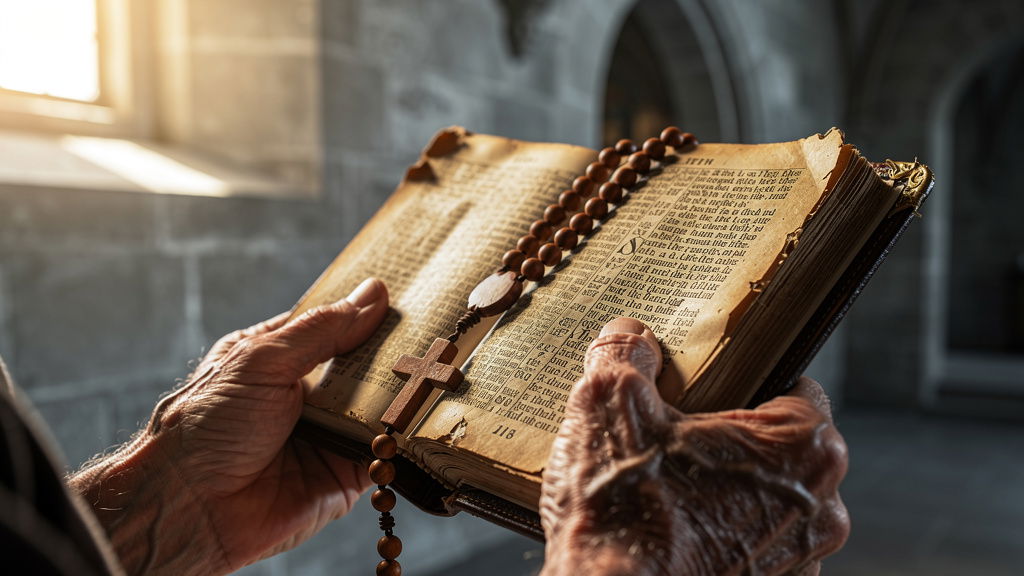
The bell rings, the cloister falls silent, and a monk bends over a worn Bible, tracing the same line again and again as if listening with his whole body. That simple scene touches the heart of what we mean when we ask what is Lectio Divina. It is not just reading, but a quiet, steady way of praying with Scripture and meeting the living God who speaks through its words.
Lectio Divina—Latin for divine reading—grew in monasteries long before study Bibles and commentaries. Monks and nuns slowly returned to the same passages, more like savoring a meal than skimming a page. The aim was not first to collect information, but to grow in communion with Christ.
After Vatican II, the Church, through documents such as Dei Verbum and voices like Pope Benedict XVI, invited all the faithful back to this ancient practice. At Crux Sancta, we stand in that stream of tradition, helping readers pray Scripture with both mind and heart.
“Ignorance of Scripture is ignorance of Christ.”— St. Jerome
This guide explains what Lectio Divina is, where it came from, how the classic four movements work, and how this way of prayer can shape daily life with the Gospel.
Key Takeaways
-
Lectio Divina is a simple pattern for praying Scripture so we meet God personally, not only learn ideas about God.
-
It follows four classic movements: Lectio, Meditatio, Oratio, and Contemplatio, all guided by the Holy Spirit.
-
Lectio Divina does not replace solid Bible study; it stands beside it so what we learn with our minds can sink into our hearts.
-
It can be prayed alone or in a group, with a spirit of listening rather than debate.
-
Carrying a word or phrase from prayer into the day lets Scripture shape conversations, choices, and habits.
What Is Lectio Divina? Understanding Divine Reading
When we first hear the phrase Lectio Divina, we may ask what it means in plain language. The term refers to prayerful, slow reading of Scripture, rooted in monastic life, where the Bible is treated as a living word rather than a puzzle for experts.
This way of prayer is:
-
Less about academic insight
-
More about meeting Christ who speaks through the text
-
Focused on allowing the Word to shape how we think, love, and act through what scholars call
Thomas Cranmer once encouraged believers to “chew the cud” of Scripture so that its flavor sinks in over time. That image fits Lectio Divina well: we linger over a short passage, allow one phrase to echo inside, and let repeated contact with the Word quietly form us.
Fr. Christopher Jamison highlights three helpful principles:
-
Receive the text as a gift, not a problem to solve.
-
Read slowly, since God’s voice is gentle and rarely heard in haste.
-
Treat the entire process—from first reading to final silence—as prayer.
In this sense, Lectio Divina becomes a real conversation with Christ and a steady path of renewal for anyone who approaches Scripture with trust.
The Historical Roots Of Lectio Divina
To understand what Lectio Divina is, it helps to see where it came from. Early Christians, by the third century, already approached Scripture as a place of vivid encounter with God. They inherited from Jewish worship the habit of retelling God’s mighty deeds—like the Exodus through the Haggadah—until the story became their own.
Key figures shaped this instinct:
-
St. Gregory of Nyssa described Scripture as an ascent into the mystery of God.
-
St. Benedict of Nursia wove prayerful reading into the daily life of his monasteries, alongside the Liturgy of the Hours and manual work.
-
Other saints, such as Pachomius, Augustine, and Basil, fostered similar patterns of slow, reverent reading.
In more recent centuries, Vatican II’s Dei Verbum urged all believers to draw life from Scripture, not only clergy and religious. Pope Benedict XVI spoke of Lectio Divina as an “intimate dialogue” in which God speaks and we respond in faith, and he expressed hope for a “new spiritual springtime” if this way of prayer spreads widely. The practice is ancient, yet deeply fitting for our age as well.
Preparing Your Heart And Mind For Lectio Divina
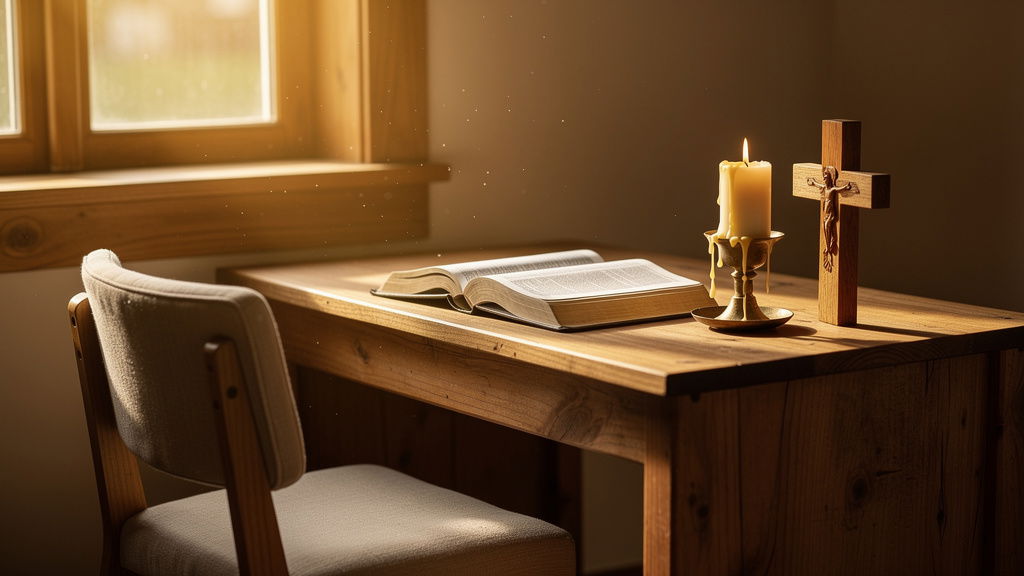
Before asking what Lectio Divina looks like in practice, we prepare both our surroundings and our inner state. Without some stillness, the words on the page may never reach the heart.
Helpful external steps include:
-
Setting aside a specific time (often 20–30 minutes)
-
Choosing a quiet place with minimal interruptions
-
Using simple signs of faith—a crucifix, icon, or candle—as reminders of God’s presence
Interior preparation matters even more. We can:
-
Sit upright yet relaxed
-
Breathe slowly for a minute or two
-
Gently let go of scattered thoughts
-
Whisper a short prayer such as “Come, Holy Spirit” or “Speak, Lord, your servant is listening”
A brief opening prayer—“Lord Jesus, let me hear your word for me now”—sets the tone. We are not cramming for an exam; we are preparing to listen. A quiet mind and willing heart become the soil where the word can take root.
The Four Movements Of Lectio Divina

The classic pattern of Lectio Divina describes four movements that flow into each other: Lectio, Meditatio, Oratio, and Contemplatio. Fr. Thomas Keating compared them to four points on a circle, all moved by the Holy Spirit.
When we are learning, it helps to follow these steps in order. Over time, they may blend more naturally, but the basic rhythm of listening, pondering, responding, and resting remains.
Lectio (Reading)
Lectio is simple, attentive reading. We choose a short passage—often 5–12 verses—and read it slowly, perhaps several times. The goal is not to explain everything but to notice what draws our attention.
Often, one word or short phrase stands out, such as:
-
“Do not be afraid”
-
“Follow me”
-
“By the hand”
We do not force this; we wait for it as a quiet gift. When a phrase does stand out, we linger with it. We might repeat it silently, almost like holding a small stone in the hand. Reading then becomes listening. The written text opens a space where God’s subtle voice can reach us.
Meditatio (Reflection)
In Meditatio, we let that word or phrase sink deeper. We read the verse again and allow it to interact with our life. Questions may surface:
-
Why did this touch me now?
-
What part of my life does this speak to—joy, fear, regret, hope?
-
How might God be using this passage to call my attention to something specific?
This is not an academic commentary. It is a gentle “chewing” of the word. We let it meet our memories, relationships, and worries. Sometimes a clear link appears—a call to forgive in the text meets a strained relationship, or a promise of peace meets an anxious heart. When that happens, we stay with it and ask the Holy Spirit to shed light.
Oratio (Response)

Oratio is our response—our side of the conversation that Lectio Divina has begun. After pondering the passage, prayer often rises on its own. We speak to God from the heart, in our own words.
Our response may include:
-
Gratitude for comfort or clarity
-
Praise for God’s goodness
-
Sorrow for sin and a desire to change course
-
A plea for strength, courage, or patience
We might say, “Lord, I see how afraid I have been,” or “Thank you for holding me by the hand.” Some people find it helpful to jot a few lines in a journal. What matters most is honesty before God. The text now becomes part of a living dialogue.
Contemplatio (Rest)
Contemplatio is quiet rest in God’s presence. After speaking, we allow silence. We may read the passage once more, then simply sit with God for several minutes.
In this stillness:
-
We let go of many words and thoughts
-
We return gently to our focus phrase if the mind wanders
-
We remain like a child resting against a parent, without needing to explain everything
There is no pressure to “feel” something special. God works in this silence more than we can see. The word we heard, reflected on, and answered now sinks deeper than clear ideas or emotions. Over time, such resting helps us carry an awareness of God’s nearness into ordinary tasks and encounters.
From Contemplation To Action Living The Word
If prayer ends only in private comfort, something important is missing. Many teachers speak of a fifth movement called Actio, which points outward. The same Lord who speaks in Scripture also sends us back into daily life with a new way of living.
Actio means letting the word guide concrete choices. For example:
-
If the phrase is “Do not be afraid,” Actio might be making the difficult phone call we keep postponing.
-
If the phrase is “Love your enemies,” Actio might be one small act of kindness toward someone who has hurt us.
The step can be small but real. We can also repeat the word quietly throughout the day—when waking, driving, or waiting in line—so the time of Lectio does not stay sealed off from the rest of life. In this way, prayerful reading grows into prayerful living.
Practicing Lectio Divina In Community
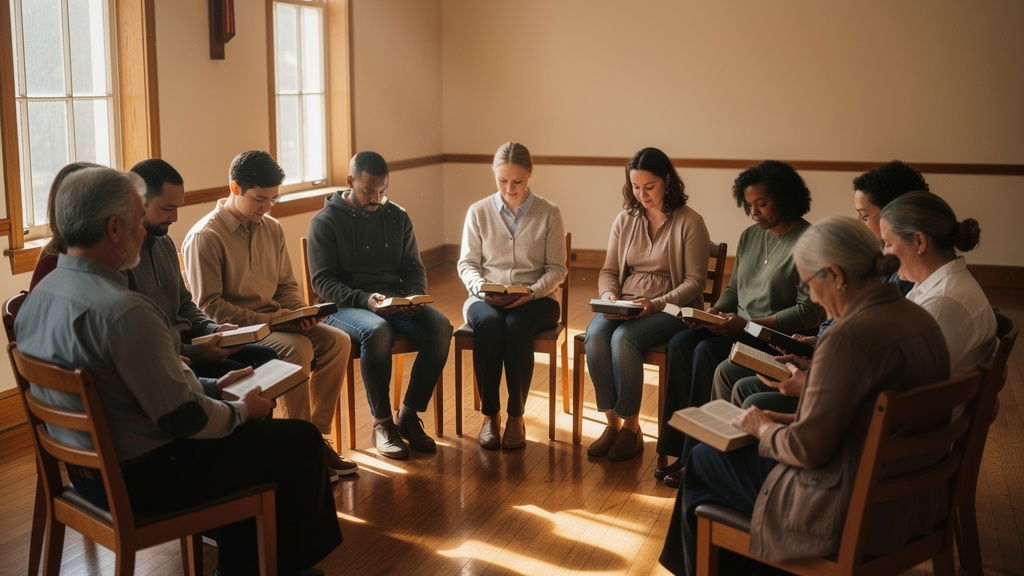
Although many people practice Lectio Divina alone, it can be especially rich in a small group. When several people listen to the same passage, each heart may receive a different emphasis, and shared listening can widen everyone’s awareness.
Group Lectio differs from Bible study:
-
The focus is on sharing how the word touches each person, not debating interpretations.
-
No one corrects another’s experience.
-
Sharing is always optional; silence is honored.
A simple pattern often works well:
-
One person reads the passage slowly. After a brief silence, participants may share a single word or phrase that stood out.
-
The passage is read again. After silence, those who wish may share how it connects with their life.
-
A final reading follows, then a longer pause and optional sharing about any step of Actio that seems invited.
-
The group closes with short intercessions or a simple prayer of gratitude.
Used in parishes, RCIA groups, or classes, this approach helps Scripture feel less distant and more personal. A room becomes like a small “upper room,” where hearts open together to the Spirit.
How Lectio Divina Complements Bible Study
Some people fear that a method centered on interior experience might pull them away from solid doctrine. That concern leads to an important point: Lectio Divina does not replace serious Bible study. It presumes and benefits from it.
At Crux Sancta, we care deeply about:
-
Sound teaching on Scripture and tradition, including careful theological review as demonstrated in
-
Historical and literary context
-
The guidance of the Church across centuries
Formal study asks, “What does this passage mean in context?” Lectio Divina asks, “How is God speaking through this passage to me and to us now?”
Without good teaching, we could twist verses to suit our own ideas. With good teaching, Lectio and study strengthen each other: study keeps us rooted; Lectio lets what we have learned become prayer and conversion of life.
“The word of God is at the basis of all authentic Christian spirituality.”— Pope Benedict XVI
Head and heart belong together; Bible study and Lectio Divina help them move in step.
Conclusion
When we step back, we see that asking what is Lectio Divina leads us into a simple yet profound pattern of prayer. From early Christian communities and monastic life to the renewed encouragement of Vatican II, this practice has helped countless believers meet Christ in Scripture.
Through Lectio, Meditatio, Oratio, Contemplatio, and the outward step of Actio, the Bible becomes more than a revered text at a distance. It becomes the place where the living Word touches joys, wounds, fears, and hopes.
At Crux Sancta, we seek to hold together careful study and contemplative prayer. Our resources aim to help the mind grasp the faith clearly and the heart rest in God’s presence. Setting aside even a short time this week for Lectio Divina—perhaps with a Gospel scene or a Psalm—can begin a quiet but real renewal in the way we hear God and live the Gospel.
FAQs
Question: Is Lectio Divina Only For Monks And Religious Or Can Laypeople Practice It Too
Lectio Divina began in monasteries, but the Church now encourages all the faithful to pray with Scripture in this way. Vatican II and later popes have invited laypeople, families, parish groups, RCIA candidates, catechists, and students to reclaim it as part of their spiritual heritage. It belongs to the whole Body of Christ, not only cloistered communities.
Question: How Long Does A Session Of Lectio Divina Typically Take
Many people find that 20–30 minutes is a good length for one session. That usually allows enough time to move through the four movements without hurry. Some days may be shorter, and that is fine; the depth of attention matters more than the clock. As the practice becomes familiar, some choose to extend the silence or linger in one movement when grace invites it.
Question: What Scripture Passages Are Best For Lectio Divina
Short passages work best, especially when beginning. Helpful choices include:
-
The daily Mass readings
-
A brief Gospel scene
-
A few verses from a Psalm
Aim for 5–12 verses that you can read slowly without feeling rushed. Texts rich in images, invitations, or direct words of Jesus often bear special fruit. A simple prayer to the Holy Spirit before opening the Bible can guide the choice.
Question: Can I Practice Lectio Divina If I Am New To Reading The Bible
Yes. Lectio Divina can be a gentle starting point for those new to Scripture. It does not require detailed background knowledge; it asks for a humble, listening heart. Beginners may find it helpful to pair Lectio with basic catechesis or simple commentaries, so personal insights rest on solid teaching. At Crux Sancta, we design our explanations with this link in mind: clear instruction that naturally leads into prayer. God speaks to hearts at every stage of faith, and Lectio Divina gives that voice more room to be heard.