


Introduction
When we slow down and notice the prayers of Jesus in the Gospels, something striking appears. The Son of God, who shares one divine nature with the Father, chooses a life soaked in prayer. He does not treat prayer as an optional extra; for Him, communion with the Father is the very air He breathes, and the prayers of Jesus become windows into His heart.
From the Jordan River to the Mount of Transfiguration, from lonely hillsides to the agony of the Cross, the Gospels show Jesus praying again and again. He prays at His baptism, before choosing the Twelve, before great miracles, over meals, in thanksgiving, in anguish, and even as He dies. These are not only historical scenes; they are living lessons for us. Many Christians know that prayer matters, but struggle with how to pray with depth, focus, and steady faith. The prayers of Jesus answer that struggle better than any theory ever could.
“He prays for us as our Priest; he prays in us as our Head; he is prayed to by us as our God.” — St. Augustine
At Crux Sancta, we care about both solid theology and lived spirituality. We want to help readers move past a quick reading of these texts and into careful, prayerful reflection that engages both mind and heart. In what follows, we will walk through key prayers of Jesus: His life of constant prayer, His thanksgiving, the Lord’s Prayer, His great intercession in John 17, His agony in Gethsemane, His cries from the Cross, and His ongoing intercession in Heaven. Along the way, we will look at what these prayers reveal about who He is and how they can reshape our own devotional life.
Key Takeaways
Before diving into each passage, it helps to see the main themes that run through the prayers of Jesus:
-
Jesus shows that prayer is a constant relationship, not a rare event. His habit of withdrawing to pray, often very early and in quiet places, teaches that steady communion with the Father stands at the center of real Christian life. His example corrects our tendency to pray only when we feel pressure or crisis.
-
The prayers of Jesus hold together deep honesty and complete trust. Nowhere is this clearer than in Gethsemane, where He voices real anguish yet still says, “Not my will, but yours.” We learn that bringing fears and sorrows to God is not weakness. True faith speaks plainly to the Father and then rests in His wisdom, even when the path ahead is painful.
-
Jesus prays for the Church as a whole and for each believer in particular. In the Lord’s Prayer He gives a pattern for every disciple. In John 17 He prays for His apostles and for all who will believe through their word. Scripture then shows Him, risen and ascended, still interceding at the Father’s right hand. When we pray, we never stand alone; we join a conversation the Son is already having with the Father for our sake.
The Foundation: Jesus' Life Of Constant Prayer

The Gospels do not present Jesus as someone who prays only in emergencies. They show a rhythm of constant communion with the Father, a steady undercurrent beneath every word and sign. The prayers of Jesus reveal a heart that turns to the Father in quiet mornings, busy days, and decisive moments alike. If we want to understand Christian prayer, we begin here.
Mark tells us that “rising very early in the morning, while it was still dark, he departed and went out to a desolate place, and there he prayed” (Mark 1:35). After a day of healing crowds and casting out demons, He steps away from noise and expectation to be alone with His Father. Luke adds that He “would withdraw to desolate places and pray” (Luke 5:16), showing a repeated pattern, not a one‑time choice. Prayer for Jesus is not squeezed into leftover minutes; it shapes His schedule.
Major events in His mission are wrapped in prayer:
-
At His baptism, “when Jesus also had been baptized and was praying, the heavens were opened” and the Spirit descends (Luke 3:21–22).
-
Before choosing the Twelve, He spends the whole night in prayer on a mountain (Luke 6:12–13).
-
At the end of His earthly life, He ascends while blessing His disciples (Luke 24:50–51).
His public mission begins and ends in prayer.
This steady pattern shows what Paul later commands: “pray without ceasing” (1 Thessalonians 5:17). Jesus does this perfectly. He creates real silence in a busy life, steps away from crowds, and roots every major decision in dialogue with the Father. If the sinless Son of God chose constant prayer, how much more do we, with all our weakness, need to build our lives on the same foundation.
Prayers Of Thanksgiving: Gratitude As The Heart Of Communion
When we listen closely to the prayers of Jesus, we hear gratitude again and again. Thanksgiving is not a small add‑on to His prayer life; it stands near the center. Jesus teaches that to stand rightly before the Father is first to receive, to thank, and to praise.
In Matthew 11:25–26, He prays, “I thank you, Father, Lord of heaven and earth, that you have hidden these things from the wise and understanding and revealed them to little children.” Here He rejoices that the Father’s plan lifts up the humble rather than the proud. This prayer shows that thanksgiving is not only for blessings that look pleasant to us. Jesus thanks the Father even for a plan that confuses human wisdom, because He trusts that divine wisdom is better.
At the tomb of Lazarus, He again leads with gratitude. Before calling His friend from death, He says, “Father, I thank you that you have heard me. I knew that you always hear me” (John 11:41–42). His words reveal steady confidence in the Father’s nearness. He also prays aloud for the sake of those standing by, so that they may believe the Father sent Him. This thanksgiving is both intimate and public, both communion and witness.
Jesus also gives thanks in simple, daily settings, especially around meals. Before feeding the 5,000 and the 4,000, He blesses and gives thanks for the loaves and fish. At the Last Supper, He takes bread and a cup, gives thanks, and institutes the Eucharist. The very word Eucharist means thanksgiving. In the Mass, the Church joins her gratitude to His, repeating the pattern of the prayers of Jesus every time the altar is prepared.
For us, this raises a searching question: are our prayers marked more by requests or by thanks? When gratitude leads, our hearts shift from entitlement to humble dependence, from anxiety to trust. Jesus shows that thanksgiving is not naïve; it is a clear-eyed confession that the Father is wise, near, and good.
The Lord's Prayer: Jesus' Blueprint For His Disciples
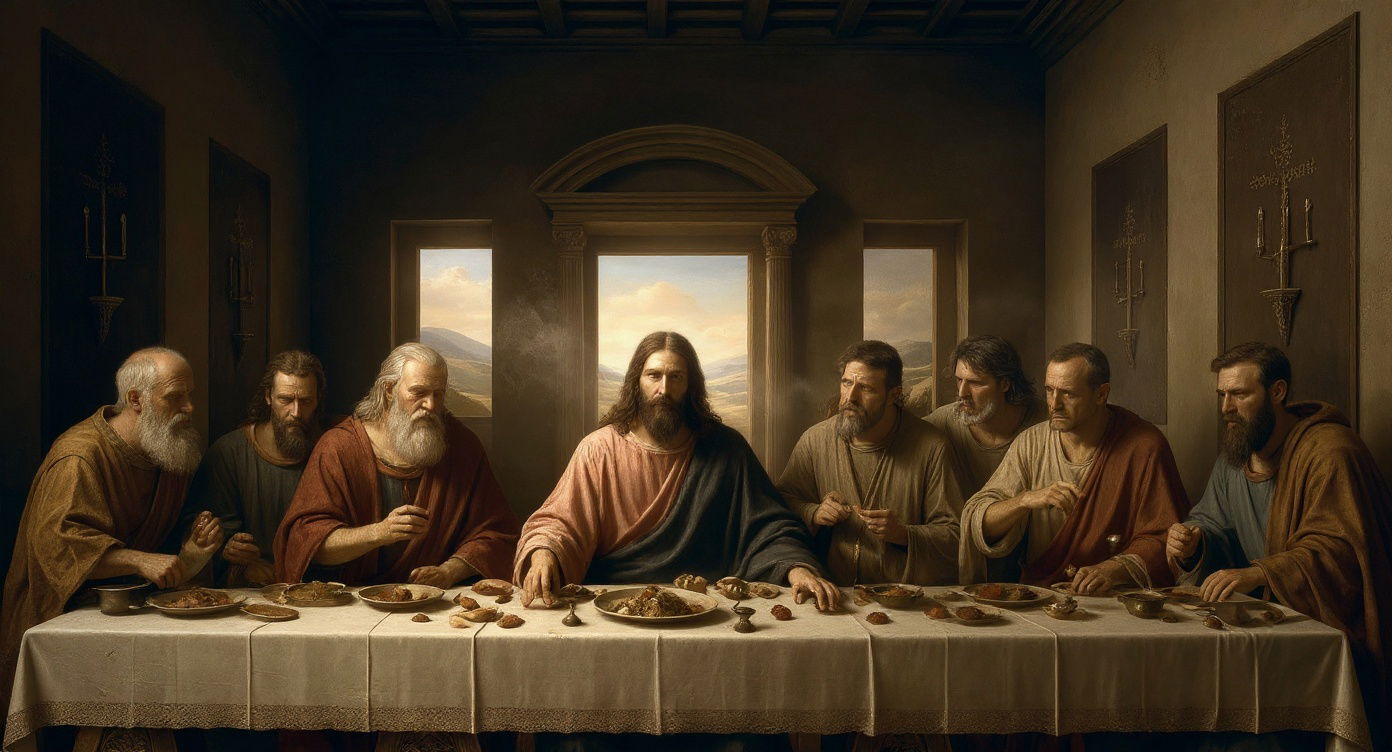
Among all the prayers of Jesus, none is more familiar or more dense with meaning than the Lord’s Prayer. It is short, easy to memorize, and yet it holds the whole pattern of Christian prayer. When the disciples ask, “Lord, teach us to pray” (Luke 11:1), this is the gift He gives them.
Before teaching this prayer, Jesus warns against two wrong approaches. He rejects the showy prayers of hypocrites who pray mainly to be seen. He also warns against mindless repetition, like those who think many words will force God’s hand (Matthew 6:5–8). Instead, He calls for quiet, sincere prayer to the Father who sees in secret. The Our Father, then, is not magic language. It is a family conversation.
The petitions of the Lord’s Prayer form a simple structure we can use in our own prayer:
-
“Our Father in Heaven, hallowed be your name” – We begin with worship and trust, recognizing God as Father and honoring His holiness in our thoughts, speech, and actions.
-
“Your kingdom come, your will be done” – We ask that God’s reign and God’s plan shape earth as Heaven. This trains us to want His will more than our own.
-
“Give us today our daily bread” – We admit our dependence for both material needs and the deeper hunger of the soul, which Catholics see fulfilled most fully in the Eucharist.
-
“Forgive us our debts, as we also have forgiven our debtors” – We ask for mercy while committing to show mercy. We cannot cling to resentment and still ask for a free pardon.
-
“Lead us not into temptation, but deliver us from the evil one” – We confess our weakness and the reality of spiritual warfare, asking for guidance and protection.
As Catholics, we pray this prayer at every Mass and in every decade of the Rosary, but it can also guide our personal time with God. We can move slowly through each line, using it as a frame: praise first, align our will with His, bring daily needs, seek mercy, and ask for protection. In doing so, we let the prayers of Jesus train our own.
The High Priestly Prayer: Jesus' Intercession For His Church
If the Lord’s Prayer is brief and clear, John 17 is deep and rich. Here we find the longest of the prayers of Jesus, spoken after the Last Supper and before Gethsemane. Many call it the High Priestly Prayer, because Jesus stands as priest, lifting Himself, His apostles, and all future believers before the Father. In this chapter we glimpse His heart for the Church across all ages.
Jesus Prays For His Own Glorification (John 17:1–5)
Jesus begins, “Father, the hour has come; glorify your Son that the Son may glorify you.” The “hour” is the time of His Passion, when the Cross, the Resurrection, and His return to the Father all form one saving work. His request for glory is not self-centered; it aims at the Father’s honor and the gift of eternal life to those the Father has given Him.
He speaks of the glory He shared with the Father “before the world existed,” pointing to His eternal divine life. By taking flesh and obeying even unto death, He reveals that same glory in a human life. When the Father glorifies the Son through the Cross and Resurrection, the world sees both divine love and the cost of our salvation. The first part of this great prayer, then, shows that the prayers of Jesus always aim at the Father’s glory and our life.
Jesus Prays For His Disciples (John 17:6–19)
Jesus then turns to the men who have walked with Him. He does not ask that they escape suffering. Instead, He asks the Father to guard them and make them holy: “Holy Father, keep them in your name…that they may be one, even as we are one.” Their unity is meant to mirror the communion of Father and Son, not just in words, but in deep charity.
He also prays, “I do not ask that you take them out of the world, but that you keep them from the evil one.” The apostles will remain in a hostile world, but they will not stand there alone. Jesus asks that they be protected from the devil’s power. Then He adds, “Sanctify them in the truth; your word is truth.” He sets Himself apart for their sake, so that they, fed by God’s word, may be set apart for mission.
These petitions still matter for the Church now. We face division, temptation, and confusion. Yet the prayers of Jesus in John 17 assure us that He has already asked the Father to give us unity in truth, real protection, and holiness.
Jesus Prays For All Future Believers (John 17:20–26)
The final part of this prayer reaches beyond the Upper Room to every age. “I do not ask for these only, but also for those who will believe in me through their word.” That includes every Christian who has heard the Gospel and come to faith. Jesus, on the eve of His Passion, has each of us in mind.
His main request here is simple to state and hard to live: “that they may all be one.” This unity is patterned on the inner life of the Trinity: “just as you, Father, are in me, and I in you.” When believers live this kind of communion, the world sees a sign that the Father sent the Son. Jesus also asks that we may be with Him and see His glory. He wants His followers not only forgiven, but brought close to share in the love that has existed between Father and Son from all eternity.
To read this part of John 17 is to realize that the prayers of Jesus include a personal line for each of us. Long before we were born, He asked the Father for our faith, our unity, and our final home with Him.
Gethsemane: The Prayer Of Anguish And Perfect Submission

In the Garden of Gethsemane, the prayers of Jesus reach a depth of anguish we rarely dare to imagine. After the Supper, He goes out to pray, taking Peter, James, and John with Him. He tells them, “My soul is very sorrowful, even to death” (Matthew 26:38). Then He goes a little farther, falls on His face, and cries out to the Father.
“My Father, if it be possible, let this cup pass from me; nevertheless, not as I will, but as you will” (Matthew 26:39). In these words we hear both the real horror of what He faces and His total obedience, revealing the power of prayer to hold together honest suffering and complete trust in God's will. As man, He recoils from the “cup” of suffering and sin He is about to drink. As Son, He chooses the Father’s plan with full freedom and love. He repeats this prayer three times, showing that the struggle is not brief or shallow.
Hebrews sheds light on this scene: “In the days of his flesh, Jesus offered up prayers and supplications, with loud cries and tears…Although he was a son, he learned obedience through what he suffered” (Hebrews 5:7–8). The prayers of Jesus here are not calm, neat phrases. They are soaked in tears, yet they never slip into rebellion. He puts honest fear and perfect trust in the same breath.
Just before this, Jesus had warned Peter that Satan wanted to “sift you like wheat,” but He added, “I have prayed for you that your faith may not fail” (Luke 22:31–32). Even in His own trial, He is praying for His disciples. For us, Gethsemane teaches that we may bring our deepest fears to God without shame. Real prayer does not pretend to enjoy suffering. At the same time, it ends with “your will be done.” When we echo that line from the prayers of Jesus, we step into the hardest and holiest act of trust.
The Cross: Jesus' Final Prayers Of Mercy, Agony, And Trust
On Calvary, the prayers of Jesus come to their earthly climax. Hanging on the Cross, He speaks seven “last words,” and three of them are direct prayers to the Father. In them we see mercy offered, desolation endured, and life handed back to God.
First, Jesus prays, “Father, forgive them, for they know not what they do” (Luke 23:34). While soldiers mock Him and divide His garments, He does not curse or accuse. He asks for pardon, not only for the men who drive the nails, but for all whose sins have led Him there. In this moment, He lives His own teaching to love enemies and pray for persecutors. The prayers of Jesus turn the worst injustice into a fountain of mercy.
Later He cries out, “My God, my God, why have you forsaken me?” (Matthew 27:46), quoting the first line of Psalm 22. This is a real cry of spiritual desolation, not a mere show. The One who has known constant communion now tastes, in His human soul, the darkness that sin brings. Yet by using the words of a psalm that ends in trust and praise, He also points beyond the darkness to God’s victory.
Finally, with His last breath, He says, “Father, into your hands I commit my spirit!” (Luke 23:46). After pouring Himself out entirely, He hands His life back to the Father in peaceful surrender. The Cross begins with a prayer of forgiveness and ends with a prayer of trust.
In Catholic devotion, we linger over these moments in the Stations of the Cross and in the Divine Mercy devotion, where the pierced Heart of Christ is the source of grace. In our own suffering, we can join these prayers of Jesus: forgiving when harmed, crying to God in honest pain, and choosing to entrust our spirit into His hands.
Christ's Ongoing Intercession: Our Eternal Advocate
The story of the prayers of Jesus does not stop at the Ascension. Scripture tells us that even now, risen and seated at the Father’s right hand, He continues to intercede for us. His priestly work is not a memory; it is a present reality.
Paul writes, “Christ Jesus is the one who died—more than that, who was raised—who is at the right hand of God, who indeed is interceding for us” (Romans 8:34). Hebrews adds, “He is able to save to the uttermost those who draw near to God through him, since he always lives to intercede for them” (Hebrews 7:25). Earthly priests live and die, and their service ends. Jesus, by contrast, has a priesthood that never ends, and His intercession never falls silent.
For Catholics, this truth shines especially in the Mass. There, Christ’s one sacrifice on Calvary is made present sacramentally, and our prayers are joined to His. We do not stand before the Father on our own. We pray “through Christ our Lord” because the prayers of Jesus give weight and worth to ours.
Knowing this changes how we face weakness and failure. Even when we feel dry in prayer, even when we are confused or accused, the Son is already praying for us. At Crux Sancta, we return often to this mystery, because it anchors both theology and spiritual life: we are never alone before God. The Eternal High Priest speaks our names.
Conclusion
When we gather the prayers of Jesus from across the Gospels, a clear pattern appears. He lives in constant communion with the Father, slips away to pray in quiet places, gives thanks in big and small moments, teaches a perfect pattern in the Our Father, pleads for His Church in John 17, submits in anguish at Gethsemane, and dies with words of mercy and trust on His lips. Prayer is not a side activity for Him; it is the hidden center of His mission.
Jesus did not need prayer in the way we do, yet He chose to pray so we could see what a human life in full obedience looks like. Through His example, we learn that prayer is not just a duty. It is the heartbeat of Christian life, the way we share in the love between the Father and the Son. The more we let the prayers of Jesus shape us, the more our own prayer moves from hurried words to real communion.
At Crux Sancta, we seek to read these texts with care, drawing from the Church’s tradition and offering clear teaching that feeds reflection and daily practice. A helpful next step is simple:
-
Use the Lord’s Prayer as a daily frame.
-
Set aside regular time for quiet, focused prayer.
-
Speak honestly with God about fears and desires.
-
Remember to give thanks often.
As we do this, the Holy Spirit slowly shapes us to resemble the One we contemplate. Learning to pray with Jesus is one of the surest ways to grow more like Jesus.
FAQs
Question: Why Did Jesus Need To Pray If He Was God?
In Christian teaching, Jesus is one divine person with both a divine nature and a human nature. As God, He shares perfect communion with the Father and the Spirit. As man, He lives out the full dependence that belongs to a faithful human heart. When we watch the prayers of Jesus, we see not weakness in His divinity, but the perfection of His humanity and a living model for our own dependence on the Father.
Question: What Is The Significance Of Jesus Praying Alone In Solitary Places?
The Gospels often show Jesus withdrawing to quiet places to pray, such as in Mark 1:35 and Luke 5:16. In these moments He steps away from noise, praise, and pressure to be with the Father in silence. The prayers of Jesus in solitude teach that real prayer needs protected time and space. In our crowded lives, we can follow His example by setting aside regular, distraction‑free times and places where our attention can rest on God alone.
Question: How Can We Apply The Lord's Prayer In Our Daily Lives?
The Lord’s Prayer is more than a text to recite; it is a pattern to live. We can pray it slowly each day, pausing over each line and letting it shape our thoughts and desires. The prayers of Jesus here put worship before requests and God’s will before our own plans. In personal prayer, we can follow the same order: begin by praising the Father, then bring our needs, seek forgiveness, and ask for strength against temptation. The Mass and the Rosary then weave this pattern into the rhythm of our week.
Question: Does Jesus Still Pray For Us Today?
Yes. Scripture is clear that the risen Christ continues His intercession in Heaven (Romans 8:34; Hebrews 7:25). As our great High Priest, He stands before the Father and presents both His perfect sacrifice and our needs. This means the prayers of Jesus are active right now, not only in the past. When the Church prays “through Christ our Lord” in the liturgy, we are acknowledging this living reality: we always approach the Father in union with the Son who prays for us.