Introduction
A classroom without a teacher quickly slips into noise and confusion. In the same way, a Church without a clear teaching voice would leave believers guessing about what Christ actually taught. From the beginning, Jesus did not leave His disciples with a book alone. He gave them living shepherds and a living teaching office that we now call the magisterium of the Catholic Church.
Many Catholics sense this, yet still feel tension. People value independence, personal research, and private interpretation. When headlines quote popes or bishops, or when online debates flare up, it can be hard to see how the Magisterium really works, or why it matters for ordinary Catholic life.
Understanding the Magisterium is not only for theologians. It shapes how a parent explains the faith to a child, how a student reads Scripture, and how a seeker weighs Catholic claims. This sacred teaching authority is meant as a gift of protection and clarity, not a cage for the mind or heart. At Crux Sancta, we try to bring careful theology into plain speech, so that anyone who loves Christ can see how He still teaches through His Church.
As we move through this article, we will look at what the Magisterium is, where it appears in Scripture, how it grew through history, and how it speaks today. We will also see how different levels of teaching call for different responses from us. By the end, you will be able to see the magisterium of the Catholic Church as one of Christ’s most tender provisions for His people.
Key Takeaways
Before going deeper, keep these core ideas in view:
-
The magisterium of the Catholic Church is the teaching authority Christ gave to His Church. It serves Scripture and Tradition by giving an authentic interpretation that guards the faith from confusion and error.
-
The Pope and the bishops in communion with him carry this authority as successors of the Apostles. Their office, received in Holy Orders, is the main way Christ keeps a visible teaching voice in His Church.
-
Magisterial teaching has two main expressions: ordinary and extraordinary. Ordinary teaching appears in daily preaching, encyclicals, and catechisms. Extraordinary teaching appears in rare, solemn definitions that give final clarity on key doctrines.
-
Not every teaching is infallible, but every authentic act of the Magisterium is authoritative. Different levels of authority ask for different forms of assent from the faithful, which protects both truth and reason.
What Is The Magisterium? Understanding Its Meaning And Divine Origin

When Catholics speak about the magisterium of the Catholic Church, we are not talking about a committee or a think tank. The word comes from the Latin magister, meaning teacher. At its heart, the Magisterium is the teaching office Christ gave to His Church so that His gospel would remain clear across time and culture.
This word has three closely linked meanings:
-
It refers to the office itself, the God-given authority to teach in Christ’s name.
-
It refers to the persons who hold this office: the Pope and the bishops in communion with him.
-
It can also refer to the body of teachings that flow from this office, such as when we speak of the Magisterium of Saint John Paul II or of Catholic social teaching.
The divine origin of the Magisterium rests on the mission Christ gave the Apostles. In Matthew 28:19–20, He sends them to make disciples, baptize, and teach everything He commanded. In 1 Timothy 3:15, Saint Paul calls the Church “the pillar and bulwark of the truth.” Christ did not intend a loose group of readers who argue over a text. He formed a visible body that carries His authority.
“The task of authentically interpreting the word of God, whether written or handed on, has been entrusted exclusively to the living teaching office of the Church.”— Second Vatican Council, Dei Verbum 10
The Church teaches that revelation comes to us in one deposit of faith, made up of Sacred Scripture and Sacred Tradition, which together form the foundation of Catholic Theology Research Papers and scholarly inquiry into divine truth. This deposit contains what God has revealed for our salvation. The magisterium of the Catholic Church does not stand over this deposit as a master that can edit or add to it. Instead, it stands under the Word of God as a servant that guards, explains, and applies it.
Christ promised to remain with His Church until the end of the age and to send the Holy Spirit as the Spirit of truth. The Magisterium is one of the main ways He keeps that promise in a visible, concrete way. Through this teaching office, guided by the Spirit, the Church can preach Christ with confidence even when new questions and cultures arise.
Who Exercises The Magisterium? The Bishops As Successors Of The Apostles
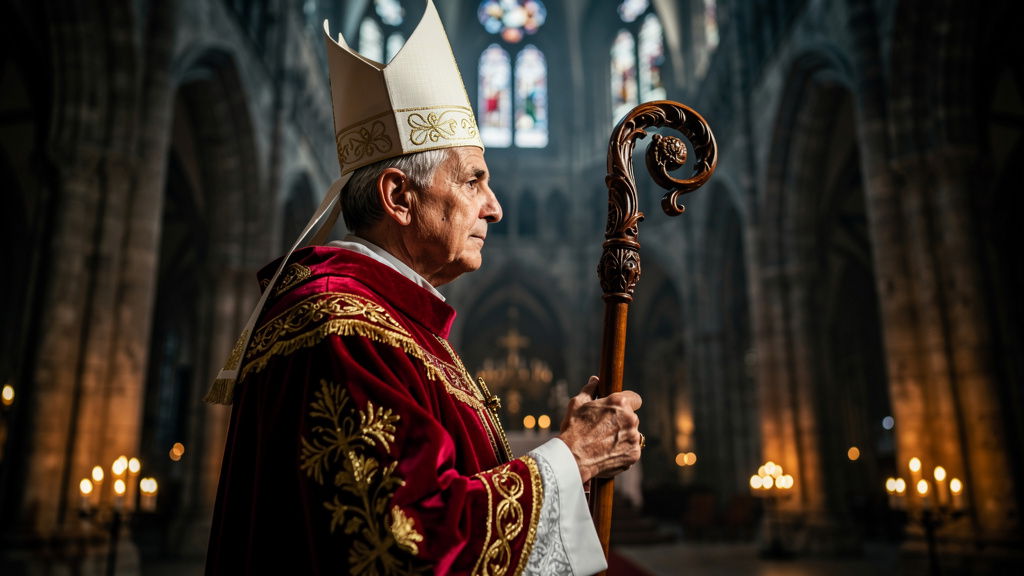
If the magisterium of the Catholic Church is Christ’s teaching office, who actually carries it out? The answer is simple but rich: only the Pope and the bishops in communion with him exercise magisterial authority, and they do so not as private scholars but as successors of the Apostles.
From the earliest centuries, the Church recognized that the Apostles handed on their mission through the laying on of hands. This unbroken line is what we call apostolic succession. A bishop does not invent his mission. He receives an office that stretches back to the Twelve and, through them, to Christ Himself. Through Holy Orders, the bishop shares in Christ’s mission as teacher, sanctifier, and shepherd.
Theologians, catechists, and scholars play a vital role. They study, clarify language, and help the whole Church understand the faith better. Yet they do not possess the Magisterium. Saint Paul VI described a kind of partnership: theologians probe questions; the magisterium of the Catholic Church then judges which answers are in harmony with the deposit of faith; finally, theologians explain these teachings to the wider Church.
Authority here belongs to the office, not to personal holiness, charm, or academic skill. A bishop may be very gifted or quite ordinary. Either way, when he teaches in communion with the Pope and the other bishops, more than his own opinion is at work. Vatican II stressed the collegial nature of this office: the bishops form one college with the Pope as its head, sharing care for the whole Church. Priests and deacons teach with real authority, but they do so as co-workers of the bishop, not as independent holders of the Magisterium.
The Two Forms Of Magisterial Teaching – Ordinary And Extraordinary
The magisterium of the Catholic Church speaks in more than one mode. Sometimes it teaches in a steady, day‑to‑day way. At other times it speaks through very solemn definitions. Catholic tradition calls these patterns the ordinary Magisterium and the extraordinary Magisterium. Both serve the same truth, but they differ in manner and weight.
Ordinary Magisterium – The Church's Daily Teaching Voice
Most Catholics meet the magisterium of the Catholic Church through its ordinary teaching. This is the constant instruction given by the Pope and the bishops in their usual ministry. When a bishop preaches in his cathedral, issues a pastoral letter, or approves a catechism for his diocese, he uses this ordinary Magisterium. When the Pope writes an encyclical or apostolic exhortation, he does the same on a wider scale.
This ordinary teaching appears in many forms:
-
Papal documents such as Laudato Si’ or Veritatis Splendor apply the gospel to questions of ethics, prayer, and social life.
-
The Catechism of the Catholic Church gathers Scripture, Tradition, and centuries of magisterial reflection into one ordered reference.
-
National bishops’ conferences publish joint statements on topics such as religious liberty, social justice, and bioethics.
Not every act of the ordinary Magisterium is infallible in the strict sense. Yet these acts come with real authority and with the help of the Holy Spirit. Vatican II teaches that they call for what it names religious submission of mind and will. We do not treat them as casual advice. We receive them with respect, trust, and a desire to understand and live what the Church teaches.
Extraordinary Magisterium – Rare And Definitive Declarations
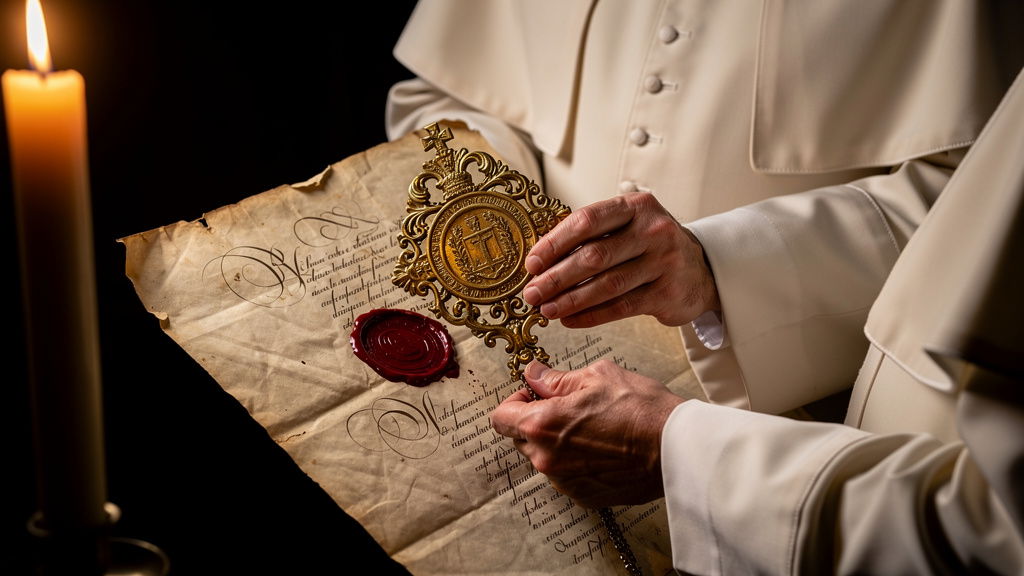
Sometimes the magisterium of the Catholic Church speaks in an especially solemn and final way. This is the extraordinary Magisterium. It appears when the Pope or an ecumenical council defines a doctrine of faith or morals in a way meant to be held definitively by the whole Church.
One form of this is the famous ex cathedra act of the Pope. In such a case, the Pope speaks as supreme shepherd and teacher of all Christians, on a matter of faith or morals, with the clear intention to bind the entire Church. Modern examples include the definitions of the Immaculate Conception of Mary (1854) and her Assumption (1950). These are rare events.
The extraordinary Magisterium also appears in ecumenical councils. When the bishops of the world gather with the Pope and issue solemn definitions, they share in infallible teaching. The Council of Nicaea declared that Christ is “true God from true God.” The Council of Trent clarified the doctrine of justification and the sacraments. Vatican I defined papal infallibility and described the magisterium of the Catholic Church in clear terms. These teachings are irreformable because they express truths bound up with the deposit of faith.
Understanding Infallibility – The Church's Protection From Error
Few ideas linked with the magisterium of the Catholic Church cause more confusion than infallibility. Some imagine a Pope who can never make a mistake about anything. Others think the Church claims too much when it speaks of doctrines that cannot be wrong. To move past these fears, we need a careful but simple picture.
Infallibility is a gift of the Holy Spirit that protects the Church from teaching error in matters of faith and morals. It does not mean that bishops or popes become saints overnight. It does not mean they always choose the best words, the wisest policies, or the soundest human judgments. It means that in certain acts, under certain conditions, God will not permit them to bind the faithful to false teaching in faith or morals.
This gift belongs first to the Church as a whole, because Christ promised that the gates of hell would not prevail against it. It belongs in a special way to the magisterium of the Catholic Church, because this office carries the public task of teaching in Christ’s name. Infallibility rests on Christ’s faithfulness and the Spirit’s guidance, not on human talent.
It also helps to see that infallibility is not active all the time. Many magisterial acts are authoritative without being infallible. A homily by the Pope, an interview, or a prudential judgment about public policy will rarely claim infallible status. Yet these acts still deserve a basic trust, because they come from those whom Christ has set as shepherds over His flock.
“He who hears you hears me, and he who rejects you rejects me.”— Luke 10:16
The Three Modes Of Infallible Teaching
Catholic tradition describes three main ways in which the magisterium of the Catholic Church can teach infallibly. All share the same goal of guarding the deposit of faith.
-
Papal Infallibility (ex cathedra)Vatican I taught that the Pope is preserved from error when he speaks ex cathedra. For this to occur, several conditions must be present:
-
Ecumenical CouncilsWhen the bishops of the world gather with the Pope and define a doctrine of faith or morals for the universal Church, their solemn teaching is free from error. The Nicene Creed and the decrees of Trent on justification and the sacraments are classic examples.
-
Ordinary And Universal MagisteriumHere there is no single dramatic act. Rather, all the bishops across the world, in communion with the Pope, agree in their teaching that a certain doctrine about faith or morals must be held definitively. Lumen Gentium explains this pattern. The constant teaching that direct abortion is always gravely wrong, or that only men may receive priestly ordination, is widely recognized as infallible in this way.
Levels Of Magisterial Authority – How Catholics Should Respond To Church Teaching

A healthy Catholic life does not treat all official statements as equal in weight, yet it also avoids picking and choosing based on personal preference. The magisterium of the Catholic Church speaks with different levels of authority, and these levels invite different kinds of assent. Knowing this helps us avoid both suspicion and exaggeration.
Divinely Revealed Dogmas – The Highest Level
At the highest level stand dogmas that the Church teaches as divinely revealed. These truths belong directly to the deposit of faith that comes from Scripture and Tradition. When the magisterium of the Catholic Church defines them—through a solemn council, an ex cathedra declaration, or the ordinary and universal Magisterium—it teaches them infallibly.
Such dogmas call for the full assent of divine and Catholic faith. We believe these truths because God has revealed them and the Church has proposed them as such. To deny them knowingly is heresy. Classic examples include:
-
The Holy Trinity
-
The Incarnation of the Son of God
-
The Real Presence of Christ in the Eucharist
-
The bodily Resurrection of Jesus
Vatican I summarized this by stating that all things contained in the Word of God and proposed by the Church as divinely revealed must be believed with this assent.
Definitive Teachings – Truths Necessary To Safeguard Revelation
There is a second tier of teachings that are also infallible, but in a somewhat different way. These are doctrines that are not themselves directly revealed, yet are so closely linked to revelation that the magisterium of the Catholic Church must present them as definitive. They protect and express revealed truth.
Our response here is firm acceptance. We hold these teachings with complete firmness, even though we do not say they are revealed in the same direct sense as dogmas. Examples include the reservation of priestly ordination to men and the grave wrong of euthanasia. These teachings guard the right understanding of the sacraments and of human dignity.
Authoritative Non‑Infallible Teachings – Religious Submission Required
Most of the time, Catholics interact with teachings that are authoritative but not presented as infallible. This includes much of the ordinary teaching of popes and bishops. Here the magisterium of the Catholic Church still speaks with Christ-given authority, but without a formal claim of freedom from error.
Vatican II describes our response as religious submission of intellect and will (obsequium religiosum). This does not mean blind obedience or pretending we never struggle. It means a real interior openness that takes the teaching seriously as a guide. We try to understand it, give it the benefit of the doubt, and shape our opinions with respect for the Church’s judgment.
Faithful Catholics can sometimes find such teachings difficult. That struggle, by itself, is not sin, especially when we pray, study, and seek wise counsel. The key difference lies between humble difficulty and stubborn refusal. In honest struggle, we keep telling the Lord that we trust the magisterium of the Catholic Church more than our limited insight, even as we ask for light.
“Ten thousand difficulties do not make one doubt.”— St. John Henry Newman
How The Magisterium Teaches – Documents And Instruments Of Authority
The magisterium of the Catholic Church does not float in the air as a vague spirit. It speaks through concrete acts and documents. To read these well, it helps to know their different kinds and weight. The CDF instruction Donum Veritatisnotes that the level of authority becomes clear from the nature of the document, how often a teaching is repeated, and how the teaching is expressed.
At the highest level of solemnity we find apostolic constitutions and the decrees of ecumenical councils. These often define dogmas, reform Church discipline, or set out major teachings. Their form signals that the magisterium of the Catholic Church is acting with special weight. They are meant for the whole Church and for the long term.
Papal encyclicals come next as major teaching documents on faith, morals, or social questions. Encyclicals such as Humanae Vitae or Fratelli Tutti offer deep reflection on specific themes. They do not always claim infallibility, yet they carry strong authority as acts of the Pope’s ordinary Magisterium. Apostolic exhortations often follow synods of bishops and apply existing teaching to pastoral practice.
Other important instruments include motu proprio documents, which can adjust law or clarify doctrine; the Catechism of the Catholic Church, which gathers the teaching of the magisterium of the Catholic Church into a single reference; and pastoral letters from individual bishops or bishops’ conferences, which apply Church teaching to local needs. At Crux Sancta, we aim to help readers sort through these different levels, so that serious study and simple faith can walk together.
It is also important to know what is not magisterial. Interviews, off‑the‑cuff remarks, or books written by popes as private theologians—such as Benedict XVI’s series on Jesus—do not, by themselves, exercise the Magisterium. They may explain or echo magisterial teaching, but they do not carry the same weight.
The Historical Development Of The Magisterium Through The Centuries
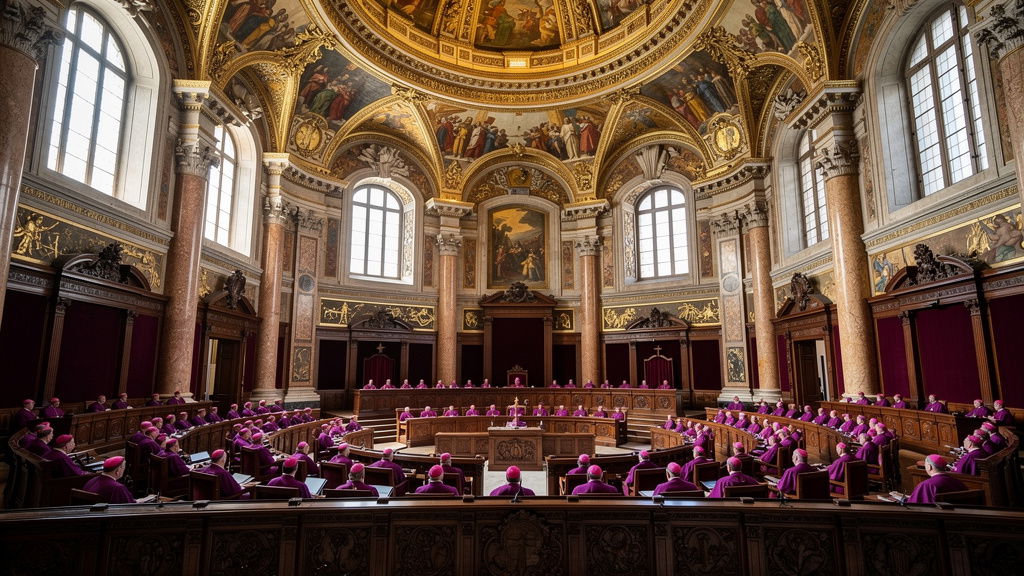
The magisterium of the Catholic Church did not appear fully formed in a single moment. Its roots lie in the New Testament, but its self‑understanding deepened across centuries. By tracing this story, we see both steady continuity and real growth in clarity.
The Early Church – Apostolic Succession As Foundation
In the second century, Christian leaders faced groups that claimed secret knowledge or new prophecy. Figures like Saint Ignatius of Antioch and Saint Irenaeus answered by pointing to the bishops. These bishops stood in public succession from the Apostles, guarding the same faith that had been preached from the start. The magisterium of the Catholic Church, in seed form, appeared here as a chain of teachers who kept the gospel intact.
Movements such as Montanism claimed that new revelations could overrule or replace apostolic teaching. The Church rejected these claims and insisted that the deposit of faith was complete. Early debates also asked whether learning or office gave true authority. By the end of the second century, a broad consensus recognized the bishop as the final local teacher of the faith, even while valuing scholars and saints.
Medieval Period – Development And Challenges
During the Middle Ages, the reach of the papacy grew. Certain texts, such as the Pseudo‑Isidorian Decretals (later exposed as forgeries), encouraged a strong view of papal power and helped to concentrate authority in Rome. At the same time, universities like Paris became centers of theology. Thinkers such as Saint Thomas Aquinas spoke about a pastoral Magisterium in the bishops and a master’s Magisterium in the scholars, each with its own place.
Tensions also arose between popes and councils. The Council of Constance, through the decree Haec Sancta, claimed that a general council held authority even over the Pope. Later teaching did not accept this view, yet the debate showed real questions about how the magisterium of the Catholic Church should act. Through it all, the Church kept turning back to apostolic succession and communion with Rome as the main markers of sound teaching.
Vatican I And The Modern Definition
By the nineteenth century, new political and intellectual movements pressed hard on Catholic belief. In this setting, Pope Pius IX convened the First Vatican Council. There, the Church gave the word Magisterium a clear, modern sense. The council defined papal infallibility in its strict form and explained when the Pope speaks in a way that cannot err in faith or morals.
Vatican I also highlighted the idea of the ordinary and universal Magisterium, where the bishops spread through the world but united with the Pope can teach infallibly. The council did not invent the magisterium of the Catholic Church. Rather, it gave sharp language to a reality that had been present since the Apostles. Later, Vatican II would stress the shared responsibility of the whole college of bishops and offer an even richer account of how the teaching office serves the people of God.
Conclusion
When we step back, the magisterium of the Catholic Church no longer looks like a cold legal machine. It appears as a living teacher that Christ Himself set in place. In a time when voices shout from every corner and opinions change with each news cycle, this steady teaching office stands as a gift of mercy.
Far from weakening personal faith, a right understanding of the Magisterium can strengthen trust in Christ. We do not have to guess which doctrines are central or which moral teachings are reliable. Christ, through the magisterium of the Catholic Church, gives clear lines that guide our conscience and our prayer. Those lines free our minds to explore within the safe field of truth.
At Crux Sancta, we hope to walk beside you in this task. We seek to link serious theology with clear explanations, so that the riches of the Magisterium become food for daily faith, not just topics for specialists. As we keep studying and praying, we can give thanks that Christ did not leave us as orphans. He still teaches through His Spirit, His Scriptures, His Tradition, and the magisterium of the Catholic Church.
FAQs
Many honest questions arise once we start to take the Magisterium seriously. Here we address some of the most common concerns in a simple way.
Question 1: Does The Magisterium Mean Catholics Cannot Think For Themselves?
Some people fear that the magisterium of the Catholic Church crushes independent thought. In reality, clear teaching makes serious thinking possible. When the basic truths of faith and morals are stable, theologians and students can explore their depth without drifting into error. Catholic history shows vigorous debate inside the bounds marked by the Magisterium. Great thinkers such as Augustine, Aquinas, and Newman used keen reason while staying loyal to Church teaching. Assent to the Magisterium does not cancel reason; it gives reason a solid anchor.
Question 2: How Can I Trust The Magisterium When Individual Bishops Or Popes Have Sinned?
Scandals and failures in Church leaders wound hearts deeply. It can seem hard to trust the magisterium of the Catholic Church when some of its members have acted so badly. Here we need a basic distinction: the authority to teach comes from Christ and the office He gives, not from a leader’s moral success. The early Church rejected the Donatist idea that sin in a minister destroys his sacramental or teaching role. Infallibility and magisterial authority do not rest on personal holiness (though holiness should be present). Our confidence rests on Christ’s promise and the Holy Spirit’s protection, even when human weakness is obvious.
Question 3: What If I Struggle To Accept A Particular Church Teaching?
Many serious Catholics have seasons when a certain teaching feels hard or even painful. That struggle by itself does not mean rejection of the magisterium of the Catholic Church. The key is how we respond. We can take the difficulty to prayer, ask the Holy Spirit for light, and study solid sources that explain the teaching. It also helps to speak with a wise priest, spiritual director, or well‑formed lay teacher. Keeping a posture of humble submission means saying to God that we want to understand and obey, even when our feelings or thoughts are not yet in full harmony.
Question 4: How Does The Magisterium Relate To Sacred Scripture?
The magisterium of the Catholic Church serves Scripture, rather than ruling over it as a rival. The same Church that gathered the books of the Bible and recognized them as inspired also has the task of interpreting them in an authentic way. Without such an interpreter, sincere believers can reach sharply different readings that contradict each other on key points. Catholic teaching holds that Scripture, Tradition, and the Magisterium stand together as one united source of guidance. The Magisterium does not add new revelation but guards and explains the Word of God for each age.
Question 5: Has The Magisterium Ever Changed Church Teaching?
Many people ask whether the magisterium of the Catholic Church has reversed itself. Here we must distinguish between true development and contradiction. Saint John Henry Newman explained that genuine development is like the growth of a living body: over time we can express a doctrine more clearly or apply it in new settings, yet it remains the same truth. Dogmas that have been infallibly defined cannot be overturned, because they express eternal realities. Church disciplines—such as fasting rules or certain legal structures—can change. Vatican II’s teaching on religious freedom, for instance, deepened the Church’s understanding without cancelling earlier doctrine. So we can trust that core teachings on faith and morals will not flip, even as our grasp of them grows.