Introduction
Everyone knows the sick feeling that follows doing something wrong. A sharp word, a broken promise, and then the quiet ache that says things are not right. The Church takes that very human experience of regret and, through the Act of Contrition, gives it a clear voice in prayer, a contrition act that brings the heart back to God.
Many Catholics learn this prayer as children, whispering it in the confessional or before bed. Yet it can feel like a small speech we rush through, more habit than heart. Behind those familiar words, though, stands a deep theology of sin, mercy, grace, and conversion. The Act of Contrition is meant to express real sorrow and a clear decision to turn away from sin, not just a quick formula to get through confession.
In this guide, we walk slowly through what contrition really is, how the Church understands perfect and imperfect sorrow, and why the contrition act matters so much in the Sacrament of Reconciliation and daily prayer. We look at the traditional wording, modern and scriptural forms, and practical ways to pray this with sincerity. Whether someone is a lifelong Catholic, an RCIA candidate, a theology student, or simply searching, our hope at Crux Sancta is to help the mind and heart move together toward a more honest, heartfelt confession.
Key Takeaways
Before going deeper, it helps to see the main ideas in front of us. These points give a simple roadmap for what follows and show how the contrition act fits into the wider life of faith. They also hint at how doctrine, Scripture, and prayer come together in this single, short prayer.
-
Contrition means real sorrow for sin joined with a firm decision to avoid it in the future, and this inner change is needed to receive God's forgiveness. It is more than a feeling, since it involves the will choosing to turn away from sin. The Act of Contrition puts this inner choice into words that the heart can claim.
-
The Church teaches a difference between perfect contrition that is moved mainly by love for God and imperfect contrition that is moved by fear of punishment or the ugliness of sin. Both can be part of an honest contrition act, and both come from God's grace at work in the soul. Perfect contrition is the higher motive, but imperfect sorrow is still a real and valuable beginning.
-
Every genuine contrition act includes several key elements: acknowledgment of sin, sorrow, recognition of offending God, firm purpose of amendment, avoidance of near occasions of sin, and reliance on divine grace. Many approved versions of the Act of Contrition exist, from traditional to scriptural, yet they all carry these same basic elements. That is why Catholics are free to choose a wording that best expresses their own heart.
-
The Act of Contrition stands at the heart of the Sacrament of Reconciliation and also serves daily prayer. When prayed with understanding, it strengthens a pattern of honest self-examination and returning to God. True contrition is never only spoken on the lips, but marks a real change in how a person lives.
What Is Contrition? The Theological Foundation Of Repentance

The Catechism of the Catholic Church gives a concise definition of contrition:
"Contrition is sorrow of the soul and detestation for the sin committed, together with the resolution not to sin again." — Catechism of the Catholic Church, 1451
In simple terms, it means seeing sin for what it is, turning away from it, and choosing God instead. Feelings may come and go, but contrition rests above all on a clear act of the will.
This turning is the first movement of conversion. In the parable of the Prodigal Son, the younger son “comes to himself,” recognizes his misery, and decides to return to his father. That decision in his heart, before he even starts walking home, is a picture of contrition. Without such sorrow and resolve, the forgiveness God offers, especially in confession, cannot truly take root—a principle supported by research showing that forgiveness by God is closely linked to psychological well-being and genuine transformation.
The Act of Contrition is the prayer that gives this inner reality a voice. When we pray any approved contrition act, we speak out loud what should already be present within us. In doing so, we open the heart to receive mercy and allow grace to repair our relationship with God, as Scripture and Tradition have always described.
Perfect Contrition Vs. Imperfect Contrition And Understanding Your Motivation

The Church makes a careful distinction between perfect and imperfect contrition, not to burden the conscience, but to help the soul grow in love. Both kinds of sorrow appear within the traditional contrition act, which gently leads the heart from fear toward love.
Perfect contrition is sorrow because sin offends God, who is all good and worthy of all love. In this case, the main motive is love for God and grief at having wounded that relationship. When someone has perfect contrition, joined with a firm decision to confess as soon as possible, this love even restores the soul to grace before entering the confessional, because love and mortal sin cannot remain together.
Imperfect contrition, also called attrition, is sorrow moved more by fear of punishment, by dread of hell or Purgatory, or even by disgust at the harm sin brings. The line in the traditional prayer that mentions “just punishments” expresses this kind of sorrow. The Church teaches that attrition is still a gift from God and is enough, when joined with confession, for valid absolution.
In the traditional contrition act, we hear both voices at once. We say we detest our sins because they deserve just punishment, yet even more because they offend God, who deserves all our love. By praying this often, the heart is slowly trained to move from lower motives to higher ones, from fear of pain to love of the Father—a spiritual journey that acts of contrition facilitate through their carefully structured expression of repentance.
The Essential Elements Of Every Act Of Contrition
Across the centuries, Catholics have used several approved wordings for the contrition act, yet they all share the same inner structure. These shared elements show what needs to be present for sorrow to be genuine, no matter which version a person uses.
Every full Act of Contrition includes:
-
Real sorrow and rejection of sinPhrases such as “I am heartily sorry” or “I detest all my sins” point to more than passing regret. They express a deep dislike for sin itself and a desire to be free of it, not simply annoyance at being caught or facing unpleasant effects.
-
Awareness of having offended GodEvery contrition act acknowledges that sin offends God, not just a moral rule. The prayer often speaks of having sinned against the One who should be loved above all things. This keeps repentance from becoming a self-centered exercise and reminds the penitent that sin harms a real relationship.
-
Firm purpose of amendment and trust in graceA complete Act of Contrition also includes a firm purpose of amendment, a decision to avoid sin and, as many versions say, the near occasions of sin. That means trying to stay away from people, places, and habits that usually lead to falling. The prayer also admits that this change is only possible with God's grace and, in some forms, adds a promise to do penance. In this way, the contrition act reaches backward to the wrong done and forward to a new way of living.
The Traditional Act Of Contrition And A Line By Line Theological Analysis
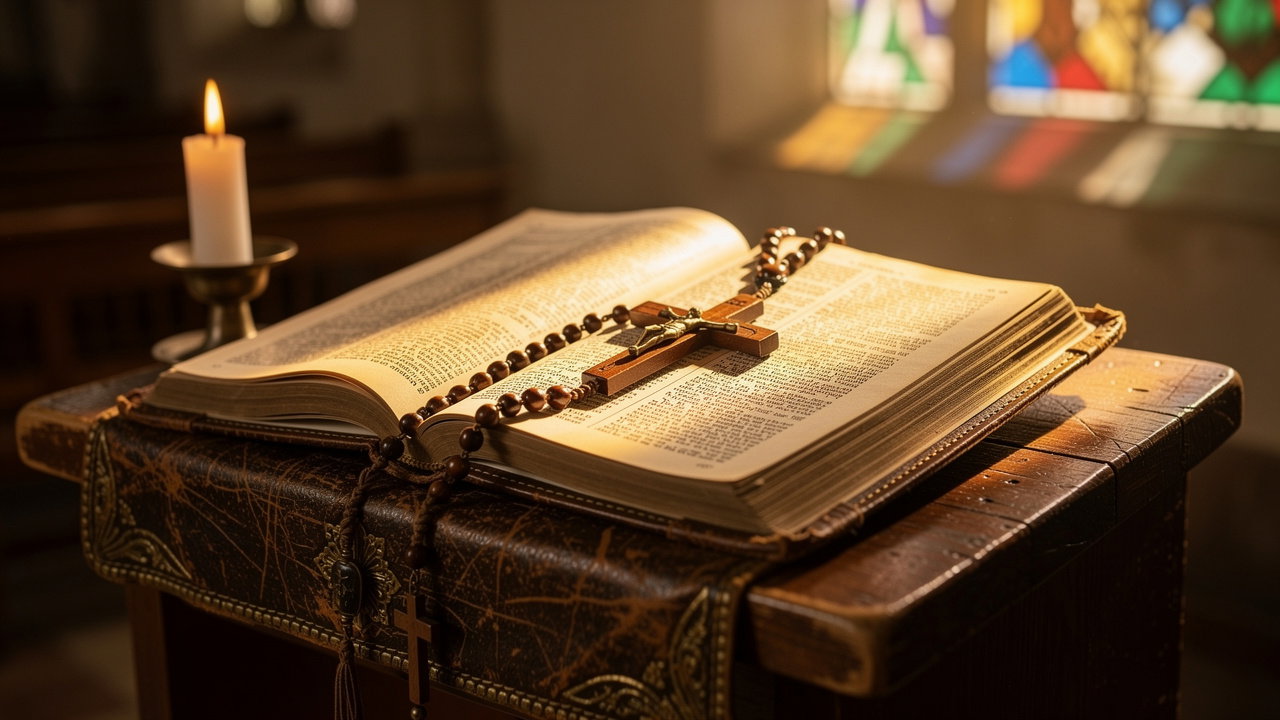
The most familiar form of the contrition act is rich in meaning, even though it is brief. Many Catholics know it by heart, yet may not have paused to reflect on each phrase.
O my God, I am heartily sorry for having offended Thee, and I detest all my sins because of Thy just punishments, but most of all because they offend Thee, my God, who art all good and deserving of all my love. I firmly resolve, with the help of Thy grace, to sin no more and to avoid the near occasion of sin. Amen.
The opening line, “O my God, I am heartily sorry for having offended Thee, and I detest all my sins,” shows both tenderness and seriousness. The prayer speaks directly to “my” God, stressing a personal bond, and claims sorrow that comes from the heart. The strong word “detest” is used on purpose, marking a clear inner break with sin.
The next phrase, “because of Thy just punishments, but most of all because they offend Thee,” gathers both imperfect and perfect contrition into one breath. It admits that fear of punishment has its place, yet sets that motive below a higher one, love of the God who is “all good and deserving of all my love.” This ordering teaches the soul to respect God's justice, while aiming for a love that would grieve sin even without fear.
The final part, “I firmly resolve, with the help of Thy grace, to sin no more and to avoid the near occasion of sin,” turns from past to future. The will makes a real decision to stop sinning, and to step away from situations that make falling likely. At the same time, the prayer humbly admits that this firm resolve stands only with grace, so that the contrition act itself becomes an act of trust.
Modern And Scripturally Inspired Forms Of The Act Of Contrition
After the Second Vatican Council, the revised Rite of Penance offered several alternative forms of the contrition act, written in more current language but holding the same heart. One well-known version begins, “My God, I am sorry for my sins with all my heart,” and later speaks of “choosing to do wrong and failing to do good.” Those simple lines name both sins of action and sins of omission, and end by recalling that “Our Savior Jesus Christ suffered and died for us.”
Other forms draw their words straight from Scripture. Some echo the Prodigal Son from Luke 15, repeating his confession that he has sinned and is unworthy to be called a child. Others follow the repentant thief in Luke 23, who asks Jesus to remember him in his kingdom. Still others use the language of Psalm 51, asking God to create a clean heart and renew a right spirit.
There are also short, powerful Christ-centered prayers such as the Jesus Prayer, “Lord Jesus, Son of God, have mercy on me, a sinner.” This simple contrition act has long been prayed in the Eastern Christian tradition and contains faith, confession, and plea for mercy in one line. Whether one chooses the traditional form, a scriptural model, or a brief cry for mercy, the Church accepts them all, as long as the essential elements of true contrition are present.
The Act Of Contrition Within The Sacrament Of Reconciliation
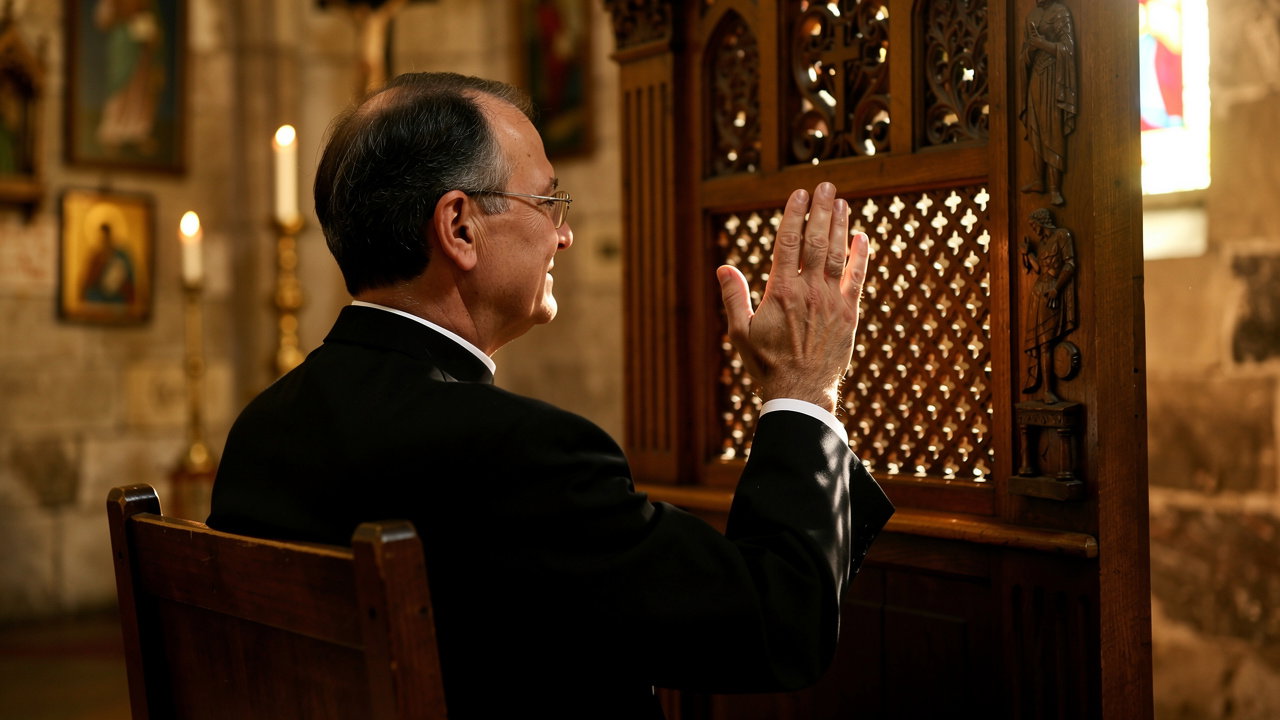
Within the Sacrament of Reconciliation, the contrition act holds a central place. It is not just another prayer in the rite, but the moment when the penitent's sorrow is clearly spoken before God and the Church.
The usual pattern of confession follows a simple order:
-
PreparationThe person prepares with an examination of conscience, looking honestly at thoughts, words, and actions.
-
Confession of sinsNext comes the spoken confession of sins to the priest, who listens and offers counsel as Christ's representative.
-
PenanceThe priest then proposes a penance, often a prayer or act of charity, to help repair harm and support new habits.
-
Act of ContritionAfter this, the priest invites the penitent to pray the Act of Contrition. Here the inner sorrow, which should already exist, is expressed in clear words that mention sin, sorrow, and resolve.
-
AbsolutionOnly then does the priest raise a hand and speak the words of absolution, by which Christ forgives the sins.
Seen this way, the contrition act is the high point of the penitent's part in the sacrament. It gathers up the examination, the spoken sins, and the desire to change, and places all of that before God with trust.
Biblical Foundations Of Repentance In Sacred Scripture
The Act of Contrition does not float free from Scripture, but grows from the Bible's many stories and prayers of repentance. The Old and New Testaments speak again and again of hearts that fall, weep, and return.
Psalm 51 is a classic example, recording David's prayer after his grave sin. He admits that his offense is above all “against you,” and begs God to wash him and create a clean heart. This psalm shows both honest confession and a longing for inner renewal, the same pattern seen in every sincere contrition act.
In the Gospel of Luke 15, the Prodigal Son recognizes how far he has fallen, plans his confession, and goes back to his father, only to be met with an embrace. Peter, after denying Jesus, goes out and weeps bitterly, and later is restored by the risen Lord and sent to feed the flock. The repentant thief on the cross, in Luke 23, speaks just one simple plea, “Jesus, remember me,” and receives the promise of Paradise. These scenes form the deep scriptural ground from which Catholic practice in confession and the Act of Contrition has grown.
How Crux Sancta Deepens Your Understanding Of Contrition And Confession
At Crux Sancta, we exist to help believers move from memorized words to living faith. When it comes to the contrition act and the Sacrament of Reconciliation, we draw on theology, Scripture, and the wisdom of the Church to make the meaning of repentance clear and practical.
We explore Catholic teaching on sin, grace, and forgiveness in a way that respects both mind and heart. Our work brings together Catholic theology and doctrine, the witness of Sacred Tradition, and solid catechesis, so that readers can see how the Act of Contrition developed and why the Church treasures it. We also offer guidance on daily prayer, examinations of conscience, and the wider pattern of Christian life, so that heartfelt confession becomes a steady habit rather than a rare event.
For practicing Catholics, RCIA candidates, theology students, catechists, and spiritual seekers, we aim to provide a place where deep questions about confession and contrition can be faced without fear. By explaining the contrition act in this way, we hope to help many approach the confessional with understanding, peace, and trust in God's mercy.
Practical Guidance For Heartfelt Contrition In Your Spiritual Life

Knowing the theology behind the contrition act is only part of the picture. The other part is learning to pray it in a way that truly touches daily life. That means letting the words shape thoughts, choices, and habits, rather than staying at the level of memory alone.
One helpful practice is a simple daily examination of conscience. At the end of the day, we can quietly review our actions, thank God for graces, and admit where we have fallen short. Ending that time with an Act of Contrition keeps the heart turned toward mercy and makes sorrow for sin a regular pattern, not just something felt before confession.
"The Lord never tires of forgiving. It is we who tire of asking for forgiveness." — Pope Francis, Angelus, March 17, 2013
That reminder encourages us to return to God again and again, without giving in to despair or discouragement.
Before going to confession, it helps to slow down with the contrition act itself. We can read it line by line, think about what each phrase says, and ask the Holy Spirit to stir real sorrow for specific sins. During the sacrament, instead of racing through the words, we can speak them with attention, aware that Christ listens.
Different people find that different versions of the contrition act speak to them more deeply. Some prefer the time-tested traditional wording, others find scriptural forms easier to connect with, and some lean on the brief Jesus Prayer. Whatever form is chosen, we can ask God for perfect contrition, meditate often on Christ's love shown on the cross, and read about saints who repented deeply. Over time, this steady pattern of prayer lets the Act of Contrition express not only words on the lips, but also a sincere change of heart, as trajectories of change in spiritual practices demonstrate genuine transformation occurs through consistent, mindful repetition.
Conclusion
The Act of Contrition is far more than a task to complete before absolution. It is a compact yet rich prayer that gathers sorrow for sin, trust in God's mercy, and a firm resolve to live differently. When we understand what we are saying, the familiar lines of this contrition act become a powerful meeting place between God and the soul.
By learning the difference between perfect and imperfect contrition, and by seeing the biblical and theological roots of repentance, we pray with greater clarity and love. Whether one uses the traditional form, a modern wording from the Rite of Penance, or a scriptural prayer, the heart of the matter stays the same. There must be real sorrow, awareness of having offended God, a decision to turn away from sin, and reliance on grace.
The Act of Contrition belongs inside the confessional, but also beside the bed, in quiet chapels, and in any place where the heart turns back to God. May every time we pray this contrition act draw us closer to the Father who runs to meet every returning son and daughter with mercy.
FAQs
Before closing, it may help to address a few common questions that often arise about the contrition act. Clear answers can quiet anxious hearts and remove needless fears around confession. Here are brief responses rooted in Catholic teaching.
Question 1: Is It A Mortal Sin If I Forget The Act Of Contrition During Confession?
Forgetting the exact wording of the Act of Contrition is not a mortal sin. What matters most is real sorrow for sin and a true desire to turn back to God. The priest can help by prompting a version, or by inviting someone to speak in their own words. God looks first at the heart, not at perfect memory.
Question 2: Can I Make An Act Of Contrition Outside Of Confession?
Yes, the Church strongly encourages praying a contrition act outside of confession. Many people include it in nightly prayer as part of their examination of conscience. When sorrow flows mainly from love of God and includes the desire to confess soon, perfect contrition brings forgiveness of grave sin in an emergency. Regular use of the Act of Contrition keeps the soul ready for the sacrament.
Question 3: What Is The Difference Between The Act Of Contrition And An Examination Of Conscience?
An examination of conscience is a time of reflection that looks honestly at thoughts, words, deeds, and omissions, measuring them against God's law. The Act of Contrition is the prayer that follows, by which one expresses sorrow and asks for mercy. In both daily life and confession, the examination comes first, then the contrition act gives that reflection a clear voice.
Question 4: Do I Have To Use The Exact Words Of A Formal Act Of Contrition?
The Church offers several approved forms of the Act of Contrition, and using one of them is helpful because it includes all the key elements. However, it is also possible to speak to God in one's own simple words, as long as there is real sorrow, acknowledgment of sin, a decision to avoid sin, and trust in grace. Many people use a formal version as a guide, then add a short personal plea that expresses their own heart.