


Introduction
She had been living on the streets for years, trapped in addiction and prostitution, and she was sure her life did not matter. At World Youth Day in Toronto, she heard Pope John Paul II speak about the love of God and the worth of every person. When he spoke of each soul as the “apple of God’s eye,” she later said that hearing this simple form of Catholic teaching on human dignity did not just encourage her; it saved her life.
What changed her was not praise, pity, or a social program, but the discovery that her value did not depend on her past, her choices, or how others saw her. Catholic teaching on human dignity proclaims that every human person has a sacred worth that no sin, weakness, or circumstance can erase. This conviction is the foundation of Catholic social teaching, the starting point for how we think about life issues, justice, freedom, and mercy.
In this article, we walk through Catholic teaching on human dignity as something far more than a slogan or a political talking point, building on research such as "Solidarity in Catholic Social Teaching and Its Implications for Creating an Authentic Human Self" that examines how this teaching shapes authentic human identity. We look at its roots in Scripture, in the life of Christ, and in the Church’s reflection over centuries. We face the harsh ways dignity is denied in our age, and we ask what it means to live as people who truly believe that every life matters. Along the way, we at Crux Sancta aim to stand beside the reader as a thoughtful, faithful guide, joining faith and reason so that this teaching can shape both mind and heart.
Key Takeaways
When we speak about Catholic teaching on human dignity, we are not adding a small detail to the faith but touching its very core. The points below summarize what we will keep returning to as the article unfolds. They can serve as a kind of compass while we look more deeply at why every life matters.
-
Every human person has an infinite, God-given dignity from the first moment of existence. This dignity comes from being created, loved, and willed by God, not from anything we do or achieve. Nothing we suffer and nothing others do to us can erase this gift.
-
Catholic teaching on human dignity rests on three great truths of faith. We are created in God’s image, redeemed by Christ, and called to eternal communion with God. Because of this, dignity is inalienable and does not rise or fall with age, ability, health, or moral failure.
-
Human dignity provides the solid ground for both rights and responsibilities. When we grasp this, it reshapes how we see ourselves, how we treat others, and how we respond to the hardest moral questions of our time. It moves from an idea in our head to a way of life in our families, parishes, and public life.
What Is Human Dignity According to Catholic Teaching?

When the Church speaks about human dignity, it is not talking about a feeling of self-worth or the respect society chooses to give. Catholic teaching on human dignity says that every person has a deep, unrepeatable value simply by being a human being. This value stands before any talent, strength, or social status and remains even when those things are lost.
The Catechism of the Catholic Church puts it very clearly. It teaches that, being in the image of God, the human individual has “the dignity of a person, who is not just something, but someone” (CCC 356). A “someone” can never be reduced to a number, a label, or a tool for another’s plans. This applies to the whole person, body and soul together, from conception to natural death.
In many secular theories, dignity is often tied to certain abilities. A person is thought to have “full” dignity only when they can think at a certain level, make independent choices, or add clear use to others. By that logic, the unborn child, the severely disabled, or the person with advanced dementia seem to fall outside the circle. Catholic teaching on human dignity flatly rejects that idea. Dignity does not appear when we cross a mental or physical line; it is present from the first moment of human life.
Recent Church teaching uses the phrase “infinite dignity,” or dignitas infinita, to stress this point. No measure of weakness, poverty, or sin can weigh against the worth of one human soul. Reason can see that human beings are different from other creatures, but Divine Revelation confirms and deepens this insight. In short, Catholic teaching on human dignity is both rational and revealed, and it is the firm ground on which all Catholic moral teaching stands.
The Biblical Foundation: Created in God's Image
To understand Catholic teaching on human dignity, we begin where the Bible begins. In Genesis we read, “Let us make man in our image, after our likeness” and, “God created man in his image; in the image of God he created him; male and female he created them” (Genesis 1:26–27). Humanity is not an accident of blind forces. We are shaped according to God’s own image and invited into friendship with Him.
Being made in the image of God means that every human person reflects something of God’s wisdom, goodness, and love. We are able to know the truth, choose the good, and enter into relationships of love. Practically, this means that no human being is a mere object or a piece of property. Catholic teaching on human dignity rests on this truth: each person is a living icon of God’s presence in the world.
The Old Testament shows God’s special care for those whose dignity others ignore. In Deuteronomy, God is described as:
“The great, mighty, and awesome God, who has no favorites, accepts no bribes, who executes justice for the orphan and the widow, and loves the resident alien, giving them food and clothing” (see Deuteronomy 10:17–19).
Laws in Deuteronomy insist on fair treatment of the stranger, the orphan, and the widow (Deuteronomy 24:17), revealing that worship of God must flow into respect for persons.
The prophets act like the conscience of Israel when this respect breaks down. Amos cries out against those “who sell the righteous for silver, and the needy for a pair of sandals” (Amos 2:6–7). Isaiah condemns those “who make unjust laws” that crush the weak (Isaiah 10:1–2). Psalm 82 links a right relationship with God to defending the oppressed, saying, “Give justice to the weak and the orphan; maintain the right of the lowly and the destitute” (Psalm 82:3–4).
From start to finish, the Old Testament reveals a God who treasures each human person and calls His people to do the same. Even the gift of being created male and female is part of this dignified design. Sexual difference is not a mistake or a flaw. It points to our call to communion, to give and receive love in a way that reflects the inner life of the Trinity. Catholic teaching on human dignity, then, is not an added rule; it flows from the very way God made us and from His faithful care throughout salvation history.
Christ: The Full Revelation of Human Dignity
If Genesis lays the foundation, Jesus Christ shows the full beauty of Catholic teaching on human dignity. By taking our human nature, the eternal Son of God did something astonishing. He did not only speak about our worth; He joined Himself to us in the most personal way. As the Second Vatican Council teaches in Gaudium et Spes 22, “By his Incarnation, the Son of God has united himself in some way with every human being.”
In the Gospels, Jesus constantly crosses social barriers to restore dignity to those cast aside. He sits at table with tax collectors, men considered traitors and sinners, and calls them to new life (Matthew 9:10–11). He speaks publicly with the Samaritan woman at the well (John 4), breaking both ethnic and gender customs in order to give her living water and a new sense of who she is. He touches lepers, blesses children, and listens to the cries of the sick and desperate. Each meeting shows us what Catholic teaching on human dignity looks like in action.
Jesus also teaches through stories. In the parable of the Good Samaritan (Luke 10:25–37), a wounded man left on the roadside becomes the test of whether we recognize another’s dignity. The religious figures pass by, but the Samaritan stops, cares, and pays for his healing. Jesus makes this outsider the example of true neighborly love, teaching that every person we meet, especially the hurting one, is “someone” to be received, not an inconvenience to be avoided.
On the cross, Christ enters the deepest depths of human suffering, shame, and apparent failure. From a worldly point of view, the crucified one looks stripped of all dignity. Yet faith sees something else. In His Passion, Jesus shows that even the places where we feel weakest or most broken can be united with God’s love. Catholic teaching on human dignity therefore includes suffering; it is not limited to moments of health and success.
The Resurrection completes this picture. By rising from the dead, Christ reveals our final calling to share His life forever. Saint Irenaeus summed this up when he wrote:
“The glory of God is man fully alive.”
Our true life is not measured by power, money, or appearance, but by our share in God’s own life. Seen in this light, every person, no matter how small or forgotten, has a destiny more wonderful than any earthly honor. This is the heart of Catholic teaching on human dignity.
The Four Dimensions of Human Dignity
Because the word “dignity” is used in many ways, the Church offers a helpful set of distinctions. Recent teaching, including the document Dignitas Infinita, speaks of four dimensions of human dignity. These do not describe different “levels” of value but different ways of looking at the same person. Understanding them helps us avoid confusion and keeps Catholic teaching on human dignity clear and steady.
Ontological Dignity: The Foundation That Cannot Be Lost
Ontological dignity is the deepest level and the starting point for all the others. “Ontological” refers to our very being. We possess this dignity simply because we exist as human persons, willed, created, and loved by God. It is not earned and it is not given by the state, by other people, or by the Church.
This kind of dignity is indelible and unconditional. It belongs equally to the unborn child, the healthy adult, the person with severe disabilities, the elderly person with dementia, and the prisoner who has done grave harm. Even when someone’s life is very disordered, their ontological dignity remains. Catholic teaching on human dignity insists that nothing anyone does, or anything done to them, can erase this foundational worth.
Moral Dignity: Freedom and Responsibility
Moral dignity concerns how we use our freedom. As persons with reason and will, we are able to choose acts that reflect our God-given dignity or acts that go against it. When we lie, cheat, abuse, or commit violence, we act in ways that do not fit who we are in God’s plan. Our behavior can be “undignified” even though we still possess true worth.
Sin wounds or obscures moral dignity, but it does not erase ontological dignity. This is why Catholic teaching on human dignity can condemn an action, such as murder or exploitation, while still calling the sinner to conversion and hope. Because a person’s deepest identity remains as a child of God, repentance and renewal are always possible, and the Church must keep the door of mercy open.
Social Dignity: Conditions of Life
Social dignity refers to the concrete conditions in which a person lives. When people lack basic food, housing, health care, or safety, we often say they live in “undignified” conditions. Here we are judging the situation, not the person. Catholic teaching on human dignity looks at extreme poverty, human trafficking, and unjust labor practices as insults to the dignity that each person already has.
This is why Catholic social teaching calls us to build structures and policies that reflect respect for the human person. To uphold social dignity means working so that every person can live in conditions that match their God-given worth, not in misery or constant fear.
Existential Dignity: Subjective Experience
Existential dignity has to do with how a person experiences his or her own life. Someone may have food, shelter, and safety, yet still feel their life is without meaning or value. Illness, depression, addiction, family conflict, or past trauma can weigh so heavily that a person sees their existence as “undignified” or pointless.
Catholic teaching on human dignity recognizes this painful inner experience without accepting it as the final truth about the person. Our feelings and perceptions do not change God’s view of us. At the same time, the Church wants to draw near to those who struggle in this way, offering listening hearts, sacraments, and practical help. The goal is not only to state that dignity exists but to help people taste and live from that truth.
Human Dignity as the Foundation of Rights and Responsibilities
If every person has inalienable dignity, then every person also has inalienable rights. Catholic teaching on human dignity provides the solid ground for human rights, not as favors granted by governments, but as moral claims that arise from what we are. This is why the Church welcomed the language of the 1948 Universal Declaration of Human Rights, which speaks of the “inherent dignity” of all members of the human family.
However, the Church also warns that talk about “rights” can become confused when it loses contact with human nature. Not every strong desire counts as a right. Authentic rights flow from what we truly are as persons created for truth, goodness, and communion. Catholic teaching on human dignity helps us tell the difference between genuine rights, like the right to life and religious freedom, and demands that contradict the moral law or the good of others.
Dignity also implies duties. If I possess inalienable dignity, then I have the duty to live in a way that honors that gift. I am called to use my freedom to seek the good, not to harm myself or others. If my neighbor has inalienable dignity, then I owe him or her respect, care, and justice. In this way, rights and responsibilities always go together.
Saint John Paul II summed up real freedom in a line many Catholics know well:
“Freedom consists not in doing what we like, but in having the right to do what we ought.”
Catholic teaching on human dignity protects us from both extremes: from tyranny, where the state hands out rights as it pleases, and from anarchy, where each person declares new “rights” based only on feelings. It also gives us a way to defend those who cannot speak for themselves, such as the unborn, the disabled, and the very poor.
Why Every Life Matters: Dignity From Conception to Natural Death
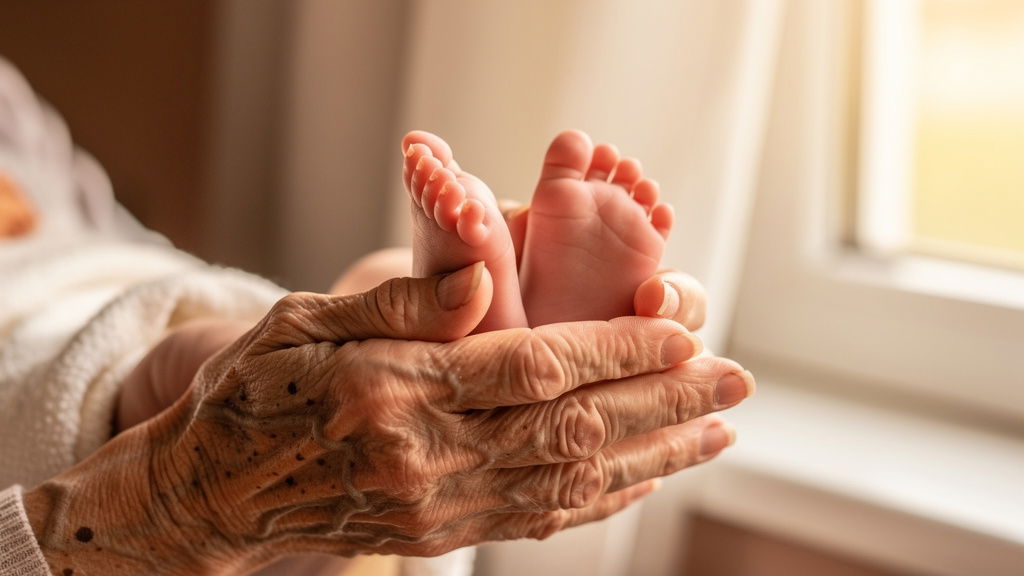
Once we accept that dignity is rooted in being human, not in ability or usefulness, a clear line appears. Catholic teaching on human dignity says that life is to be respected and protected from conception to natural death. This is not only a matter of biology; it is a matter of recognizing a person wherever he or she exists, even at the earliest or weakest stages.
From the first moment of conception, a new human life begins, with its own genetic identity and inner drive to grow. The Church teaches that this life must be treated as a person, not as a thing or a “potential” person. Because ontological dignity is present, direct abortion, which ends this life, cannot be made acceptable by any argument of convenience or fear. To attack the unborn child is to deny Catholic teaching on human dignity at its root.
At the other end of life, the Church looks with compassion on those who suffer greatly. Many people speak of euthanasia or assisted suicide as “death with dignity.” Catholic teaching on human dignity answers that dignity does not leave when the body grows weak or the mind fades. True compassion means staying with the sick, relieving pain as much as possible, and refusing to treat any life as a problem to be removed.
The same logic shapes the Church’s stance on the death penalty. Even when someone has committed a terrible crime, their ontological dignity remains. Society has a right to protect itself, but in our time there are ways to do this without killing the offender. For this reason, recent popes have called for an end to the death penalty, describing it as incompatible with full respect for human dignity.
In all of these cases, Catholic teaching on human dignity rejects a “throwaway culture” that values people only when they are strong, independent, or productive. Dependency does not lessen worth; in fact, Christ identifies Himself especially with the hungry, the sick, the prisoner, and the stranger. When we look at a tiny child, a person with severe disabilities, or a frail elder, we are called to see the face of Christ. That is why every life matters.
Living With Dignity: The Moral Imperative in Daily Life

If Catholic teaching on human dignity is true, it cannot stay on the page. It presses into the way we live each day. We move from the “is” of doctrine—each person is created in God’s image—to the “ought” of moral life—so we ought to treat ourselves and others accordingly. This shift touches our thoughts, our speech, and our choices.
First, we look at ourselves. Many of us tie our worth to grades, income, appearance, or ministry success. When those things falter, we may fall into deep self-contempt. Catholic teaching on human dignity invites us to root our identity not in what we have or do, but in the fact that we are beloved children of the Father. That truth steadies us when we fail and keeps pride in check when we succeed.
Second, we look at the way we treat the people around us. Spouses, children, co-workers, parishioners, and strangers at the store are not background figures in our story. Each one carries the image of God. When we slow down enough to listen, to forgive, to show patience, we act according to this truth. When we insult, gossip, or treat people as tools for our plans, we deny it.
To make this more concrete, we can think of a few areas where honoring dignity becomes very practical:
-
In the workplace, we can resist using people only for profit or advancement. We can speak up for fair pay and safe conditions, and we can treat both employees and customers with honest respect. Work becomes not only a way to earn a living, but a field where Catholic teaching on human dignity takes shape in real policies and daily habits.
-
In our speech, both offline and online, we can choose words that build up rather than tear down. That means refusing gossip and slander, rejecting cruel jokes, and stepping back from online arguments that treat people as enemies rather than neighbors. Even when we must disagree, we can argue ideas without attacking the person who holds them.
-
In our habits as consumers, we can pay attention to how goods are made and who might be suffering to produce them. We may not fix every injustice, but we can avoid buying from clearly exploitative practices when we know about them. By giving time, money, or skills to the corporal and spiritual works of mercy, we also stand beside the hungry, the lonely, the imprisoned, and the grieving as brothers and sisters.
Living this way is not easy, but Catholic teaching on human dignity assures us that no act of respect, however small, is wasted. Each one is a step toward a culture where every person is seen and loved as God sees and loves them.
Grave Violations of Human Dignity in the Modern World
The Church does not teach about dignity only in gentle, abstract terms. She also names the many ways dignity is attacked in our time. Pope Francis often says that these offenses “poison human society” and injure not only the victims but also the ones who commit them. Catholic teaching on human dignity says a strong “no” to these practices precisely because it says an even stronger “yes” to the human person.
Threats to Life: Abortion, Euthanasia, and the Death Penalty
Direct attacks on innocent human life strike at the foundation of all other rights. Abortion ends the life of a child who is completely defenseless and hidden from view. Catholic teaching on human dignity holds that no appeal to choice, convenience, or fear can outweigh the basic right of that child to live. To defend the unborn is not to ignore women in crisis, but to support both mother and child in their shared dignity.
Euthanasia and assisted suicide send another grave message, suggesting that a life marked by heavy suffering no longer has worth. In contrast, the Church teaches that every life retains dignity, even when it is fragile or dependent. We are called to relieve pain, give comfort, and stay close, not to see death as a medical “service.”
The death penalty also raises serious concerns. While the state has the duty to protect citizens, Catholic teaching on human dignity now holds that cases where this can only be done by execution are extremely rare, if they exist at all. Modern society has other means of defense, so taking a life in this way becomes unnecessary and wrong. The Church also warns against practices like surrogacy that treat children as products and women’s bodies as means to an end, cutting against the personal meaning of parenthood and pregnancy.
Economic Injustice and the Throwaway Culture
Grave offenses against dignity also arise when economic life forgets the person. Extreme poverty, massive gaps between rich and poor, and systems that trap families in misery contradict the equal worth of all. When millions lack food, clean water, or decent housing while others waste great resources, Catholic teaching on human dignity calls this an injustice that cries out before God.
Pope Francis speaks often of a “throwaway culture,” where the weak, the poor, and the elderly are treated like items to be discarded. Human trafficking, where people are bought, sold, and abused for labor or sex, is a crime against humanity that deeply violates dignity. So do work conditions that treat laborers as replaceable tools rather than partners in a shared task. As consumers and citizens, we are urged to remember that people are always more important than profits or things.
Violence, War, and Persecution
Violence in all its forms is a direct denial of the other person’s worth. War leaves a long trail of bodies, trauma, and ruined communities. The Church calls war a defeat for humanity and urges leaders to exhaust every just means of peace. Terrorism, which targets civilians and spreads fear, shows particular contempt for human dignity.
Violence against women, including domestic abuse, sexual assault, and the killing of women simply because they are women, is another grave wound. So is the sexual abuse of children and vulnerable adults, which leaves scars that can last a lifetime. In our age, we must also face the suffering of migrants and refugees, who often flee danger only to meet rejection or exploitation in new lands. Even in the digital realm, forms of violence appear in cyberbullying, revenge pornography, and ruthless online shaming. Catholic teaching on human dignity measures all these acts against the truth that every person is a brother or sister, never an object to hurt.
Gender Ideology and Threats to Identity
The Church also speaks about ideologies that confuse our understanding of the human person. Some forms of gender theory suggest that our bodily sex is meaningless and that our identity is only a matter of choice. Catholic teaching on human dignity sees this as a serious error because it breaks the link between body and soul and sets aside the gift of being created male or female.
Medical attempts to alter one’s sex raise deep concerns about harming, rather than healing, the person’s integrity. At the same time, the Church firmly teaches that every person, including those who experience gender dysphoria or same-sex attraction, has full dignity and must be treated with respect. We are called to reject insults, bullying, and unjust discrimination.
The key distinction is between persons and ideas. We are bound to honor and care for every person we meet. Yet we are not bound to affirm every belief about the human body or sexuality, especially when it conflicts with God’s design. Catholic teaching on human dignity seeks a path that holds truth and compassion together. It invites us to speak clearly while walking closely with those who suffer.
Crux Sancta: Your Guide to Understanding Catholic Teaching on Human Dignity

In a time of noisy opinions and shallow slogans, many Catholics and sincere seekers long for a place where they can think more deeply about faith without needing a theology degree. At Crux Sancta, we share that desire. Our mission is to help readers enter the riches of Catholic teaching on human dignity and related doctrines with both clarity and reverence.
We do this through several content pillars that work together. In Catholic Theology and Doctrine, we explore key teachings on the human person, sin, grace, and salvation, always rooted in magisterial documents and the Catechism. In Sacred Scripture Study, we look closely at passages that reveal God’s care for the poor, the stranger, the unborn, and the suffering. Sacred Tradition and Church Teaching allow us to trace how saints, councils, and popes have deepened the Church’s understanding of dignity over time.
Crux Sancta also turns to Catholic philosophy and Thomistic thought to show how reason supports what faith proclaims. For those engaged in RCIA, catechesis, or apologetics, we offer content that explains Catholic teaching on human dignity in a way that is faithful, thoughtful, and ready to be shared with others. Finally, in areas like Catholic psychology and practical discipleship, we consider how living from our God-given dignity can shape mental health, relationships, and service to the poor.
Our hope is simple. We want to walk beside readers who care about both faith and reason, offering solid teaching presented in an accessible style. If this article stirs questions or a desire to go deeper, Crux Sancta stands ready as a steady companion for further study and prayer.
Conclusion
Catholic teaching on human dignity proclaims a simple yet demanding truth. Every human life matters because every person is created in God’s image, redeemed by the blood of Christ, and called to eternal communion with the Holy Trinity. This truth does not depend on health, success, or approval. It shines in the unborn child, the prisoner, the person with disabilities, the migrant, and the neighbor who irritates us.
This is not abstract theory. As the testimony from World Youth Day shows, discovering one’s God-given dignity can quite literally save a life. When we believe what the Church teaches, it changes the way we look in the mirror and the way we look at others. We start to see fewer enemies and more brothers and sisters, fewer “problems” and more persons loved by God.
We live in a world where dignity is often denied by abortion, euthanasia, war, exploitation, and confusion about what it means to be human. Yet the Church continues to hold up a different vision, grounded in Christ. We are invited to defend life in the public square, to honor dignity in our homes and workplaces, and to ask in every situation, “How would I act if I truly saw Christ in this person?”
Catholic teaching on human dignity offers a steady foundation when many values feel uncertain. It anchors our hope that a culture of life is possible, brick by brick, choice by choice. As we continue to study, pray, and act—supported by resources such as those at Crux Sancta—we can take our place in God’s work of honoring every human life as His beloved creation.
FAQs
Question: How Is Catholic Teaching on Human Dignity Different From Secular Humanist Views?
Catholic teaching on human dignity holds that our worth comes from God, who creates each person in His image and calls us to share His life. It is not something society invents or grants. Many secular humanist views ground dignity in human agreement or in traits like rational thought and independence. When those traits fade, dignity seems to weaken. The Catholic view says that even when cognition or autonomy is limited, the person’s worth remains the same. Because dignity is given by God and rooted in our very being, it is truly inalienable and applies to every member of the human family.
Question: Does the Church Teach That People Lose Their Dignity When They Sin Gravely?
No. Catholic teaching on human dignity is clear that ontological dignity can never be lost, even through serious sin. What can be harmed is moral dignity, which relates to how we use our freedom. When we commit grave sin, we act in ways that do not fit our calling as children of God. Still, our deepest identity remains, which is why repentance and conversion are always possible. The Church can strongly condemn evil acts while at the same time affirming the enduring worth of the person who did them. God’s mercy is offered to every sinner without exception.
Question: How Does the Church Balance Respect for Dignity With Its Teachings on Gender and Sexuality?
The Church begins with the firm conviction that every person, whatever their sexual orientation or experience of gender, has full and equal dignity. Catholic teaching on human dignity requires respect, compassion, and sensitivity toward all. At the same time, the Church believes that moral teachings about sex, marriage, and the body are given by God for our good. To say that certain choices or ideologies are not in line with God’s design is not a denial of dignity, but a call to a way of life that leads to deeper freedom and peace. Genuine love seeks the true good of the other, which includes the truth about the human person.
Question: If Everyone Has Equal Dignity, Why Does the Church Speak of a "Preferential Option for the Poor"?
The phrase “preferential option for the poor” can sound like the poor are more important, but that is not what the Church means. Catholic teaching on human dignity says that everyone has the same infinite worth. Because of that, those whose dignity is most often ignored or attacked—the poor, the sick, the unborn, the stranger—deserve special care. Scripture shows God’s constant concern for the widow, the orphan, and the stranger, and Jesus identifies Himself with “the least of these” (Matthew 25). Giving extra attention to the vulnerable simply honors the equal dignity of all by lifting up those who are most at risk.
Question: What Should I Do If I Struggle to See My Own Dignity or the Dignity of Someone Who Has Hurt Me?
Many of us wrestle with this, especially after deep wounds or long patterns of sin. Catholic teaching on human dignity invites us to remember that our worth does not rest on feelings, memories, or other people’s opinions. It rests on God’s choice to create and love us. In practice, prayer, the sacraments, and spiritual direction can help that truth sink in. When someone has harmed us, forgiveness does not mean pretending the hurt did not happen. It means choosing, often slowly and with help, to see that person as more than their sin. Community support and, when needed, professional counseling can be important steps. As we encounter God’s mercy, we begin to see both ourselves and others more truthfully, through His eyes.