Introduction
The Catholic Church stretches across centuries and continents, from small mission chapels to soaring cathedrals, gathering more than 1.3 billion people under one faith. It is the oldest continuously functioning institution in Western civilization, yet it still speaks to restless hearts in the twenty‑first century. When we ask what the Catholic Church really is, we are not only asking about buildings or history, but about a living Body guided by Christ.
“You have made us for yourself, O Lord, and our hearts are restless until they rest in you.”— St. Augustine, Confessions
Many come to this question from different places. Some are lifelong Catholics who sense there is more beneath the surface of familiar prayers. Others are in RCIA, converts, theology students, catechists, or thoughtful Christians who want to test what the Catholic Church teaches against Scripture and reason. There are also seekers who simply sense there might be more to reality than what can be measured in a lab or reduced to a headline.
In this article, we walk through the heart of the Catholic Church in a clear and ordered way. We look at its apostolic origins and structure, its core beliefs grounded in Sacred Scripture and Sacred Tradition, its sacramental life, and its mission expressed in social teaching, devotion to Mary, and the saints. At Crux Sancta, we try to hold together careful theological study and a warm, pastoral tone, so that faith and reason can meet without fear.
By the end, the goal is simple. Readers should see how the teachings of the Catholic Church fit together into one coherent vision, and how this vision can shape prayer, study, and daily life.
Key Takeaways
-
The Catholic Church traces its origin to Jesus Christ, who chose the Twelve Apostles and sent them out with His authority. Through apostolic succession, bishops continue this mission in an unbroken line. This gives the Church a stable link between the first century and the present.
-
Catholic teaching flows from one deposit of faith expressed in Sacred Scripture and Sacred Tradition together. The Magisterium serves this deposit rather than replacing it, offering an authentic reading of revelation across time. This helps protect both fidelity to the Gospel and unity among believers.
-
The seven sacraments stand at the center of Catholic life as concrete encounters with Christ. Side by side with social doctrine, Marian devotion, and the communion of saints, they shape both personal holiness and public witness. Crux Sancta exists to help readers enter these mysteries with both understanding and prayer.
The Apostolic Origins And Structure Of The Catholic Church
When we say the Catholic Church was founded by Christ, we are not speaking in a vague, symbolic way. The New Testament records that Jesus chose the Twelve Apostles, formed them through His teaching, and gave them a clear mission to preach, baptize, and guide His flock. The Church understands the outpouring of the Holy Spirit at Pentecost as the beginning of her public life, when frightened disciples became bold witnesses and the first Christian community took visible shape.
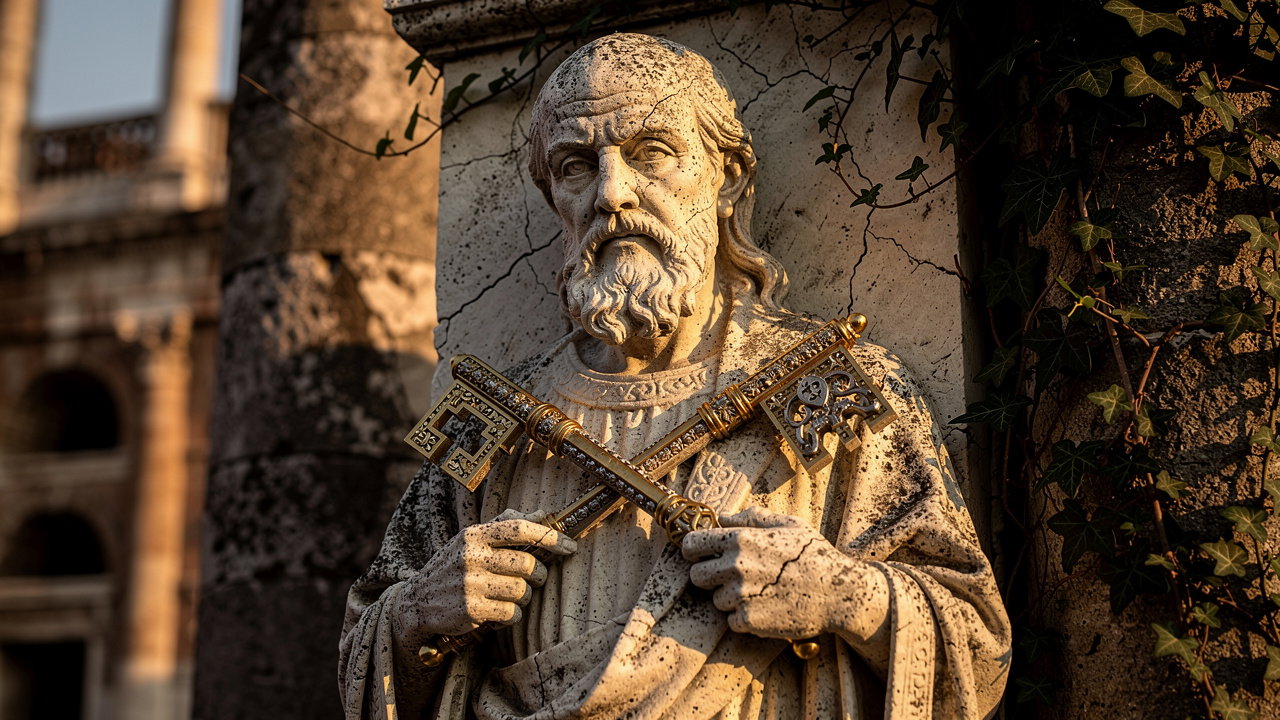
A key moment in this story is the Confession of Peter in Matthew 16. There Jesus changes Simon’s name to Peter, meaning “rock,” and promises that on this rock He will build His Church. He gives Peter the “keys of the kingdom of heaven,” language that echoes the royal steward in the Old Testament. The Catholic Church sees in this passage the origin of the papacy, a continuing office rather than a one‑time honor.
Because Peter died as bishop of Rome, his office continues in the Pope, who serves as Bishop of Rome and successor of Peter. The Pope has full, supreme, and universal authority in the Catholic Church, always as a servant of the Gospel and guardian of unity. He leads not as a distant ruler but as a father who confirms the brethren in faith. Vatican City, the small independent state where the Pope lives, expresses this spiritual role in visible political form.
Beneath the Pope stands the worldwide college of bishops, each entrusted with a particular local church called a diocese or eparchy. Under each bishop are priests, who shepherd parishes and administer most sacraments, and deacons, who assist in preaching, charity, and worship. These three ranks of Holy Orders form the basic structure of ordained ministry in the Catholic Church and carry forward the work begun by the apostles.
The Catholic Church is not limited to the Latin or Roman tradition. It is a communion of twenty‑four particular churches, including the Latin Church and twenty‑three Eastern Catholic Churches. These Eastern churches preserve ancient liturgies and spiritual traditions from regions such as the Middle East, India, and Eastern Europe, while staying in full communion with the Pope. The Roman Curia and the College of Cardinals assist the Pope in guiding this worldwide family, advising him, helping govern, and, when needed, gathering to elect a new successor of Peter.
Core Beliefs: Scripture, Tradition, And The Deposit Of Faith
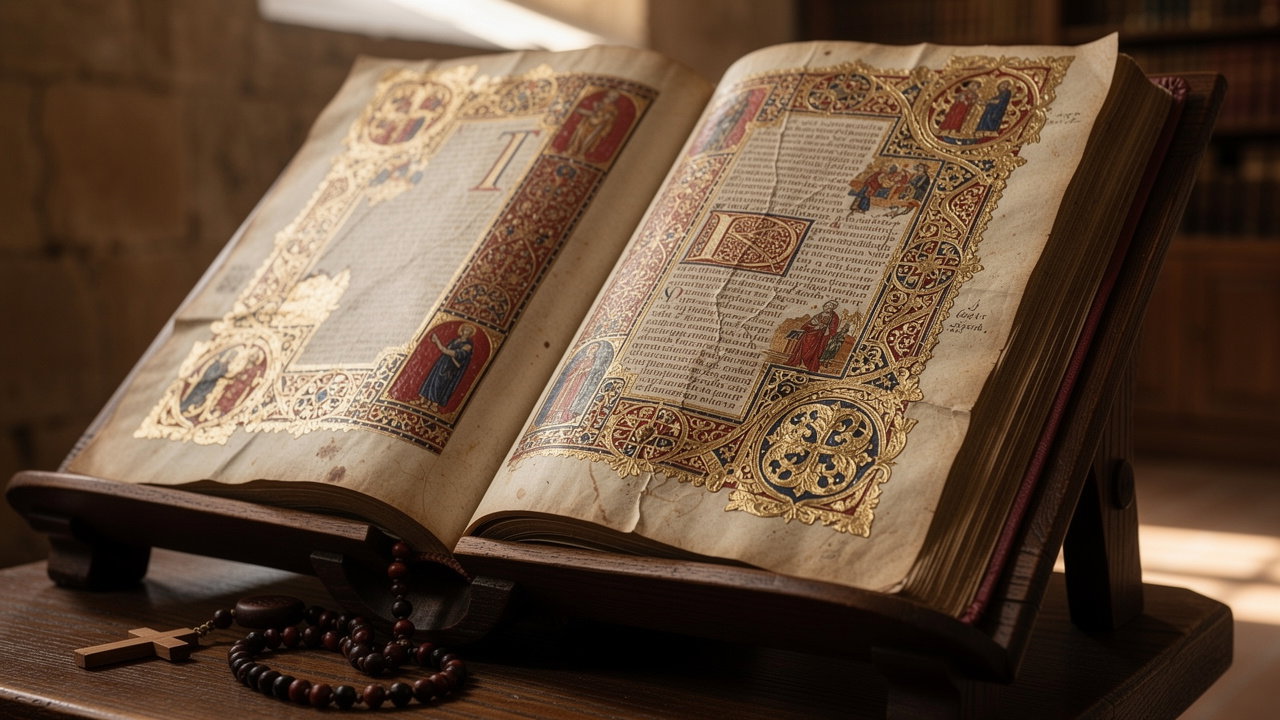
The Catholic Church believes that God speaks to humanity in a real and reliable way. This self‑communication is called divine revelation. According to Catholic teaching, revelation comes to us through two linked modes that cannot be separated without harm. The first is Sacred Scripture, the inspired books of the Old and New Testaments. The second is Sacred Tradition, the living transmission of teaching, worship, and life handed down from the apostles.
“Sacred Tradition and Sacred Scripture form one sacred deposit of the word of God.”— Dei Verbum 10
Together, Scripture and Tradition form one deposit of faith. The task of guarding and explaining this deposit belongs to the Magisterium, the teaching office of the Church exercised by the Pope and the bishops in communion with him. This does not mean new revelations are invented. Rather, it means that under the guidance of the Holy Spirit, the Church clarifies and applies what has already been given in Christ. The Catechism of the Catholic Church gathers this teaching in an ordered and accessible way, making it a key reference for study and catechesis.
The heart of Catholic belief is summed up in the Nicene Creed, prayed every Sunday at Mass. In this creed, the Catholic Church confesses one God in three Persons: Father, Son, and Holy Spirit. It proclaims that the Son became man in the womb of the Virgin Mary, suffered, died, and rose again for our salvation. This Paschal Mystery shows both the horror of sin and the depth of divine mercy, revealing that love is stronger than death.
The Church also confesses four marks that describe her deepest identity:
-
One – because there is one Lord, one faith, and one baptism.
-
Holy – because Christ is holy and shares His life with the faithful, even though members still struggle with sin.
-
Catholic – meaning universal, both in time and space, as the Catholic Church reaches every culture with the same Gospel.
-
Apostolic – rooted in the original witnesses chosen by Christ and continued through apostolic succession.
Catholic teaching on the afterlife flows from this same deposit of faith. Each person faces a particular judgment at death, entering Heaven, Purgatory, or Hell based on their free response to God’s grace. Heaven is perfect union with God, Purgatory is a temporary purification for those bound for Heaven, and Hell is self‑chosen separation from God. At the end of history there will be a final judgment and a new heaven and new earth. At Crux Sancta, we seek to explore these teachings with both academic care and pastoral sensitivity, helping readers see how they connect with the concrete choices of daily life.
The Seven Sacraments: Channels Of Divine Grace
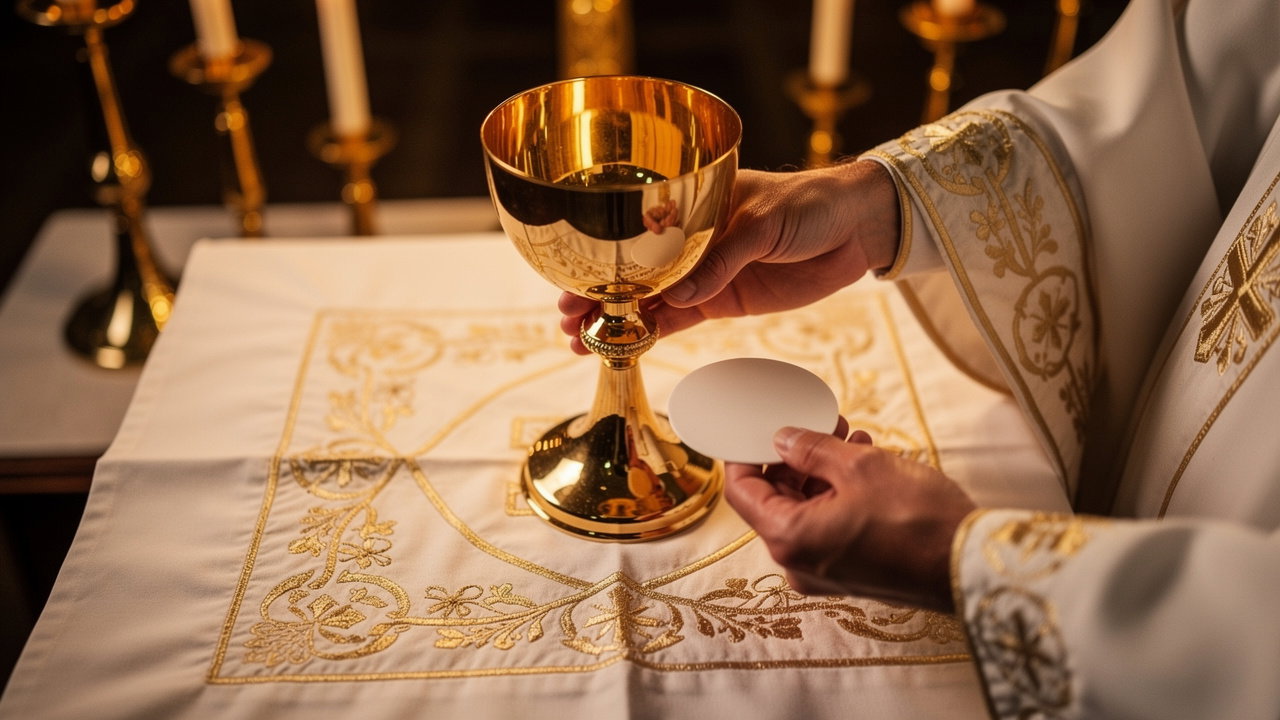
The Catholic Church does not see faith as merely an inner idea. God meets His people through concrete signs that enter the senses and shape the heart. The Church teaches that Christ Himself instituted seven sacraments as outward signs that actually communicate the grace they signify. When received with faith, these encounters draw believers into deeper union with Christ and with one another.
These seven sacraments span the whole rhythm of life, from birth to death, from personal conversion to service in the community. They are grouped into sacraments of initiation, of healing, and of service. Together they show that God cares for the whole person, body and soul, and that the Catholic Church is meant to touch every stage of human existence.
-
The sacraments of Christian initiation are Baptism, Confirmation, and the Eucharist. Through Baptism, a person is cleansed of original sin, reborn as a child of God, and joined to the Catholic Church, never to be baptized again. Confirmation deepens this grace, sealing the believer with the Holy Spirit for mature witness. The Eucharist stands at the center as the source and summit of Christian life, where bread and wine truly become the Body and Blood of Christ through transubstantiation.
-
The sacraments of healing are Penance and Anointing of the Sick. In Penance, also called Reconciliation or Confession, the penitent admits sins to a priest, expresses sincere sorrow, and accepts a penance, receiving sacramental absolution and restored friendship with God. Anointing of the Sick is given to those who are seriously ill or near death, bringing spiritual strength, peace, and, when God wills, bodily healing. Together these sacraments show that the mercy of Christ reaches both spiritual wounds and physical weakness.
-
The sacraments at the service of communion are Holy Orders and Matrimony. Holy Orders configures a man to Christ the Servant, ordaining him as deacon, priest, or bishop for public ministry in the Catholic Church. Matrimony joins a baptized man and woman in a lifelong covenant ordered to mutual good and the gift of children, reflecting the faithful love of Christ and His Church. Both sacraments are not only for the persons who receive them but also for the upbuilding of the whole community.
“The Eucharist is ‘the source and summit of the Christian life.’”— Catechism of the Catholic Church, 1324
For RCIA candidates, theology students, and long‑time Catholics alike, recognizing the sacraments as living encounters with Christ can change how Sunday Mass, confession lines, and even hospital visits are seen. At Crux Sancta, we strive to unpack the biblical roots and spiritual depth of each sacrament so that study leads naturally into worship.
The Church's Mission: Social Teaching, Mary, And The Saints
The Catholic Church does not exist only to guard correct ideas. She is sent into the world to bear witness to Christ in both word and deed. This mission touches every field of human life, from family and work to politics and art. Social teaching, Marian devotion, and the communion of saints show three key ways this mission takes shape, calling believers to charity, contemplation, and holy courage.
Catholic social teaching begins with a simple conviction that every human person is made in the image of God. From this dignity flow several principles, including:
-
The common good, which looks to the conditions that allow people and communities to flourish.
-
Solidarity, a real commitment to stand with others, especially the vulnerable.
-
A clear preference for the poor, who deserve special concern in personal choices and public policy.
Over centuries, the Catholic Church has built schools, universities, hospitals, and clinics across the globe, making her one of the largest non‑governmental providers of education and health care. Her moral voice defends human life from conception to natural death, opposes abortion and euthanasia, upholds marriage between one man and one woman, rejects artificial contraception, and calls for respect and chastity for every person. Recent popes, including Pope Francis in Laudato si’, have also stressed care for creation as a serious moral duty.
“Charity is at the heart of the Church’s social doctrine.”— Pope Benedict XVI, Caritas In Veritate, 2
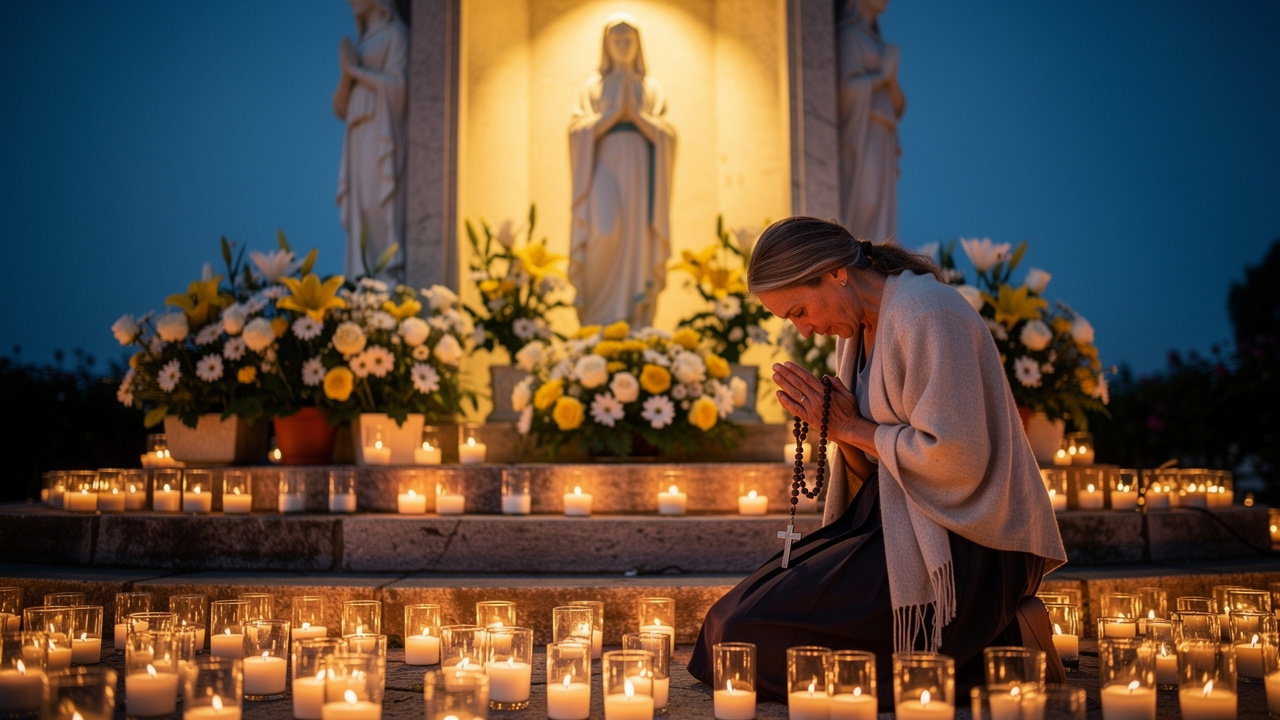
Mary, the Mother of Jesus, shows the personal face of the Church’s faith. The Catholic Church honors her with four defined dogmas, seeing her as Mother of God, perpetually virgin, conceived without original sin, and assumed body and soul into Heaven. These teachings are not mere abstract claims but invitations to ponder how God’s grace can work in a human life. Popular devotions such as the Rosary, the Hail Mary, and pilgrimages to shrines like Lourdes and Fátima lead believers to Christ through the heart of His mother. When we pray with Mary, we learn to say “yes” to God with the same trust she showed at Nazareth.
The communion of saints extends this pattern of holiness across centuries and cultures, gathering martyrs, mystics, scholars, and ordinary believers who loved God in heroic ways. The Catholic Church recognizes some of these as canonized saints, proposing them as models and intercessors. Veneration of saints is an act of honor, not worship, since adoration belongs to God alone. Yet asking for their prayers and reading their lives can powerfully strengthen faith. For catechists, apologists, and parents, the saints provide concrete stories that make doctrine tangible and show how grace can shape real choices.
At Crux Sancta, we see this mission field as the natural home of the doctrines we study. Theology that never touches the poor, never deepens Marian devotion, and never learns from the saints remains thin. Our work aims to form readers who can think with the Church and also live as credible witnesses in classrooms, workplaces, and parishes across the Catholic Church.
Conclusion
We have traced a broad arc, from the apostolic origins of the Catholic Church to her global mission in service of the Gospel. Christ founded His Church, entrusted it to Peter and the apostles, and continues to guide it through Scripture, Tradition, and the Magisterium. Within this Church, the seven sacraments mark key moments of grace, while social teaching, Marian devotion, and the communion of saints show what redeemed life looks like in practice.
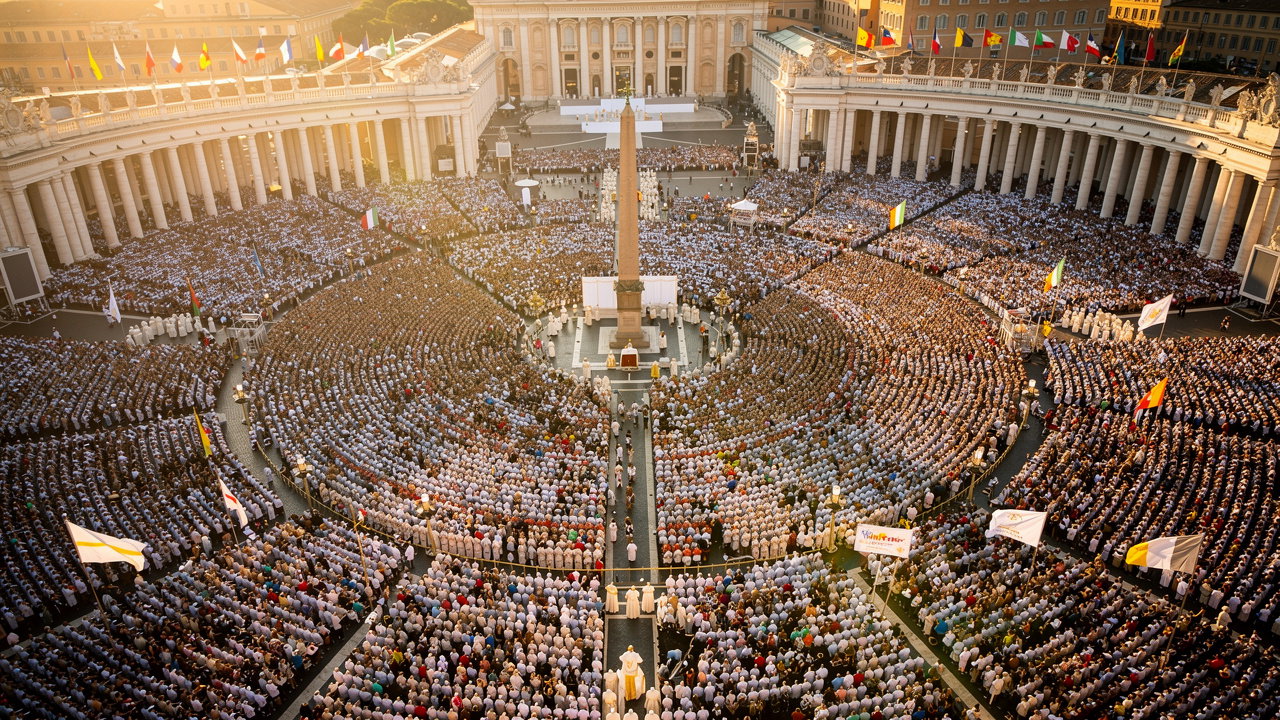
The Catholic Church is far more than a historical institution or a set of abstract claims — though as reporting on the Pew: US Christianity downturn notes, the Church faces real challenges in retaining and re-engaging the faithful in the modern era. It is the living Body of Christ, fed by His Word and His Eucharist, healed by His mercy, and sent to bring His love to a wounded world. Whether someone is preparing to enter the Church, deepening long‑held faith, or testing Catholic claims for the first time, there is always more to discover.
At Crux Sancta, we invite readers to keep going further. Study the Catechism, pray with Scripture, learn the stories of the saints, and explore our articles and resources that seek to hold faith and reason together. In doing so, we walk more steadily with the Lord who founded the Catholic Church and still calls each person to holiness and truth.
FAQs
What Makes The Catholic Church Different From Other Christian Denominations?The Catholic Church claims continuity with the apostles through an unbroken line of bishops and the special role of the Pope as successor of Peter. It recognizes seven sacraments as real channels of grace, not only symbols. Alongside Scripture, it upholds Sacred Tradition and the Magisterium as the proper interpreter of God’s revelation, confessing itself as the one, holy, catholic, and apostolic Church in the Nicene Creed.
What Is The Role Of The Pope In The Catholic Church?The Pope is the Bishop of Rome and the visible head of the Catholic Church on earth. As successor of Saint Peter, he has full, supreme, and universal authority in matters of faith, morals, and discipline. He teaches together with the bishops and, in very limited cases, may speak infallibly when defining doctrine for the whole Church.
Do Catholics Worship Mary And The Saints?Catholics do not worship Mary or the saints, since worship belongs to God alone. Instead, they venerate them, which means offering honor and love to those who are already perfected in Heaven. Believers ask for their prayers just as one might ask a holy friend on earth to pray, trusting that this communion reflects the unity of the Body of Christ.
What Is The Eucharist And Why Is It Central To Catholic Worship?In the Eucharist, the Catholic Church believes that the bread and wine at Mass truly become the Body and Blood of Christ, even though the appearances remain. This change, called transubstantiation, makes present the one sacrifice of the Cross in a sacramental way. Receiving Holy Communion unites believers with Christ and with one another, which is why the Church calls the Eucharist the source and summit of the Christian life.