
Introduction
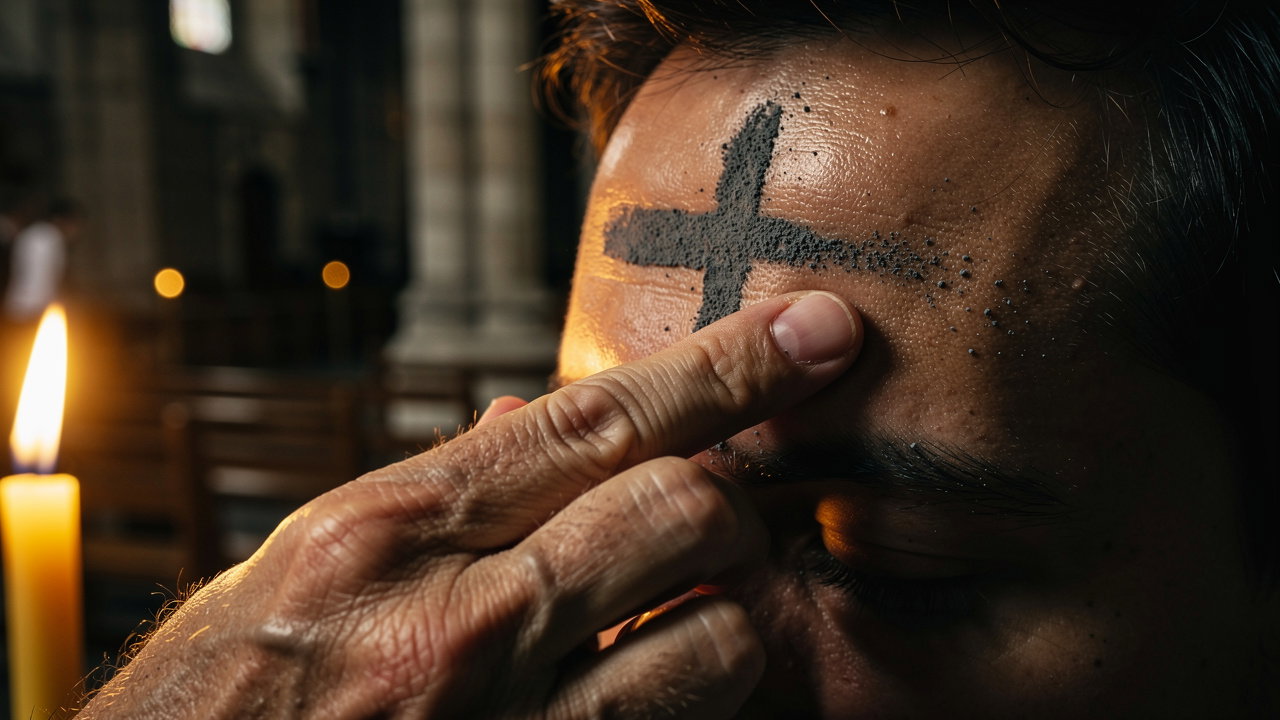
The cool trace of ashes on the forehead is hard to forget. On Ash Wednesday, we feel a thumb draw the sign of the cross, we hear quiet words about dust and repentance, and we step back into the pew marked in a very public way. That small, dark cross is a visible sign of invisible grace, and it announces that we belong to Christ and need his mercy.
Ash Wednesday stands at the doorway of Lent like a threshold between ordinary habits and a more focused season of conversion. On this day the Church asks us to face two hard truths at once: we are sinners, and we are mortal—truths that many find difficult to confront, as research shows that creative ritual practices of Lent help believers engage more deeply with these realities. Yet at the same time we are loved, called, and destined for resurrection. The ashes on our skin hold both realities together.
From Ash Wednesday onward, the Church invites us into the three great practices of Lent: prayer, fasting, and almsgiving. Some have walked through many Lents and want a deeper, more theological grasp of what this day means. Others are RCIA candidates, new Catholics, students, or seekers experiencing their first Ash Wednesday and wondering what the Church is really doing.
In this guide we walk through Scripture, history, liturgy, and spiritual practice so that Ash Wednesday becomes more than a yearly custom. At Crux Sancta, we care about the meeting of faith and reason, so we will look at both the biblical roots and the lived spirituality of this day. By the end, we hope we will stand before God on Ash Wednesday with clearer minds, humbler hearts, and a stronger desire for holiness.
Key Takeaways
-
Ash Wednesday begins the Lenten fast that mirrors Christ in the desert. The forty days of penance, counted without Sundays, prepare us for Easter and place the whole season under the sign of conversion and hope.
-
The ashes on our heads speak of mortality, sorrow for sin, and the need to turn back to God. They also form the cross, which points to mercy and resurrection. This simple sign holds together both death and new life.
-
Catholics keep Ash Wednesday as a day of fasting and abstinence as an act of penance. These bodily practices teach the heart to desire God more than comfort and unite us with Christ who suffered for our sake.
-
The use of ashes runs through Scripture as a sign of mourning and repentance. Ash Wednesday gathers these biblical images into one day of focused prayer. The three pillars of Lent—prayer, fasting, and almsgiving—begin in earnest here.
-
Ash Wednesday is kept across many Western Christian traditions. This wide observance shows a shared call to repentance and renewal and allows Christians to give a common witness to faith in Christ.
What Is Ash Wednesday? Understanding Lent's Solemn Beginning
When we speak of Ash Wednesday, we are talking about the first day of Lent in the Western Church. It is a day of prayer, fasting, and repentance that sets the tone for the entire season. Ash Wednesday always falls forty‑six days before Easter, giving us forty fasting days once we set aside the six Sundays that are never days of fast.
Because Easter follows the first Sunday after the first full moon on or after March 21, the date of Ash Wednesday moves each year. It can fall as early as February 4 and as late as March 11. This link to Easter makes it clear that Ash Wednesday is not an isolated observance but the opening of the Paschal season.
Ash Wednesday is not a holy day of obligation, yet in many parishes the church is as full as on a Sunday. We freely come forward for ashes because something in us recognizes the truth they express. We know that we are fragile, that we have sinned, and that we need grace.
Theologically, Ash Wednesday is a day when the Church brings the deepest realities to the surface. We remember sin, judgment, and death, but we do so in the light of Christ’s cross and resurrection. In classic language, we recall the four last things—death, judgment, heaven, and hell—and we ask for the grace to live wisely in view of them.
This day also marks a turning from excess to restraint. It follows closely after Shrove Tuesday or Mardi Gras, a final evening of feasting before the fast. Where that night can slide into self‑indulgence, Ash Wednesday stands as a clear contrast, calling us back to sobriety of mind and heart.
At the same time, Ash Wednesday is both communal and personal. We stand together in church with ashes on our foreheads, a whole people turning toward God. Yet each conscience is examined one by one, and each soul hears the call to deeper conversion. Across Catholic, Anglican, Lutheran, Methodist, and many Reformed communities, Ash Wednesday draws Christians into a shared beginning of Lent.
The Biblical Foundations of Ashes – Dust, Repentance, and Divine Mercy

The words many of us hear on Ash Wednesday come from the early chapters of Genesis. After the fall, God tells Adam, “You are dust, and to dust you shall return” (Genesis 3:19). In that single line we learn that our bodies are formed from the earth, that sin has brought death, and that our lives are moving toward a final meeting with God.
Throughout the Old Testament, ashes appear as a stark sign of grief and repentance:
-
When the people of Nineveh hear Jonah’s warning, they respond with fasting and sackcloth, and the king sits in ashes as a sign of their sorrow (Jonah 3:5–6).
-
Job, after struggling with suffering and with God’s justice, ends by saying, “I repent in dust and ashes” (Job 42:6), placing himself in humble trust before the Lord.
-
Jeremiah urges the people to roll in ashes as they mourn their sins (Jeremiah 6:26).
-
Daniel prays with fasting, sackcloth, and ashes as he confesses the nation’s guilt and begs for mercy (Daniel 9:3).
In each case, ashes on the body express the truth of a contrite heart.
This pairing of sackcloth and ashes is important. The rough cloth and black dust are outward signs that match an interior state. They say in visible form, “I cannot save myself; I depend on God.” The body speaks the same language as the soul.
Jesus himself refers to this tradition when he says that if the miracles done in certain towns had been done in Tyre and Sidon, they would have repented long ago in sackcloth and ashes (Matthew 11:21; Luke 10:13). Far from dismissing the practice, he points to it as a fitting response to God’s call.
On Ash Wednesday we also pray Psalm 51, the Miserere, which begins, “Have mercy on me, O God, according to your steadfast love.” This psalm gives words to a heart that knows both its guilt and God’s kindness. It moves from confession to cleansing, from brokenness to renewed praise.
"Yet even now," declares the LORD,"return to me with all your heart,with fasting, with weeping, and with mourning."— Joel 2:12
Taken together, these biblical images show what ashes mean for us. They speak of humility before God, the shortness of earthly life, and the hope that God can purify and restore us. The New Testament word for this turning of the heart is metanoia, a deep change of mind and life. When we receive ashes on Ash Wednesday, we are stepping into this long story of repentance that runs through Scripture, asking that our outward sign reflect a real inner change.
From Ancient Practice to Liturgical Tradition – The Historical Development of Ash Wednesday
The way we keep Ash Wednesday today grew from very concrete practices in the early Church. In the first centuries, Christians who had committed grave public sins were enrolled in a formal order of penitents. On the first day of Lent, they would stand apart, be marked with ashes, and begin a period of strict penance before being reconciled to the community.
Writers such as Tertullian spoke of confessing sins while wearing sackcloth and lying in ashes. Church historians tell stories of those who, after denying the faith under persecution, begged to return to the Church while covered in ashes. For them, this was not a yearly custom but a hard and humbling step back toward communion.
Between the eighth and tenth centuries, public penance in this strict form began to fade. The Church, however, did not let the sign of ashes disappear. Instead, the mark that had set apart a few public sinners was extended to the entire community. All the faithful would receive ashes as they entered the Lenten season.
In 1091, at the Council of Benevento, Pope Urban II ordered the use of ashes on this day for the Church in Rome. From there the practice spread and became a fixed part of the Western liturgical year. The day came to be called Feria Quarta Cinerum, the Wednesday of ashes, which we now simply call Ash Wednesday.
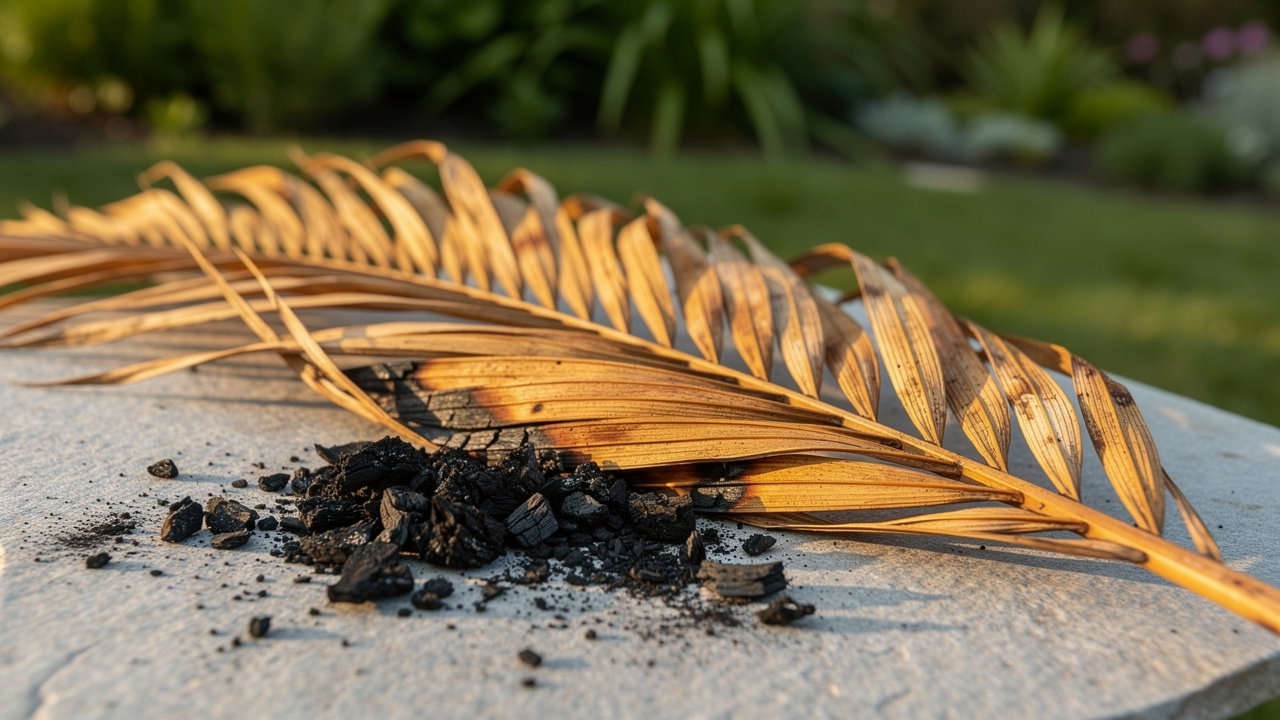
A beautiful link in this history is the use of palms from the previous year’s Palm Sunday. These blessed branches, once waved in honor of Christ’s entry into Jerusalem, are burned and ground to make the ashes. The Church thus binds together Christ’s royal entry, his passion, and our repentance within the rhythm of the year.
In the Anglican world, the English Reformation removed the blessing of ashes from the first Book of Common Prayer. In its place came the Commination Office, a severe reading of warnings against sin meant to stir repentance without visible ashes. Over time, many Anglicans came to see the older practice as a help rather than a hindrance, and in the twentieth century the rite of ashes returned widely in Anglican and Episcopal churches.
Across other Western traditions, similar renewals took place. Lutherans, Methodists, and some Reformed communities either kept or recovered Ash Wednesday, often as part of a broader return to ancient practices that serve the Gospel. This history shows the Church’s life as something living, carrying forward a simple sign that still speaks with power.
The Sacred Rite for the Imposition of Ashes
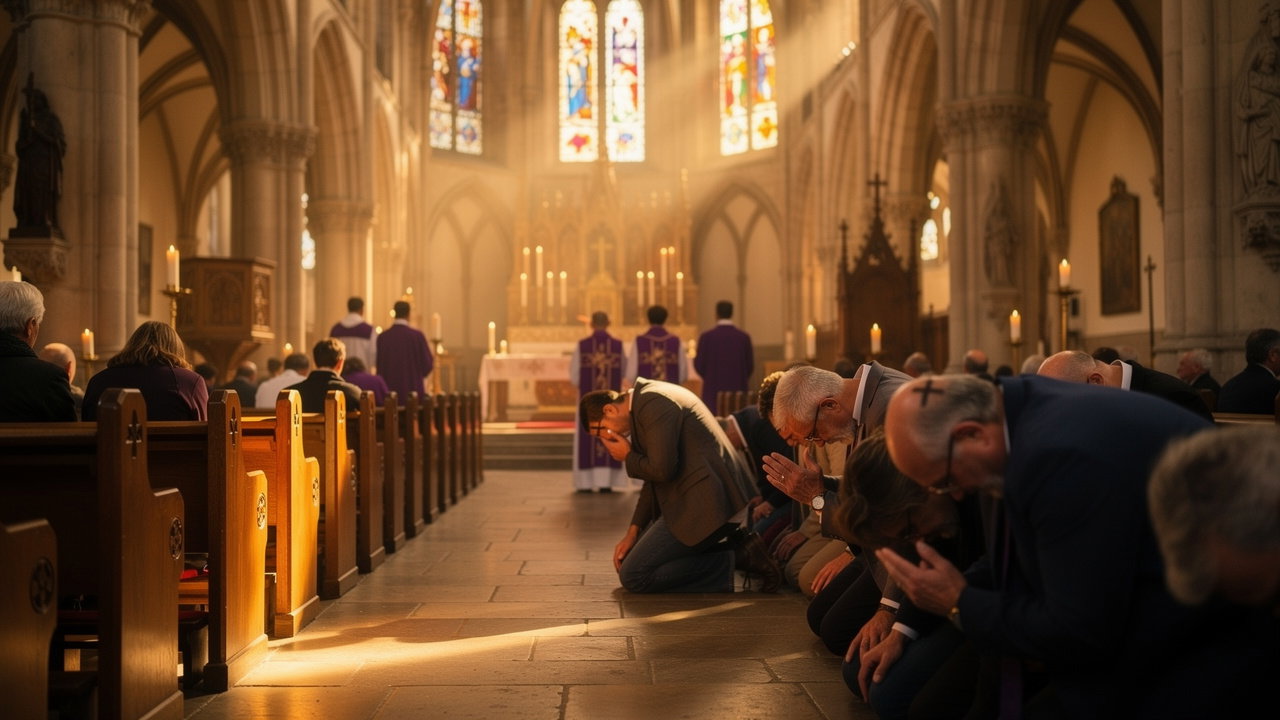
On Ash Wednesday the central act many of us remember is the moment we receive ashes. This act is not a sacrament like Baptism or the Eucharist, but a sacramental. Sacramentals are holy signs established by the Church that dispose us to receive grace and to cooperate more freely with God.
At the beginning of the liturgy, the priest blesses the prepared ashes, often mixed with a small amount of holy water. This blessing asks that the ashes stir up true repentance and that all who are marked by them grow in holiness during Lent.
As the faithful come forward, the minister traces a cross on each forehead or sprinkles ashes on the head, marking believers with the words 'Remember you are dust': Why people fill the pew on Ash Wednesday reflects both the power of this ancient ritual and the human need for tangible signs of repentance. While doing so, he speaks one of two formulas:
-
“Repent, and believe in the Gospel,” drawn from the opening of Jesus’ preaching in Mark 1.
-
“Remember that you are dust, and to dust you shall return,” taken from God’s words to Adam in Genesis 3:19.
Each formula stresses a different aspect of the same truth. The call to repent and believe highlights conversion, faith, and personal response to Christ. The reminder of dust places our sin and our entire life within the horizon of death and judgment, so that we will cling more firmly to God’s mercy.
There are also two main ways of applying the ashes. In the United States and many English‑speaking countries, a cross is drawn clearly on the forehead, visible to others throughout the day. In parts of Europe and Latin America, ashes are sprinkled on the crown of the head, an older practice still seen often at the Vatican.
One striking feature of Ash Wednesday is that anyone may receive ashes. Because this is a sacramental, there is no requirement of baptism or formal membership in the Catholic Church. We often see non‑Catholics, inactive Catholics, and spiritual seekers step forward in response to God’s quiet invitation.
Many people wonder whether they should keep the ashes on for the entire day. Jesus warns against showy displays of piety, especially in fasting and prayer, and those words must guide us. At the same time, a simple, quiet wearing of ashes can be a gentle witness and a reminder to oneself to stay turned toward God.
In the end, the value of the rite is not in how long the mark remains, but in whether the heart turns. The cross of ashes is meant to be a memento mori that keeps death and eternity before our eyes, and an opening for conversations that point others to the hope we have in Christ.
Fasting and Abstinence in the Penitential Disciplines of Ash Wednesday

Ash Wednesday, together with Good Friday, is one of the two days when the Catholic Church binds us to both fasting and abstinence. These practices are not punishments but loving discipline, training both body and soul to seek God above all else. They give Ash Wednesday a concrete shape that we can feel.
Before looking at the deeper meaning, we need clear norms. The Church’s law sets out who must abstain from meat and who must fast, always allowing room for serious health needs and other just reasons.
-
Abstinence from meat binds Catholics who are fourteen years old and older. On Ash Wednesday we set aside the flesh of mammals and birds as a small act of self‑denial. This form of abstinence also applies to all Fridays of Lent, linking each Friday more closely to the memory of Christ’s passion.
-
Fasting binds Catholics from their eighteenth birthday until the start of their sixtieth year. On Ash Wednesday, this means one full meal and two smaller meals that together are not equal to another full meal. Snacks that would count as a fourth eating period are set aside, though water and necessary medicine are always allowed.
These are minimums, not goals to exceed in a competitive way. Some choose stricter practices, such as a bread‑and‑water fast or eating only after sunset, following the older Black Fast custom. What matters is that any extra penance be guided by prudence, respect for one’s state in life, and, when helpful, spiritual direction.
The roots of fasting run deep in Scripture. Moses fasted on the mountain, Elijah fasted on his way to meet God, and Jesus fasted forty days in the desert before beginning his public ministry. The early Church fasted before important decisions and in times of crisis, trusting that God works powerfully when his people humble themselves.
“And when you fast, do not look gloomy like the hypocrites, for they disfigure their faces that their fasting may be seen by others.”— Matthew 6:16
Spiritually, fasting teaches detachment from comforts that dull our hunger for God. It can foster solidarity with the poor and with Christ who went hungry for love of us. When joined to prayer and almsgiving, fasting becomes part of a threefold pattern that shapes the whole of Lent.
At the same time, the Church is a wise mother and does not ask the impossible. Those who are ill, pregnant, nursing, or burdened by very hard labor are not bound to the full fast. In such cases, we still keep the spirit of Ash Wednesday by offering other sacrifices and by turning to God with sincere hearts.
When we feel the ache of an empty stomach on Ash Wednesday, that discomfort can become a quiet prayer. It reminds us that we do not live by bread alone and that our deepest hunger is for the living God.
Beyond Ash Wednesday and the Lenten Season
Ash Wednesday is not meant to stand alone. It is the first step on a forty‑day path that reflects Christ’s time of testing in the desert. The ashes and fast of that day point forward to a season of steady, patient conversion.
During Lent, the Church encourages us to deepen daily prayer. Many turn to Scripture reading, especially the Gospels, or to meditating on the Passion of Christ. Others add an examination of conscience at night, the Stations of the Cross on Fridays, or simple Lenten devotions with family or friends.
Some helpful Lenten practices include:
-
“Giving something up”—such as a type of food, a form of entertainment, or a habit that clutters the heart.
-
“Taking something on”—for example, regular works of mercy, extra time in adoration, or intentional acts of kindness.
-
Setting a concrete and realistic plan so that our penances lead to steady faithfulness rather than discouragement.
We also remember that the forty days of fast do not include Sundays. Each Sunday remains a small Easter, even in Lent, a weekly taste of the Resurrection. This rhythm keeps our penance tied to joy and reminds us that sorrow for sin leads toward hope.
Liturgically, the Church signals this season in many ways. Violet vestments are worn, the Gloria and Alleluia are omitted, and church spaces often look more bare. These choices gather the senses into the same movement of penance and expectation that began on Ash Wednesday.
At Crux Sancta, we see Lent as a time when faith and reason can work together in a special way. Study of Scripture, theology, and the Church’s tradition can guide the practices we choose, so that Lent becomes less about self‑improvement and more about real conversion of heart.
“You have made us for yourself, O Lord, and our heart is restless until it rests in you.”— St. Augustine, Confessions I,1
The ashes of Ash Wednesday are the first reminder that our goal is nothing less than holiness.
Common Questions and Misconceptions About Ash Wednesday
Many questions arise each year as Ash Wednesday approaches. One common concern is whether non‑Catholics or those not yet baptized may receive ashes. Because ashes are a sacramental, the Church welcomes anyone who wishes to step forward in good faith, trusting that God can use this sign to stir conversion.
Another frequent question is whether Ash Wednesday is a holy day of obligation. It is not, yet the Church strongly encourages attendance at Mass or at a liturgy with the imposition of ashes. The large crowds we often see show how many hearts sense the importance of beginning Lent together.
People also worry about breaking the fast or eating meat by accident. Forgetfulness or minor slips are not grounds for despair. If someone treats the law lightly on purpose, that calls for serious reflection and, when needed, confession. In every case, the point is to grow in love rather than to feed scruples.
Some wonder whether they must receive ashes to keep Ash Wednesday well. The answer is no, since the ashes are a help, not a strict requirement. However, most of us find that this simple rite focuses the mind and heart in a way that supports prayer and penance.
There are also practical matters. Blessed ashes that remain should be kept in a worthy place or returned to the ground, not thrown away carelessly. Receiving ashes more than once on the same Ash Wednesday does not add spiritual benefit, so one reception is sufficient.
Finally, we often hear about the tension between Jesus’ warning against showy religion and the very public mark of ashes. The key is the motive of the heart. If we wear ashes without drawing attention to ourselves and let them remind us to repent and believe, then the outward sign and the inward grace move in the same direction.
Ash Wednesday Across Christian Traditions in an Ecumenical Perspective
While Ash Wednesday is closely linked with Catholic life, many Christians outside the Catholic Church now observe it as well. The Catholic practice provides a kind of anchor, showing how the day opens Lent and calls the faithful to repentance and hope.
Anglican and Episcopal churches offer a good example of recovery. After the English Reformation, the old ceremony of ashes gave way to the Commination Office, a spoken service of warnings and prayers. In recent generations, however, many Anglican communities have restored the imposition of ashes alongside those texts, finding that the ancient sign supports the call to conversion.
Lutheran churches, especially those with a strong liturgical life, have long kept Ash Wednesday with readings, preaching, and the giving of ashes. Martin Luther did not reject Lent as such but urged that it be kept in a way that points to Christ rather than to human pride.
Methodist communities, influenced by John Wesley’s teaching on fasting and holy living, have also seen a renewed use of Ash Wednesday. Services that include ashes, Scripture, and calls to social holiness now mark the start of Lent in many Methodist congregations.
Some Reformed churches, which once avoided the liturgical year beyond Sunday worship, have begun to mark Ash Wednesday as well. They often stress preaching on sin and grace, paired with times of fasting and prayer, and in many places they also give ashes as a voluntary sign.
The Eastern Orthodox churches do not observe Ash Wednesday. Their Great Lent begins on Clean Monday, two days earlier, with a strict fast and rich liturgical prayers of repentance. Even so, the aim is very similar to that of Western Lent: turning from sin and opening the heart to God.
In the last two decades, a movement known as “Ashes to Go” has brought ministers from several traditions into streets and public squares to offer ashes. This shared witness on Ash Wednesday shows both the unity and the real variety of Christian practice. Beneath these differences lies a common desire for renewal through repentance, fasting, and deeper faith.
Conclusion
Ash Wednesday stands as a clear call from God in the middle of ordinary life. With one simple cross of ashes, we remember that we are dust, admit that we have sinned, and throw ourselves again on the mercy of Christ. The day gathers together themes of death, judgment, and grace, not to crush us, but to wake us up.
The ashes we receive are not the goal but the starting line. From Ash Wednesday we move into the full season of Lent, with its prayer, fasting, and almsgiving. If we let these practices shape our days, our repentance will show itself in changed habits, renewed charity, and deeper love for God and neighbor.
Lent ends not in gloom but in the bright hope of Easter. The path of penance leads to the empty tomb and the promise of resurrection. At Crux Sancta, we invite all who keep Ash Wednesday to continue seeking a deeper understanding of the faith through study and prayer. May God grant us a holy Lent, and may the ashes on our foreheads mark hearts that are turning ever more fully to him.
FAQs
Question 1 – When Is Ash Wednesday and How Is the Date Determined?
Ash Wednesday is what we call a moveable feast because its date shifts each year. It always falls forty‑six days before Easter Sunday. Easter itself is set as the first Sunday after the first full moon that falls on or after March 21. This method, rooted in ancient practice, ties Easter to both the solar and lunar cycles. When we count forty fasting days plus six Sundays, we arrive at the forty‑six days that begin with Ash Wednesday.
Question 2 – What Are the Rules for Fasting and Abstinence on Ash Wednesday?
On Ash Wednesday, Catholics who are fourteen or older abstain from eating the flesh of mammals and birds. Those from their eighteenth birthday until the start of their sixtieth year are also bound to fast. Fasting means one full meal and two smaller meals that together do not equal another full meal, with no extra snacks between. People who are ill, pregnant, nursing, very elderly, or whose work would be harmed by strict fasting are excused. These rules set a minimum; some may freely choose a stricter practice, but the aim is loving discipline, not needless suffering.
Question 3 – Can Non‑Catholics or Non‑Christians Receive Ashes on Ash Wednesday?
Yes, anyone may receive ashes on Ash Wednesday. Because this rite is a sacramental rather than a sacrament, it is not limited to those who are baptized or formally in full communion with the Catholic Church. The Church offers ashes as a sign meant to stir the conscience and open hearts to God’s mercy. This openness reflects the universal call to repentance that runs through Scripture. For many seekers, stepping forward for ashes can be an early step on a deeper spiritual path.
Question 4 – Why Do We Use Ashes From Last Year’s Palm Sunday Palms?
The Church uses palms from the previous Palm Sunday to create a strong sense of continuity within the liturgical year. Those branches once greeted Christ as king when he entered Jerusalem. When they are burned and turned into ashes, they become signs of repentance that point toward his passion and our need for forgiveness. Many parishes invite the faithful to bring in old palms so they can be burned together. In this way, what once signaled joy and honor now also reminds us of the cross and calls us to humble faith.
Question 5 – Should I Wash Off the Ashes or Keep Them on My Forehead All Day?
The Church does not require us to keep ashes on for any set length of time. Some people wash them off soon after Mass for work or personal reasons, while others leave them until evening. Jesus warns us not to practice piety in order to be seen by others, so we must watch our motives. At the same time, quietly wearing ashes can be a sincere witness and a useful reminder to stay turned toward God. In many places, the mark opens gentle conversations about faith and Lent. We should decide in prayer, with humility, asking whether keeping or removing the ashes will help us live this Ash Wednesday with real repentance and charity.