Introduction
When we ask what is the catechism of the catholic church, we are really asking how the Church gathers two thousand years of faith into one clear voice. The Catechism of the Catholic Church (CCC) is not simply a big green book on a shelf. It is a careful echo of Scripture and Tradition, ordered so that the teachings of the Church can be heard, remembered, and lived.
Many people come to the Catechism at turning points in life. Some are lifelong Catholics who sense there is more depth beneath familiar prayers and devotions. Others are RCIA candidates, theology students, or thoughtful Christians from other traditions who want to know what the Catholic Church actually teaches, not just what they have heard about it. Some are simply seekers drawn to the wisdom of the Church.
The Catechism matters because it is more than an academic manual. It is a reference that points to a Person. Paragraph by paragraph, it shows how the Church reads Scripture, how she prays, how she worships, and how she understands the moral life as a response to Christ. To sit with the Catechism is to sit with the Church as teacher, listening to how faith and reason fit together.
In this guide we walk through where the Catechism came from, how it is structured, what kind of authority it carries, and how it can shape real spiritual life. We also look at helpful companion texts and explain how we at Crux Sancta work to make this rich book clear and approachable. By the end, the Catechism should feel less like a dense reference and more like a trusted companion on the path of faith.
Key Takeaways
Before we move into the details, it helps to see the big picture of what the Catechism of the Catholic Church is and how it serves the Church. These points give a quick frame so the later sections make more sense and feel less overwhelming.
-
The Catechism of the Catholic Church is the official summary of Catholic teaching on faith and morals. It was promulgated by Pope John Paul II in 1992 and presents doctrine in an ordered and reliable way. It gathers what the Church believes so readers do not have to piece things together from scattered sources.
-
The text is built around four main parts that reflect the heart of Christian life: the Creed, the Sacraments, the Commandments, and Prayer. Together they show what the Church believes, celebrates, lives, and prays, so the faith can be seen as one connected whole.
-
The Catechism serves bishops, priests, catechists, and teachers as a reference for their work. At the same time, it is a rich resource for any adult who wants deeper understanding. It draws on Scripture, Tradition, and the Magisterium and continues to be updated carefully as the Church grows in her understanding.
Understanding What A Catechism Is
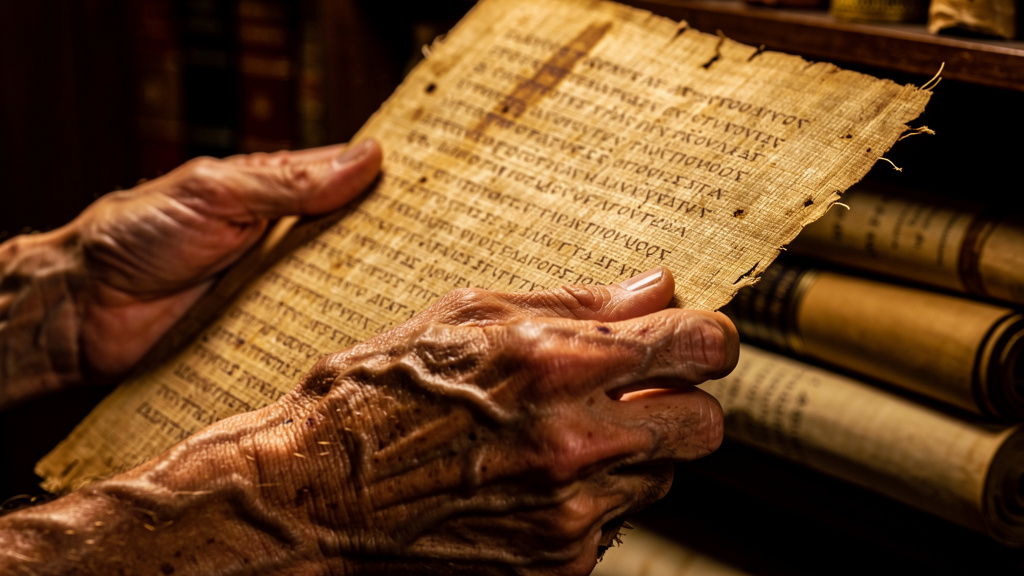
Before we look at this specific book, we need to ask what a catechism is at all. The word comes from the Greek katechein, which means “to echo.” In the early Church, new believers learned the faith by hearing questions and answers and repeating them aloud. A catechism is meant to echo the faith in a clear and memorable way, so that what the apostles handed on can still be heard.
Over time, the Church produced different kinds of catechisms:
-
A “major” catechism serves as a broad reference point for the whole Church. It gathers doctrine in a full and orderly way.
-
From that large reference, “minor” catechisms are shaped for local needs, such as children, new converts, or specific cultures. These smaller works draw from the major catechism but express the same faith in simpler or more concrete language.
History offers good examples of both. After the Council of Trent, the Roman Catechism of 1566 helped priests preach and teach with a shared understanding of core doctrines. In the United States, the Baltimore Catechism of 1884 presented the faith in a simple question‑and‑answer format that formed generations of Catholic children. All these catechisms share one purpose: they organize the essential truths of the faith in a way that is ordered, faithful, and easier to study.
After the Second Vatican Council, the bishops of the world saw that the Church again needed a major catechism to serve as a common reference. This led to the Catechism of the Catholic Church we use today.
The Historical Development Of The Catechism Of The Catholic Church
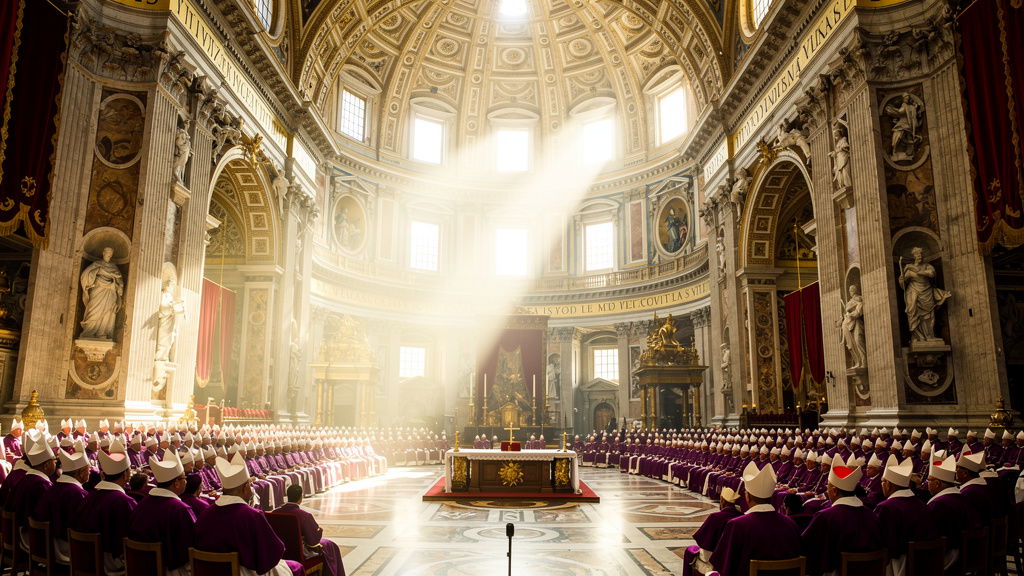
The modern Catechism grows out of the life of the Church in the twentieth century. The Second Vatican Council, held from 1962 to 1965, called Catholics to deeper renewal in worship, teaching, and mission. As bishops worked to put the council into practice, they realized that catechesis also needed renewed clarity. Different regions were producing new teaching materials, but there was a risk of confusion if they were not drawing from the same doctrinal source.
In 1985, Pope John Paul II gathered an Extraordinary Synod of Bishops to reflect on the first twenty years after the council. During that meeting, the bishops asked for “a catechism or compendium of all Catholic doctrine regarding both faith and morals.” They wanted one reference text that could guide the writing of local catechisms around the world and express the teachings of Vatican II in continuity with the Church’s whole tradition.
To answer this request, Pope John Paul II created a commission in 1986. It was made up of twelve cardinals and bishops and was chaired by Cardinal Joseph Ratzinger, who later became Pope Benedict XVI. A smaller committee of diocesan bishops, skilled in theology and catechesis, assisted them. Their work was marked by wide consultation. A first draft of the Catechism was sent to every Catholic bishop in the world in 1989.
The response was enormous. Bishops returned more than twenty‑four thousand suggested changes. The commission reviewed these carefully, adjusted the text, and produced a final version very different from the first draft. This shows how deeply the worldwide episcopate shaped the book. Cardinal Ratzinger later remarked that the completion of the Catechism seemed like a kind of miracle, given the scale of the work and the harmony that resulted.
The first edition was published in French in 1992. On October 11 of that year, the thirtieth anniversary of the opening of Vatican II, Pope John Paul II officially promulgated the Catechism through the apostolic constitution Fidei Depositum. A Latin typical edition followed in 1997. This Latin text became the standard. Existing translations, including the first English edition, were revised to match it. Today we use this second edition, often with added indexes and glossaries to help readers find their way.
The Four Pillars: Structure And Organization

When we first open the Catechism of the Catholic Church, it can seem like a thick wall of numbered paragraphs. Yet its structure is very deliberate and beautiful. Pope John Paul II described the four main parts of the Catechism as “the four movements of a great symphony.” Each part has its own theme, yet they flow into one another and form a single work of faith.
The Catechism follows the pattern of the old Roman Catechism. That older work ordered teaching around the Creed, the Sacraments, the Commandments, and the Lord’s Prayer. The modern Catechism adopts the same pattern. In doing so, it shows that Catholic life is not a set of scattered topics. It is one reality that can be seen from different angles. What we believe, how we worship, how we live, and how we pray are deeply connected.
The book is divided into 2,865 numbered paragraphs. These numbers are not just markers. They let readers and teachers refer precisely to passages and make it possible to build indexes and study plans. Cross references at the margins link related paragraphs across the four parts, so a question about one topic can lead to others.
This structure makes the Catechism flexible:
-
A beginner can read just a few connected paragraphs.
-
A teacher can trace a theme like grace or the Church through several parts.
-
A student can compare what the Catechism says about a passage of Scripture in different contexts.
In this way, the four pillars hold together a rich and ordered presentation of Catholic faith.
Part One: The Profession Of Faith (The Creed)
The first part of the Catechism explains what the Church believes. It follows the Apostles’ Creed and the Nicene Creedline by line, because these ancient texts sum up the heart of Christian faith. By unpacking the Creed, the Catechism moves from God’s revelation in history to the mystery of the Trinity, the person of Jesus Christ, the Holy Spirit, the Church, and the hope of eternal life.
Along the way, it treats major areas of theology such as creation, sin, redemption, and the final destiny of humanity. This section shows that Catholic belief is rooted in God’s self‑revelation through Scripture and Apostolic Tradition. If someone asks what Catholics believe at the deepest level, Part One is the place we point to first.
Part Two: The Celebration Of The Christian Mystery (The Sacraments)
The second part turns from belief to worship and asks how God makes grace present in the Church. It explains the liturgyas the work of Christ and his Body across time. Here the Catechism presents each of the seven sacraments, describing their signs, their scriptural basis, and their effects in the lives of believers.
-
Baptism, Confirmation, and the Eucharist are shown as sacraments of initiation.
-
Penance and Anointing of the Sick speak to healing.
-
Holy Orders and Matrimony serve the good of others and the growth of the Church.
This part answers the question of what the Church celebrates and how Christ continues his saving work through visible, effective signs.
Part Three: Life In Christ (The Commandments)
The third part looks at the moral life. Instead of treating morality as a bare list of rules, the Catechism starts with human dignity, freedom, conscience, grace, virtue, and sin. Only then does it move through the Ten Commandments, reading them in the light of Christ’s teaching and the Beatitudes.
Here we find reflection on both personal morality and on Catholic social teaching. Topics include the family, economic life, care for the poor, the dignity of work, and the call to build a just society. This part makes clear that what we believe is meant to shape how we act. It answers the question of how the Church calls us to live as disciples.
Part Four: Christian Prayer (The Lord’s Prayer)
The final part of the Catechism focuses on prayer, because faith that does not lead to conversation with God remains incomplete. It begins with the universal call to prayer written on every human heart, then describes different forms of prayer such as petition, intercession, thanksgiving, and praise.
The last chapters offer a careful meditation on the Lord’s Prayer, phrase by phrase. By praying with Jesus’ own words, we learn what we may ask of God and how we relate to him as Father. This part links personal prayer with liturgical prayer and shows how a life of prayer flows from and returns to the sacraments. In this way, it answers how the Church prays.
The Authority And Doctrinal Weight Of The Catechism
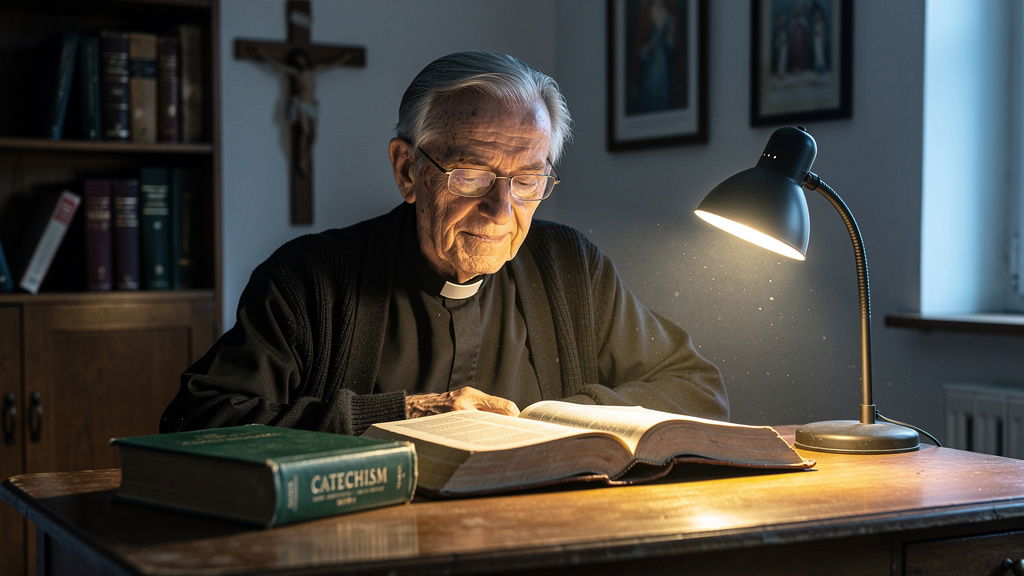
Because the Catechism gathers so much teaching, it is natural to ask what kind of authority it carries. Pope John Paul II promulgated it by his apostolic authority, so it stands as an act of the ordinary papal Magisterium. In Fidei Depositum he described it as:
“A sure norm for teaching the faith” and “a valid and legitimate instrument for ecclesial communion.”— St. John Paul II, Fidei Depositum
Those phrases mean that bishops, priests, and catechists can rely on it when they teach and know they are in harmony with the Church.
At the same time, the Catechism is not itself a new dogmatic definition. It contains many doctrines that have been taught infallibly by councils and popes and presents them faithfully. It also includes other teachings that, while not defined in a solemn way, are still authoritative expressions of the ordinary Magisterium. In this sense, the Catechism is a window onto the Church’s teaching office rather than a replacement for it.
Another important feature is its collegial character. The text did not come from one theologian or one office working in isolation. It was requested by the Synod of Bishops, drafted under a commission of cardinals and bishops, and revised after the worldwide episcopate sent thousands of comments. This broad involvement strengthens its role as a point of unity in doctrine.
It is also vital to remember that the Catechism stands alongside Scripture, Tradition, and other magisterial documents. It does not replace the Bible or the documents of Vatican II, nor does it take the place of papal encyclicals or local catechisms. Instead, it gathers and orders their teaching so that Catholics across cultures can share a common understanding of the faith.
Who Is The Catechism For? Understanding Its Intended Audience

The Prologue of the Catechism speaks plainly about who it is written for. First of all, it is directed to bishops as chief teachers in their dioceses. Since they are charged with passing on the apostolic faith, they need a clear reference that reflects the mind of the universal Church. The Catechism also addresses priests, deacons, catechists, and editors of catechetical texts who help bishops in the work of teaching.
Because of this primary audience, the book does not read like a children’s textbook or a beginner’s pamphlet. It is dense at times and assumes some familiarity with Scripture and theological language. That is why it is often used not as the first tool in religious education for children, but as a foundation behind local catechisms and teaching programs.
Yet Pope John Paul II also offered the Catechism as “useful reading for all other Christian faithful.” Many adults use it as a reference, turning to it when questions about the faith arise. It can function much like a theological commentary or dictionary. A reader might look up a topic such as grace, the Eucharist, or marriage and read a cluster of paragraphs to gain a clearer view.
Different groups use the Catechism in different ways:
-
RCIA candidates may follow a plan that moves through the four parts alongside Scripture and liturgy.
-
Theology students draw on it to see how the Church summarizes doctrinal points.
-
Preachers consult it while preparing homilies.
-
Lay Catholics may read it slowly, paragraph by paragraph, as part of ongoing formation.
In every case, the Catechism gives the “what” of Catholic teaching, while pastors and catechists discern the best “how” for sharing it with real people.
The Sources: Scripture, Tradition, And The Magisterium
The strength of the Catechism lies not only in its structure but also in its sources. Pope John Paul II described it as a statement of the Church’s faith “attested to or illumined by Sacred Scripture, the Apostolic Tradition, and the Church’s Magisterium.” These three form the classic foundations of Catholic teaching, and they are visible on almost every page.
Sacred Scripture holds a primary place. The Catechism is filled with biblical quotes and references, drawing from both Old and New Testaments. Doctrines are not presented as bare ideas. They are tied to the story of God’s work with Israel, the life and words of Jesus, and the preaching of the apostles. Readers who follow the footnotes can move back and forth between the Catechism and the Bible in a fruitful way.
“Ignorance of Scripture is ignorance of Christ.”— St. Jerome
The text also makes generous use of the Church Fathers and Doctors, such as Augustine, Gregory the Great, and Thomas Aquinas. It cites early creeds, liturgical texts, and councils from Nicaea to Vatican II. Papal encyclicals and more recent documents appear in the notes as well. In total there are thousands of references, weaving Scripture and Tradition together into a single fabric.
That fabric is held together by the Magisterium, the Church’s teaching office. The Catechism reflects how the bishops and the pope read Scripture and Tradition together under the guidance of the Holy Spirit. This is why we can trust it as more than one author’s opinion. At Crux Sancta, we aim to mirror this same pattern. Our work seeks to be rooted in biblical truth, guided by the interpretive tradition of the Church, and attentive to the teaching office that serves the people of God.
The Catechism As A Living Document: Development And Revision
Catholics sometimes wonder how a book can be both firm in doctrine and open to revision. The key is to distinguish between the unchanging “deposit of faith” and the Church’s growing understanding of that deposit. Divine revelation in Christ is complete. Yet the Church reflects on it across time, drawing out implications and seeing new connections as history and experience raise fresh questions.
The Catechism reflects this dynamic. A clear example appears in paragraph 2267, which treats the death penalty. The original 1992 edition of the Catechism acknowledged the traditional allowance of capital punishment in rare cases, when it was the only way to defend human lives. The 1997 Latin typical edition, shaped by Pope John Paul II’s encyclical Evangelium Vitae, stressed that such cases were “very rare, if not practically non‑existent,” given modern means of detention.
In 2018, Pope Francis approved a further revision of this paragraph. The new text teaches that, in light of the Gospel, the death penalty is inadmissible because it attacks the dignity of the person. It also states that the Church works with determination for its worldwide abolition. This change does not mean that past generations lacked faith. Instead, it shows a deepening awareness of human dignity and a clearer recognition that safe alternatives to execution now exist in most societies.
Changes of this kind in the Catechism are rare and carefully prepared. They follow long reflection, consultation, and explicit acts of the Magisterium. When they occur, they show that the Catechism is not a museum exhibit frozen in time. Rather, it is a living expression of the same faith, read again for current circumstances without giving up its roots in Scripture and Tradition.
Adaptations And Resources: Making The Catechism Accessible
Because the Catechism is intended for the whole Church, it must be both faithful and adaptable. The Prologue says that its teachings need “indispensable adaptation” for differences of culture, age, and social situation. The universal text gives the substance of doctrine. Local bishops and catechists then apply and express that doctrine in ways that fit their people.
This work of adaptation is not about changing what the Church believes. It is about finding suitable language, examples, and teaching methods. A paragraph that helps a seminary student may overwhelm a new member of a parish. A topic that feels abstract on the page may become clear when linked to a story from local history or the life of a saint. Good catechesis respects both the integrity of doctrine and the concrete situation of learners.
In the decades since the Catechism’s release, several important resources have grown from it. These derived works keep the core content but present it at different levels or for different audiences. Alongside online guides and explanatory articles from Crux Sancta, they help answer, in practice, what the Catechism of the Catholic Church offers a college student, a parish adult education class, or a teenager preparing for Confirmation.
Among these resources are the United States Catholic Catechism for Adults, the Compendium of the Catechism of the Catholic Church, and the Youcat for youth. Together they show how flexible the Catechism can be as a source. In the next sections we look briefly at each of these, so readers can decide which might serve them best alongside the full Catechism and trusted guides like Crux Sancta.
The United States Catholic Catechism For Adults (USCCA)
The United States Catholic Catechism for Adults grew directly from the CCC and was published by the United States bishops in 2006. It keeps the four‑part structure of the main Catechism but explains each theme through the lens of American Catholic experience. Many chapters begin with the story of a saint or important figure from the Church in the United States, which helps readers see doctrine at work in real lives.
This text is especially helpful for:
-
Parish adult faith formation
-
RCIA programs
-
Personal study for Catholics in the United States
Its language is somewhat simpler than the CCC, and it often includes reflection questions and prayer suggestions. For Catholics in the United States, it serves as a bridge between the universal teaching of the Church and the particular history and culture they know best.
The Compendium Of The Catechism
The Compendium of the Catechism of the Catholic Church, published in 2005, offers a shorter presentation of the same teachings. It uses a traditional question‑and‑answer format. Questions are numbered and matched with brief but complete replies, which often quote the full Catechism directly. This style echoes older catechisms while drawing from the content of the modern one.
Because of its concise form, the Compendium works well for quick reference or for structured classes. Readers who feel daunted by the length of the CCC can start here to gain a basic grasp of topics, then move to the longer text when they are ready. Teachers also use the Compendium to prepare lessons, since the questions can shape discussion and the answers give a reliable core.
Youcat: Youth Catechism
Youcat, short for Youth Catechism of the Catholic Church, first appeared in 2011 in connection with World Youth Day. It presents the teachings of the CCC in a format designed for teenagers and young adults. The book keeps a question‑and‑answer structure but adds graphics, side notes, and quotations that speak to younger readers.
Youcat uses clear, modern language while staying faithful to the doctrine of the full Catechism. It addresses many of the moral and spiritual questions young people actually ask, linking Church teaching to friendship, vocation, social media, and more. Parishes often use it for youth groups, Confirmation preparation, or high school religion classes. In many cases, it serves as a first real contact with the depth of the Catechism for the next generation.
How Crux Sancta Helps You Engage The Catechism
At Crux Sancta, we see the Catechism as a great gift, but we also know it can feel demanding. Our work is to stand beside readers as a guide. We draw from the Catechism’s structure and sources and explain its teachings in language that remains faithful yet clear. In doing this, we aim to serve exactly those who most need the Catechism. That includes Catholic adults, RCIA candidates, theology students, catechists, and Christian seekers.
Our content explores Catholic theology and doctrine in an ordered way, echoing the four pillars of the CCC. We write about the Creed, the sacraments, the moral life, and prayer with careful attention to Scripture and Tradition. When the Catechism cites a council or a Church Father, we often unpack that reference and show how it fits with the wider teaching of the Church. This helps readers see that the CCC is part of a living stream, not an isolated manual.
We also care deeply about the link between faith and reason. Many people want to know not only what the Church teaches, but why. In our articles and guides, we explain the reasoning behind doctrines so that minds and hearts can both engage. We show how the Church’s teachings on topics like grace, marriage, or social justice grow from Scripture and from a thoughtful reading of human experience.
Finally, we try to keep a tone that is reverent, thoughtful, and pastoral. We write for real people who carry questions, hopes, and wounds. Our goal is not to overwhelm with technical detail, but to open space where readers can enter more deeply into the wisdom of the Catechism. In that sense, Crux Sancta hopes to serve as a steady companion as readers let the CCC shape their faith and daily spiritual life.
Conclusion
The Catechism of the Catholic Church stands as one of the most important teaching texts in modern Catholic history. It gathers the faith of centuries and presents it in an ordered, prayerful, and coherent way. The four pillars show how the Church believes, celebrates, lives, and prays as one Body. This means the Catechism is far more than an academic reference. It is a living expression of the Church’s faith that points again and again to Christ.
Engaging the Catechism is, at heart, an encounter with the Lord who speaks through Scripture, Tradition, and the Magisterium. The book can seem dense at first, and that can discourage many readers. Yet taken slowly, with guidance and prayer, it becomes a source of steady nourishment. Even a single paragraph, read carefully and linked to the Bible and to personal experience, can deepen both understanding and love of God.
We encourage readers to think of the Catechism not as a text to conquer in one sitting but as a companion for a lifetime. Start with questions that matter most at the moment. Use adapted resources like the USCCA, the Compendium, or Youcat when they fit your stage in life, and draw on guides such as Crux Sancta to help make sense of what you read. Above all, keep returning to the heart of the matter, which is Christ and his saving work.
Crux Sancta stands ready to walk with you in this work of learning and prayer. Through thoughtful explanations and faithful teaching, we hope to help you read the Catechism with confidence and joy. As we keep asking together what is the catechism of the catholic church, may the Lord use this great book to draw us closer to himself and to his Church.
FAQs
Question 1: Is The Catechism Of The Catholic Church The Same As The Baltimore Catechism?
The Catechism of the Catholic Church and the Baltimore Catechism are not the same book, though both serve the teaching mission of the Church. The Baltimore Catechism, first published in 1884, was written for Catholics in the United States and used a short question‑and‑answer format. It was aimed mainly at children and basic parish instruction.
The Catechism of the Catholic Church, on the other hand, is a major catechism for the whole Church after Vatican II. It is much longer, covers a wider range of topics, and is written for bishops, priests, catechists, and adults. Both texts are valuable, but they differ in scope, depth, style, and intended audience.
Question 2: Do I Need To Read The Catechism From Beginning To End?
Most readers do not need to read the Catechism straight through as if it were a novel. It is designed more as a reference work that can be entered at many points. Many people begin with sections related to questions they already have, such as the sacraments, moral issues, or the Creed.
At the same time, some benefit from moving through one part in order, for example reading the entire section on Christian prayer. The indexes and cross references make it easier to follow themes across the book. It is helpful to approach the Catechism as a long‑term resource that supports steady growth rather than a task that must be finished quickly.
Question 3: What Is The Difference Between The Catechism And The Compendium?
The Compendium of the Catechism of the Catholic Church is an official shorter version of the full Catechism. It presents the same teachings of the Church but in a brief question‑and‑answer format. Each reply is concise, often with a direct link to the corresponding paragraph in the CCC.
Both books carry authority, but they differ in depth and detail. The Compendium works well for basic catechesis, quick reference, and introductory study. The full Catechism of the Catholic Church is better for those who want to see the full argument, scriptural background, and theological context behind each point.
Question 4: Can The Catechism’s Teachings Ever Change?
What God has revealed in Christ is unchanging, and the Church may not set that aside. At the same time, the Church’s understanding and expression of that revelation can grow. The Catechism reflects this by sometimes adjusting how it states a teaching as reflection deepens and circumstances shift. The revision of paragraph 2267 on the death penalty is a good example.
Such changes are not frequent and do not mean the Church is inventing new faith. They are efforts to express the same Gospel more clearly for the present moment. The Catechism presents both infallible dogmas and other authoritative teachings. In all of this, the Magisterium serves as a guide so that development remains faithful to the deposit of faith.
Question 5: How Can I Use The Catechism For Personal Spiritual Growth?
The Catechism can become a powerful aid to prayer when used slowly and thoughtfully. Many people:
-
Choose a short paragraph, read it carefully, then turn to the Scripture passages quoted there.
-
Let the teaching and the Bible text shape a time of quiet reflection, much like lectio divina.
-
Link their reading to the liturgical year, focusing on sacraments during Easter or on moral life during Lent.
-
Read about a sacrament while preparing to receive it, such as studying the section on the Eucharist before Mass.
-
Keep a simple journal of insights and questions that arise during study.
-
Join a study group or parish class to share insights and stay accountable.
Crux Sancta offers explanations and guides that walk with readers through key parts of the Catechism of the Catholic Church, helping personal study become a source of lasting spiritual growth.
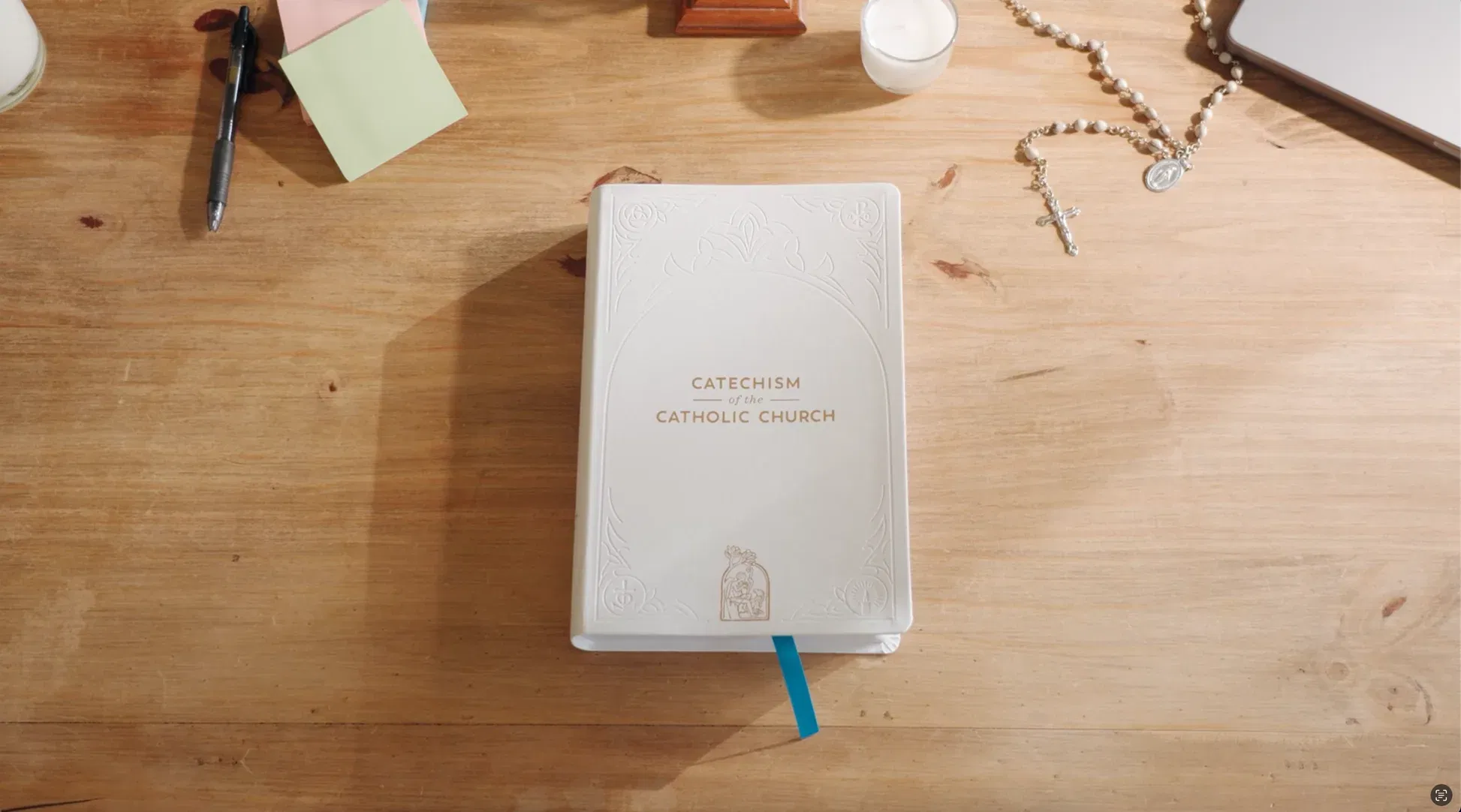
I Recommend the Ascension Edition of the Catechism of the Catholic Church.
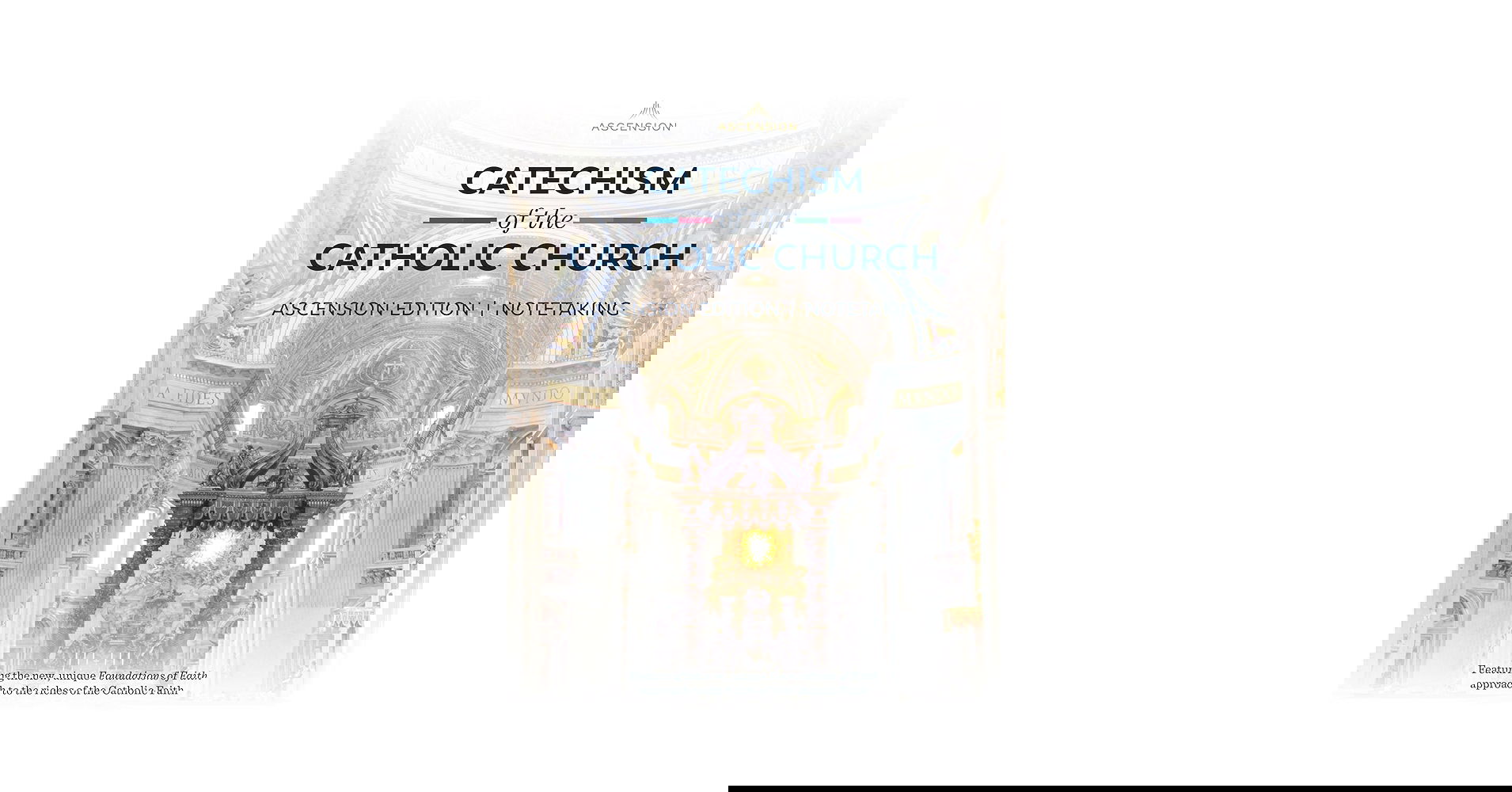
A Review of the Catechism of the Catholic Church Ascension Edition by Crux Sancta.
You can also learn more information about this Catechism when you click the Buy Now button to be redirected to Amazon.