

Introduction
“Take and eat, this is my body… Drink from it, all of you, for this is my blood of the covenant” (Matthew 26:26–28).
Matthew 26:26–28
Those words are either a simple figure of speech or the boldest claim Jesus ever made about His nearness to us. The Catholic Church takes them at face value and shapes its worship around them.
That is where the meaning of transubstantiation comes in. It is the name the Church gives to the change that happens at Mass, when bread and wine no longer remain what they were, even though every sense still tells us they are the same. We kneel, genuflect, and receive on the tongue or in the hand because the Church dares to say that the living Christ is there.
This teaching is demanding. It stretches the mind and calls for faith, yet it is also the beating heart of Catholic life. To grasp it more deeply, we look to Scripture, the early Fathers, Church councils, and some simple philosophy. In this article we move from a clear definition, to the biblical roots, to the history and theology, and then to how this mystery shapes prayer and daily life.
At Crux Sancta, we try to stand where faith and reason meet. Our hope is that, by the end, the meaning of transubstantiation will feel not only more understandable but more personal, drawing us into a deeper love for Christ in the Eucharist.
Key Takeaways
-
Transubstantiation is the Church’s way of saying that the whole reality of bread and wine is changed into Christ’s Body and Blood, while what we see, taste, and touch stays the same. The Mass is built on this truth and treats the Eucharist with great reverence.
-
The meaning of transubstantiation rests on Jesus’ own words at the Last Supper and His strong teaching in John 6. The early Church Fathers spoke about the Eucharist in very concrete terms, showing that belief in a real change goes back to the first centuries.
-
The Church uses the terms “substance” and “accidents” to describe this mystery. These words do not remove the mystery but give us a careful way to say that what something is can change even if how it appears does not.
-
Because of transubstantiation, Catholics believe in the Real Presence of Christ in the Eucharist. The Mass is a true encounter with the living Lord, not only a reminder of Him, and this shapes everything from how we receive Communion to Eucharistic adoration.
What Is Transubstantiation Defining the Doctrine
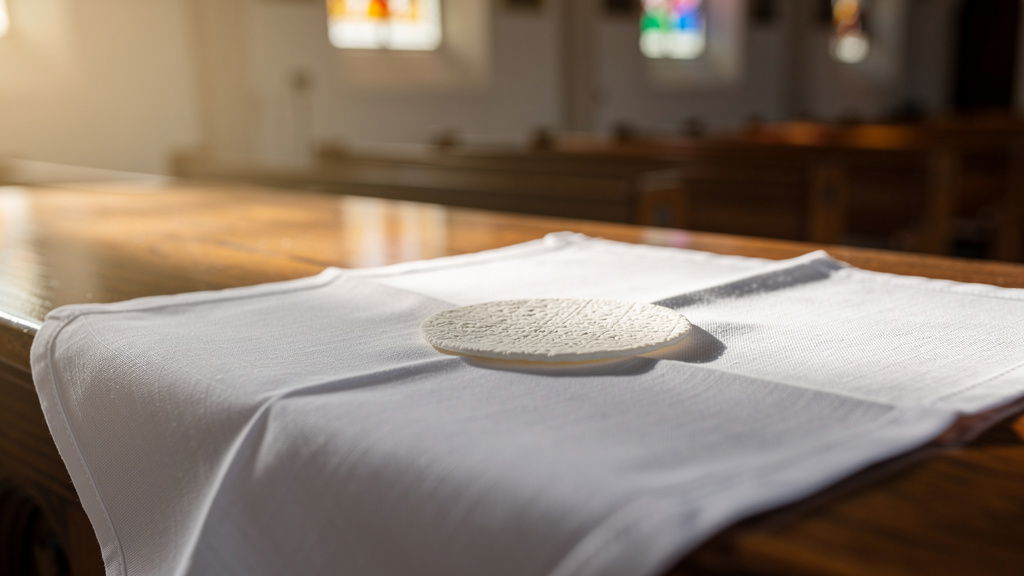
When we speak about the meaning of transubstantiation, we are talking about a very specific claim. The Catholic Church teaches that, at the consecration during Mass, the whole substance of the bread becomes the Body of Christ, and the whole substance of the wine becomes the Blood of Christ. Nothing of the inner “bread-ness” or “wine-ness” remains.
This is not just a strong symbol or a spiritual idea of Christ. The Council of Trent, echoed in the Catechism of the Catholic Church, says that Christ is present “truly, really, and substantially.” That means His Body, Blood, Soul, and Divinity are present in a way deeper than any other kind of presence. We see bread, yet in reality we are before the Lord Himself.
The Church also teaches that this change takes place through the words of consecration. The priest does not act on his own; he speaks in persona Christi—in the person of Christ—and the Holy Spirit brings about the conversion. At that moment, the inner reality changes, while all the outward traits, called “species” or “accidents”—taste, color, weight, texture—stay the same.
Some Christian groups speak only of a spiritual presence or a symbolic memorial. Catholic teaching goes further and says there is an objective change in the elements themselves. We trust this not because we can map out every detail of how it works, but because Christ has spoken, the apostles handed it on, and the Church has guarded this teaching across the centuries.
The Biblical Foundation Christ’s Words at the Last Supper
To understand the meaning of transubstantiation, we begin with Scripture. In the accounts of the Last Supper (Matthew 26, Mark 14, Luke 22), Jesus does not say, “This represents my body” or “This points to my blood.” He simply says, “This is my body… This is my blood.” For two thousand years, the Catholic Church has taken those words as they stand.
John 6 deepens this. In the Bread of Life discourse, Jesus says that His flesh is true food and His blood true drink, and that we must eat and drink if we want eternal life. Many listeners protest that this is a hard saying. Instead of softening the language or explaining it as a figure, He repeats the claim with even stronger words, and some disciples walk away rather than accept it.
Saint Paul also takes this very seriously. In 1 Corinthians 11, he repeats the words of institution and warns that anyone who eats and drinks “without discerning the body” eats and drinks judgment on himself. A simple symbol would not carry such a weighty warning. Paul treats the Eucharist as a holy reality that can be received worthily or unworthily.
The Last Supper happens in the setting of the Passover. In Jewish thought, a memorial (zikkaron) does more than recall a past event. It makes that saving event present again in a real way for those who take part. So when Jesus says, “Do this in memory of me,” He is not asking for a bare reminder. He is giving a liturgy where His sacrifice becomes present for His people in every age.
Understanding Substance and Accidents The Philosophical Framework
To talk clearly about the meaning of transubstantiation, the Church borrows some basic tools from philosophy. It is not asking us to sign on to an entire system. Instead, it uses familiar terms to guard what faith already knows.
The word “substance” points to what a thing really is at its core—the inner reality that makes something what it is, not just how it looks or feels. “Accidents” are the outward features we can sense, like size, shape, color, taste, and smell. When we say a person is the same person as in childhood, even though height and hair have changed, we are already thinking in this way.
In everyday life, substance usually stays the same while accidents change. A tree grows taller, gains leaves, and loses them, yet it remains the same tree. In the Eucharist, the pattern is reversed. At the consecration, the accidents of bread and wine remain exactly what they were. Our senses still report bread and wine, yet the substance—the innermost reality—no longer belongs to bread or wine, but to Christ’s Body and Blood.
This is why Catholic teaching does not match consubstantiation. In consubstantiation, bread remains while Christ is also present with it. In transubstantiation, the bread’s substance is gone. Only Christ’s Body is present under the appearances of bread, and only His Blood under the appearances of wine, though by concomitance the whole Christ is present under each.
This way of speaking does not remove mystery. It gives us careful language so we can avoid confusion and treat the sacrament as it deserves. We genuflect before the tabernacle, handle every fragment with care, and adore the Eucharist because, in deepest reality, we are before the Lord.
From the Apostles to the Councils And the Historical Development of the Doctrine
The meaning of transubstantiation did not appear out of thin air in the Middle Ages, and a review of Catholic theology on Eucharistic transubstantiation shows how this doctrine developed over centuries. The word came later, but the faith it expresses runs back to the earliest generations of Christians.
Saint Ignatius of Antioch, writing around the year 106, called the Eucharist “the flesh of our Savior Jesus Christ.” Saint Justin Martyr, in the second century, wrote that the food blessed at the Eucharist “is the flesh and blood of that Jesus who was made flesh.” Saint Ambrose in the fourth century taught that before the consecration there is bread, but after the consecration “it becomes the body of Christ.”
“We do not receive these as ordinary bread or ordinary drink, but as the flesh and blood of that Jesus who became man for our sake.”– Saint Justin Martyr, First Apology
In the ninth and eleventh centuries, some thinkers began to question how this change could be real. Berengar of Tours, in particular, argued against a real change in the elements. His views pressed the Church to speak more clearly about what Christians had always believed. Around this time, Hildebert de Lavardin first used the Latin word transubstantiatio to name the change.
By 1215, the Fourth Lateran Council officially spoke of bread and wine being “transubstantiated” into Christ’s Body and Blood. In the thirteenth century, Saint Thomas Aquinas drew together Scripture, the Fathers, and philosophy to explain the doctrine in a balanced way.
During the Reformation, debate over the Eucharist became intense. In response, the Council of Trent (1545–1563) solemnly taught that “by the consecration of the bread and wine there takes place a change of the whole substance of the bread… and of the whole substance of the wine.” It affirmed that “transubstantiation” is the most fitting name for this conversion. Across these centuries, we do not see a new belief being invented, but a steady clarification of what the Church had always held about the Eucharist.
The Real Presence and Related Theological Principles
When we say “Real Presence,” we are naming the fruit of transubstantiation. The meaning of transubstantiation is not just a theory about objects; it is about Christ Himself being present “truly, really, and substantially” in the Eucharist. He is not only present in our thoughts or in a spiritual feeling. He is there in His risen Body and Blood.
From this come several linked teachings:
-
Concomitance: Because the risen Christ cannot be divided, where His Body is, there also are His Blood, Soul, and Divinity. Receiving only the Host or only from the chalice still means receiving the whole Christ.
-
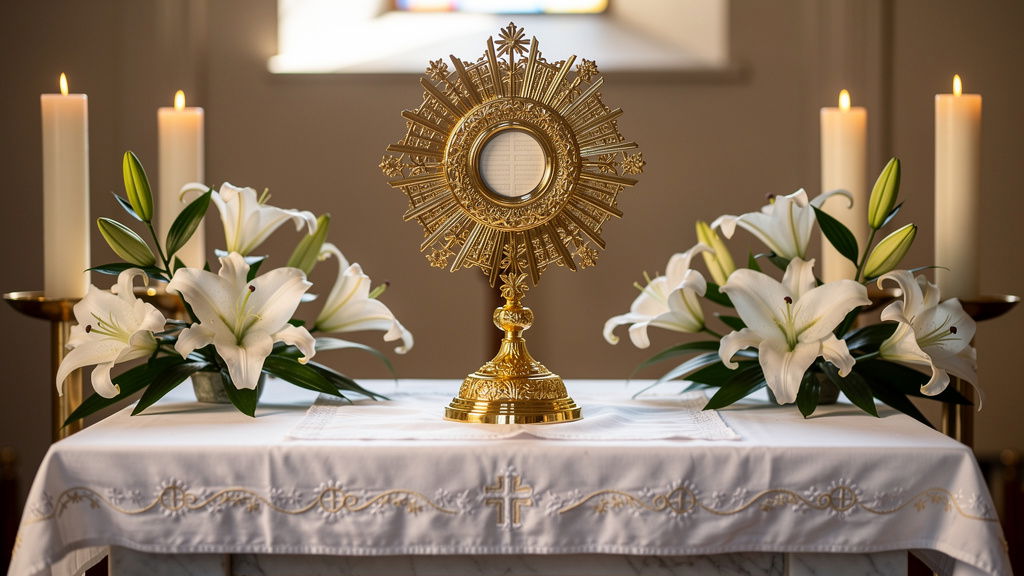
Lasting Presence: Christ remains present as long as the appearances of bread and wine remain. This is why the Church reserves the Blessed Sacrament in the tabernacle, carries it in a pyx to the sick, and practices Eucharistic adoration.
-
Whole Christ in Every Part: Christ is wholly present in every part of the Host and every drop of the Precious Blood. Breaking the Host does not divide Christ, which is why even the smallest fragments are treated with such care.
These precise points protect something very simple: when we kneel at Mass or in adoration, we are not kneeling before a symbol only. We are kneeling before the living Lord.
How Transubstantiation Differs from Protestant Views
During the Reformation, the meaning of transubstantiation became one of the sharpest points of disagreement. Many Reformers wanted to stay close to Scripture but interpreted Christ’s words about the Eucharist in different ways.
Martin Luther strongly defended that Christ is really present in the sacrament, but he rejected the claim that the bread and wine cease to be bread and wine. He spoke of Christ’s Body and Blood being present “in, with, and under” the forms of bread and wine. This view, often labeled consubstantiation, holds that both bread and the Lord’s Body are there together.
Huldrych Zwingli, by contrast, saw the Lord’s Supper mainly as a memorial. For him, the bread and wine were powerful reminders of Christ’s death, but Christ was present only in the hearts of believers, not in the elements themselves. John Calvin stood somewhat between Luther and Zwingli. He taught a real but spiritual presence, where the Holy Spirit lifts the believer to commune with Christ in heaven rather than Christ being bodily present in the Eucharistic signs.
Within Anglicanism and Methodism, there is a range of views, from a real spiritual presence to a more symbolic reading, with official documents often rejecting the term transubstantiation.
The Catholic Church, in contrast, insists that an objective change of substance takes place. Christ is present in the Eucharist whether or not the believer has strong feelings, though our faith affects how well we receive Him. We can and should respect the sincere faith of other Christians, even as we hold firmly to what the Church teaches about the Eucharist.
The Eastern Christian Perspective on the Eucharistic Change
The meaning of transubstantiation is not only a Western concern. Eastern Orthodox, Oriental Orthodox, and Eastern Catholic Churches all confess that, in the Divine Liturgy, the bread and wine truly become the Body and Blood of Christ. On this point, there is deep agreement with Catholic teaching.
The East generally does not lean as heavily on Aristotelian terms. Instead of “transubstantiation,” Eastern writers often use the Greek word metabole, which simply means “change.” Some documents, like the Synod of Jerusalem in 1672, used the word metousiosis, a direct Greek match for transubstantiation, to resist claims that the Eucharist is only a symbol. Still, Eastern theology tends to stress that the change is a holy mystery beyond full analysis.
There is also a difference of emphasis in the liturgy. Western theology highlights the words of institution—“This is my Body… This is my Blood”—as the key moment of change. Eastern theology often focuses on the epiclesis, the solemn calling down of the Holy Spirit upon the gifts.
These are different ways of speaking about the same saving act. Both East and West affirm that the Eucharist is not a product of human thoughts or feelings. It is a real change brought about by God, making Christ present for His people.
Living the Mystery Transubstantiation in Catholic Spiritual Life
If we keep the meaning of transubstantiation only in our heads, we miss its real purpose. This doctrine is meant to shape how we pray, how we attend Mass, and how we live.
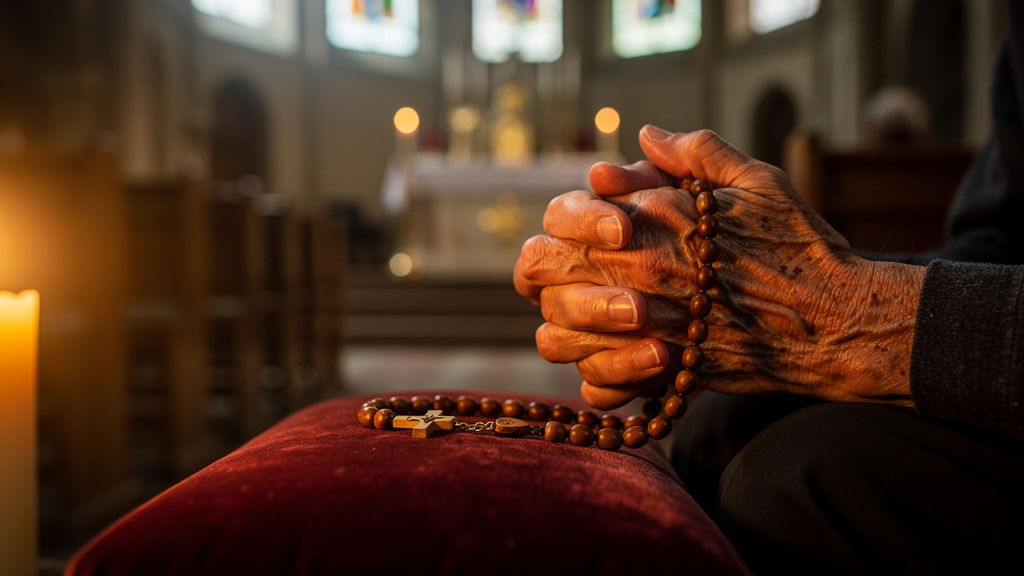
When we know that the Eucharist is truly Christ, our whole way of being at Mass shifts. We enter the church with a sense of awe, genuflect toward the tabernacle, and keep a quiet recollection before and after Communion. We kneel during the Eucharistic Prayer not as a mere custom, but as a bodily act of adoration before our Lord who is about to come to the altar.
“The Church draws her life from the Eucharist.”– Saint John Paul II, Ecclesia de Eucharistia
Saint John Paul II, Ecclesia de Eucharistia
Eucharistic adoration flows from the same faith. We do not sit before a blank sign. We sit or kneel before the same Jesus who walked in Galilee and who now reigns in glory. Fasting before Communion and making a careful act of contrition are ways of preparing mind and body to welcome Him worthily.
In daily life, the Eucharist also sends us out:
-
To serve the suffering: When Communion is brought to the sick or the dying, Christ Himself draws near to them.
-
To grow in charity: When we receive Him in a state of grace, He strengthens us to love more as He loves.
-
To become what we receive: As the ancient saying puts it, we become what we receive.
At Crux Sancta, we hope to help Catholics and seekers pray this mystery better by understanding it better. Study and devotion are not rivals here. The more we understand what happens at the altar, the more our hearts can respond with love and gratitude.
Conclusion
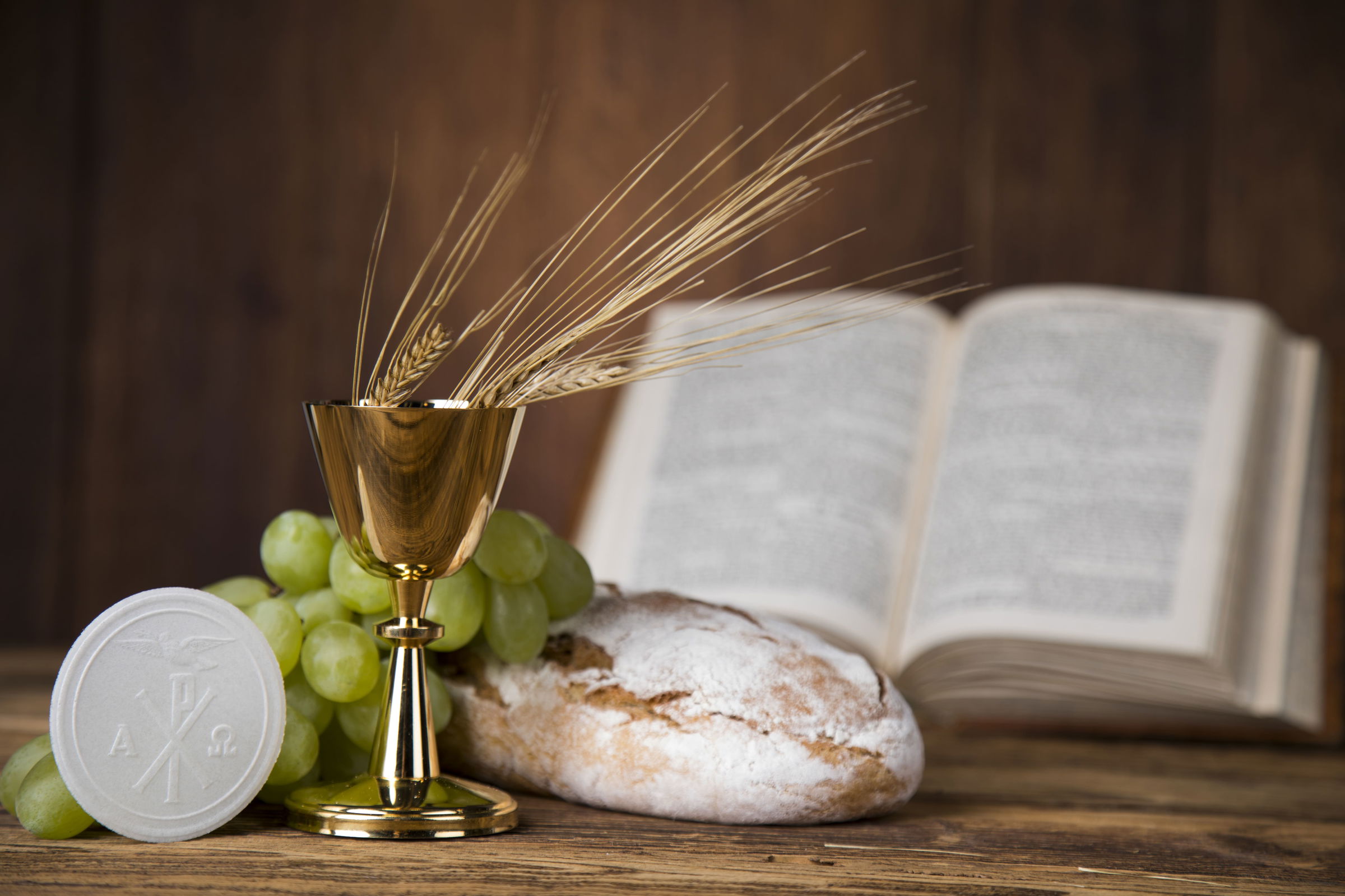
At the center of Catholic worship stands a simple piece of bread and a cup of wine. The meaning of transubstantiation is the Church’s careful way of saying what faith sees beyond those simple signs. Christ keeps His promise to be with us always by making Himself present in a way that is steady, concrete, and astonishing.
This teaching is not a dry theory for theologians only. It is the foundation of our most intimate meeting with Jesus on this side of heaven. We can say that a change takes place and that His Body and Blood are truly there, but we do not claim to grasp the full inner “how.” That belongs to God’s power and wisdom.
What we can do is keep studying, praying, and receiving. The more we let Scripture, the Fathers, and the councils speak, the more we see that the meaning of transubstantiation is both reasonable and life-giving. It draws us to deeper reverence at Mass, more faithful adoration, and a stronger desire to live as members of His Body.
Whether we are long-time Catholics, RCIA candidates, or thoughtful seekers, we are invited closer. Crux Sancta exists to walk with those who want both clear teaching and real depth. As we sink our roots into this mystery, we come to see that the Eucharist does not only change bread and wine—it changes us, so that we can carry Christ into the world with love.
FAQs
Question 1 Is Transubstantiation Found Explicitly in the Bible
The exact word “transubstantiation” does not appear in Scripture, just as many later doctrinal terms do not. However, the reality it describes comes straight from the Bible. Jesus says, “This is my body… This is my blood,” and in John 6 He insists that His flesh is true food and His blood true drink. Saint Paul warns that unworthy Communion profanes the Body and Blood of the Lord. The Church later used the word transubstantiation to express this clear biblical teaching in a precise way.
Question 2 If the Bread Still Looks and Tastes Like Bread How Can It Really Be Christ’s Body
Here we return to the distinction between substance and accidents. What our senses grasp are the accidents—the outward features such as taste, smell, and texture. In the Eucharist, those features remain the same, but the substance, what the thing really is, has changed into Christ’s Body. We already accept that some of the deepest realities, like love, grace, or the human soul, cannot be seen or touched. In a similar way, Christ chooses to come to us hidden under humble appearances so that we may receive Him without fear and with trust.
Question 3 What Is the Difference Between Transubstantiation and Consubstantiation
Consubstantiation is a term often linked with some Lutheran teaching. It suggests that after the consecration, both bread and Christ’s Body are present together. The Catholic doctrine of transubstantiation says something different. It teaches that the substance of the bread is no longer there at all, but has been changed into the substance of Christ’s Body, with only the appearances of bread remaining. This expresses how completely Christ gives Himself to us in the sacrament.
Question 4 How Does the Catholic Church Know Transubstantiation Is True
The Church does not rest this teaching on one source alone. It stands on Scripture, where Christ speaks clearly about His Body and Blood. It looks to Tradition, where the early Fathers, liturgies, and councils consistently speak of a real change in the Eucharist. The Magisterium, guided by the Holy Spirit, has solemnly taught this doctrine at councils such as Lateran IV and Trent. Eucharistic miracles add striking signs along the way, though faith does not depend on them. At the deepest level, we trust the One who said, “This is my body,” and who promised that the Spirit would guide the Church into all truth.